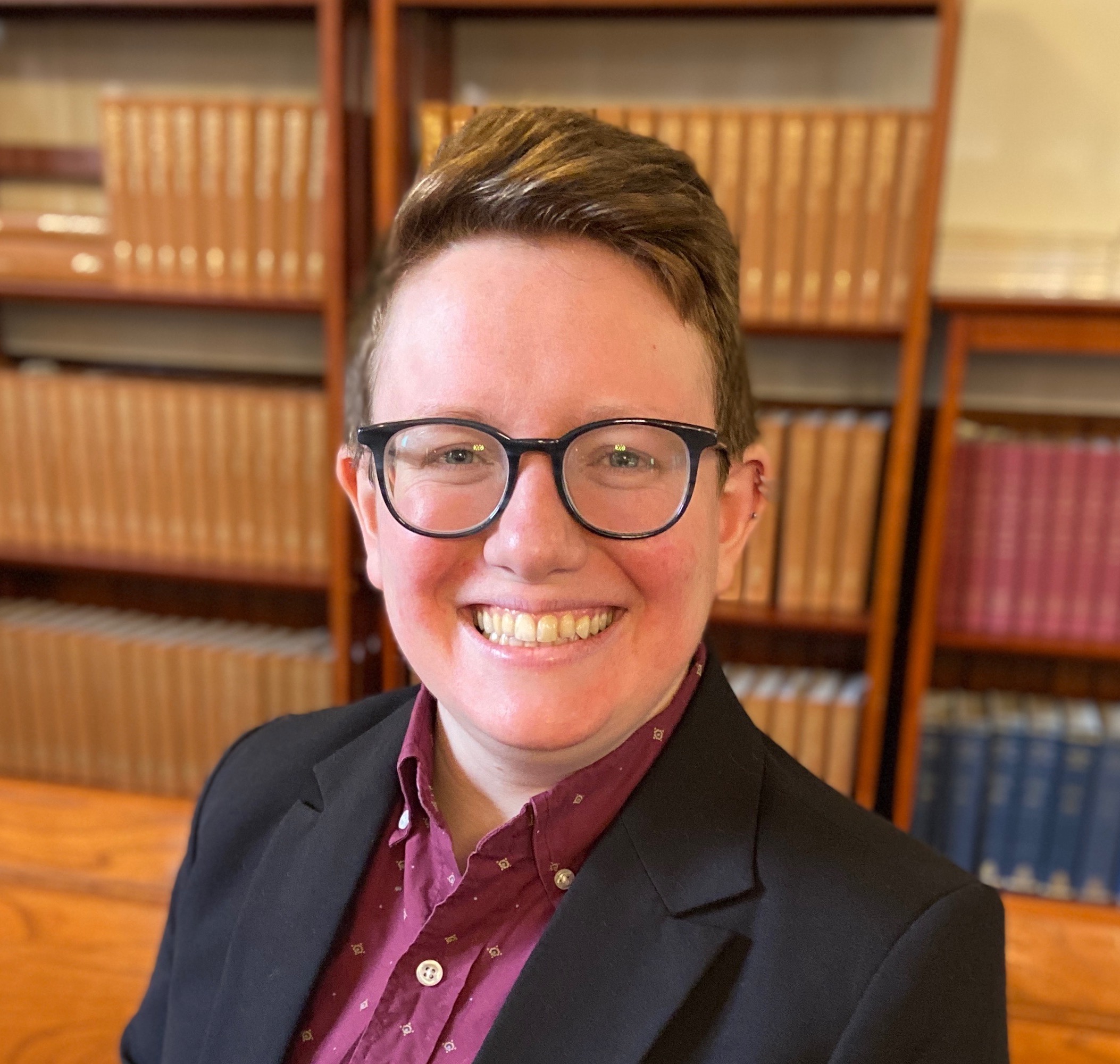
About the narrator:
Lily Solochek is a Reconstructionist rabbi based in Nobleboro, Maine. With a background in theater and Jewish studies from Brandeis University and rabbinical training in the Reconstructionist movement, Rabbi Lily has played a significant role in fostering inclusive Jewish practices and revitalizing Jewish communities in rural Maine. Their leadership has included serving as the rabbi of Adas Yoshuron in Rockland and contributing to the Center for Small Town Jewish Life.
In this excerpt from their interview with Papa Yaw Owusu Nti on January 17, 2025 at Colby College, Rabbi Solochek discusses imposter syndrome in the Jewish community and the need for greater access to meaningful rituals like the mikvah.
Transcript:
“We don’t know what we don’t know. The mikvah might be the perfect ritual for somebody, but if they’ve never been exposed to it—there’s a lot of imposter syndrome in the Jewish community. People feeling, “Well, I’m not Jewish enough,” or, “I only do this, so I’m a bad Jew.” Many people in their life have had their “I’m a bad Jew” moment. There are no bad Jews. We’re all just on different parts of our journey. But I think as people discover that the mikvah is here and discover the ways it can be used—I have the privilege of having lived in the communities I’ve lived in and having the Jewish education that I have. That is not something everyone has. And sometimes we just don’t know that the perfect ritual is out there for us.” – Rabbi Lily Solochek
Rabbi Lily Solochek’s full oral history interview is available through Colby’s Special Collections & Archives.
About the interviewer:
Papa Yaw Owusu Nti is a sophomore at Colby College studying Computer Science and Math. Having grown up in a Christian household in Ghana, he is deeply interested in cultural and religious traditions from all over the world.
Owusu Nti expressed surprise at how deeply learning about the evolving ritual of mikvah impacted him. “It made me wonder, how many people never step into this ritual because they assume it’s not for them,” he wrote. “Maybe they don’t see themselves as religious enough, or they don’t know where to start. As Rabbi Lily described, ‘the mikvah might be the perfect ritual for somebody, they might have never been exposed to it.’ That really resonated with me. So much of what I learned about Judaism in Maine is about access and about making traditions feel open instead of closed off.”