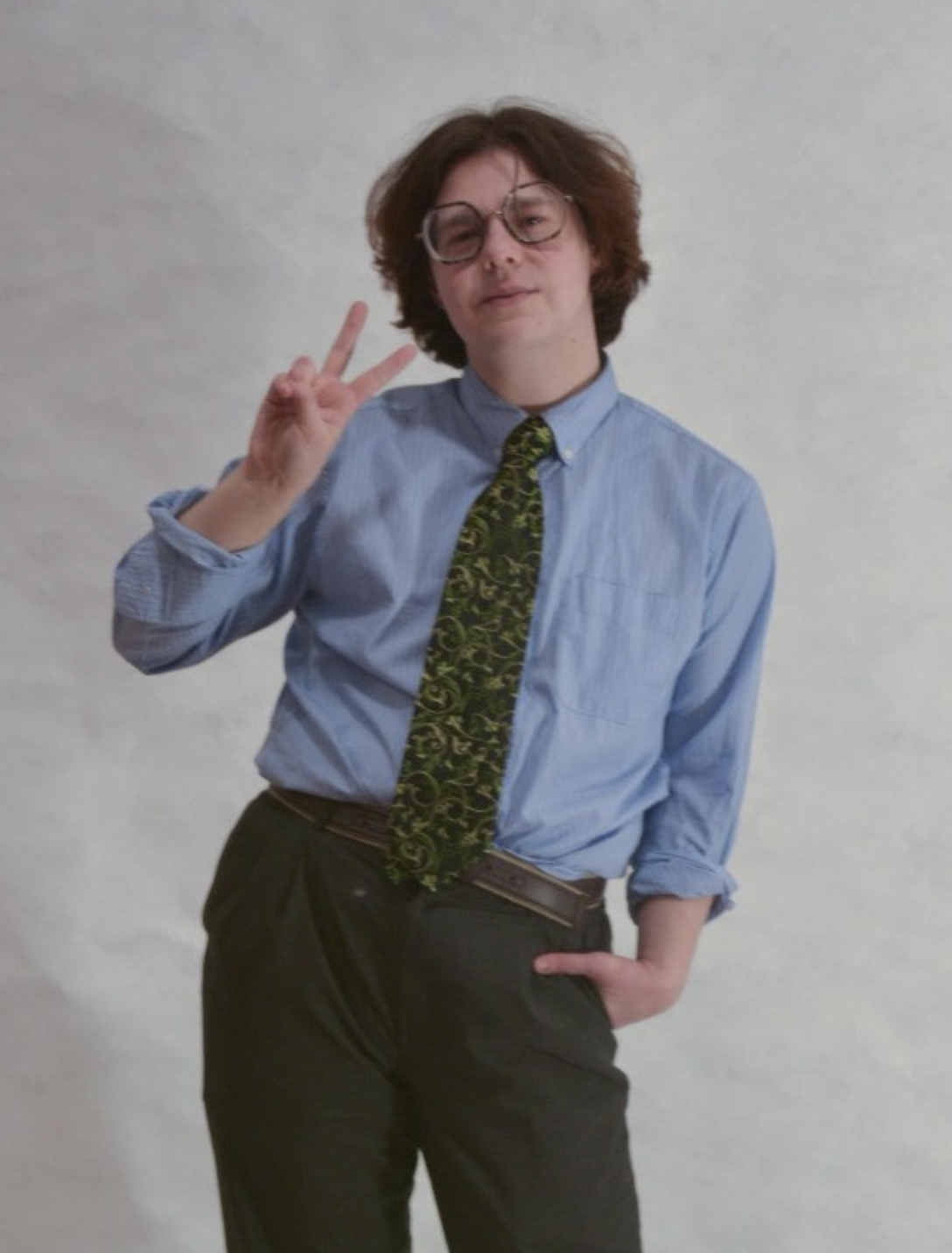
About the narrator:
Lake Cody Dunton is a Jewish trans masculine and nonbinary person living in Augusta, Maine. A ’22 Colby College graduate, Lake is an active member of Temple Beth El in Augusta and Beth Israel in Waterville. He is a trained mikvah guide and uses the mikvah regularly, both for conversion rituals and personal spiritual practice. His experience with Jewish community life has shaped his perspective on inclusivity, ritual adaptation, and the evolving role of the mikvah. In his oral history interview, Dunton reflects on family and community responses to his conversion to Judaism, the gendered history of the mikvah, and how the ritual can be rebranded for modern use.
In this excerpt from his interview with Jack Reddy on January 20, 2025 at Colby College, Dunton reflects on the importance of making Jewish practices personally meaningful and actionable, sharing how rituals like mikvah and prayer resonate more deeply with him than dietary laws when they connect to a sense of purpose and spiritual identity.
Transcript:
“Number one is how actionable. I know myself and I know that if it’s not actionable, I won’t do it. Going kosher is a continuing struggle for me. I think the longest I’ve kept kosher was about eight or nine months. And then usually what happens is somebody wants to go to a Chinese place and there are potstickers and then it’s over. And that’s a continuing struggle for me. I like to eat. I like interesting food. I like other kinds of food and other cultures of food, some of which has a lot of pork and shellfish. Mostly East Asian food is something I really enjoy that has a lot of those things you’re not really supposed to be eating.
Other ones, like taking twenty minutes after my day to pray is very actionable. The next thing is, how can I make this important to me? And if I can make it important to me, like with the mikvah – it’s okay, I’m taking two hours out of my month to return my soul to a state of ritual purity. And remember that there are things more important than the material. That’s great. That works for me all day.
Praying regularly to develop a regular relationship with God and really think about bigger things is totally something that can motivate me. Just to go back to the kosher thing, not eating pork because Jews don’t eat pork doesn’t work. But not eating pork because I have a Jewish body, and I want to treat my body like a Jewish body, tends to work a lot better.” – Lake Dunton
Lake Dunton’s full oral history interview is available through Colby’s Special Collections & Archives.
About the interviewer:
Jack Reddy is a sophomore at Colby College, majoring in Computer Science. He identifies as non-religious and is not Jewish, but became interested in Jewish life in Maine after taking a class with Professor Rabbi David Freidenreich. Growing up in South Portland, Maine, he had little exposure to Jewish communities before this project. This oral history interview was his first interaction with Lake Dunton, and through it, he explored themes of conversion, gender identity, and the evolving role of Jewish rituals. “Talking with Lake and hearing his story gave me a new conception of the ritual that framed it as a personal religious experience rather than a draconic obligation,” Reddy reflected.