
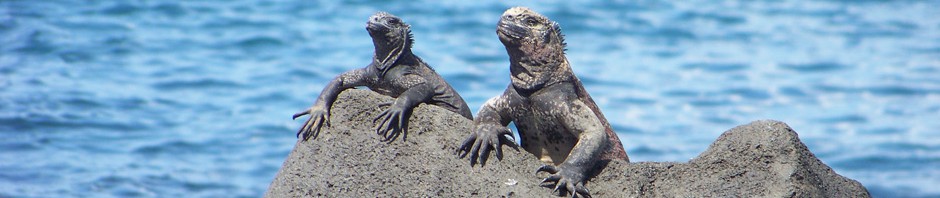
Today’s activities centered around a cruise to the extremely arid island of Bartholomé, a small island adjacent to Santiago. 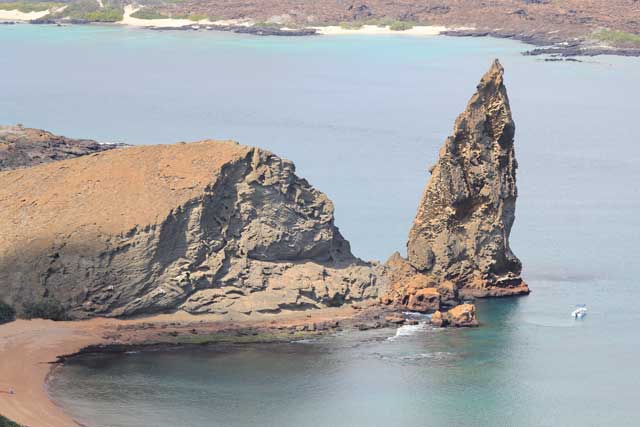 We hired two boats to transport us there. One boat was slower so half of us began our trip at 5 AM this morning. The rest of the class started at 6 AM.
The cruise took about 3 hours on the slow boat. Once there, we climbed Bartholomé for spectacular views of Santiago and the beautiful ocean. We saw lots of evidence of volcanic activity: lava flows, cinder cones, ash everywhere. 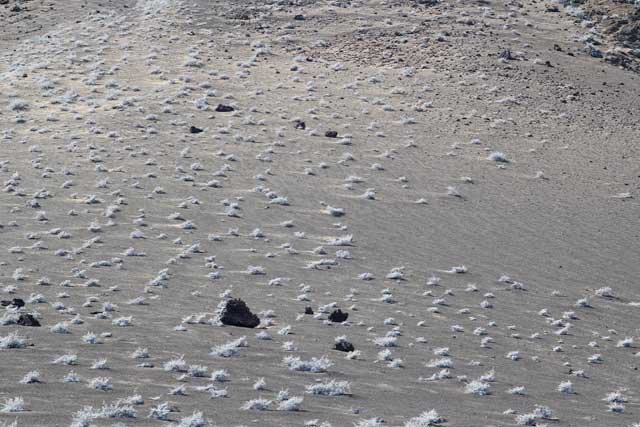 The soil is very poor here and only a few hearty plants can make it in this habitat. One is the gray matplant that occurs in regular, sparse concentrations. The soil resources and water are so scarce that each plant needs a significant area to send out roots.
 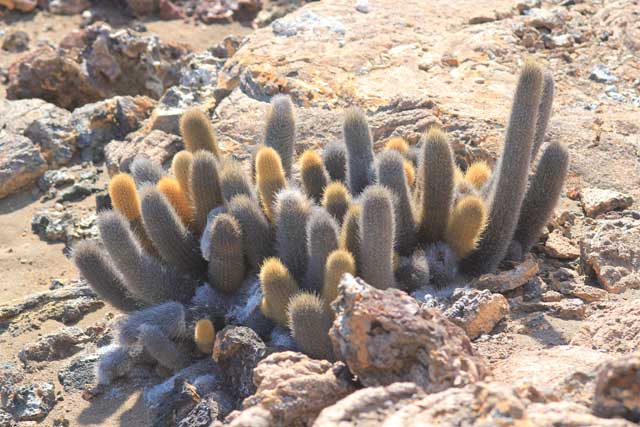 The lava cactus is the first species to colonize such volcanic habitats in the Galápagos. Both species of plants are endemic to the Galápagos.
On the boat ride, we saw many pelagic birds including Nazca Boobies, Blue-footed Boobies, Red-necked Phalaropes, Galápagos Shearwaters, Eliot’s Storm-Petrel, Red-billed Tropicbirds. A probable Bryde’s Whale put in an all-too-brief appearance. A pod of Bottle-nosed Dolphins rode our bow wave for a while, always a treat. 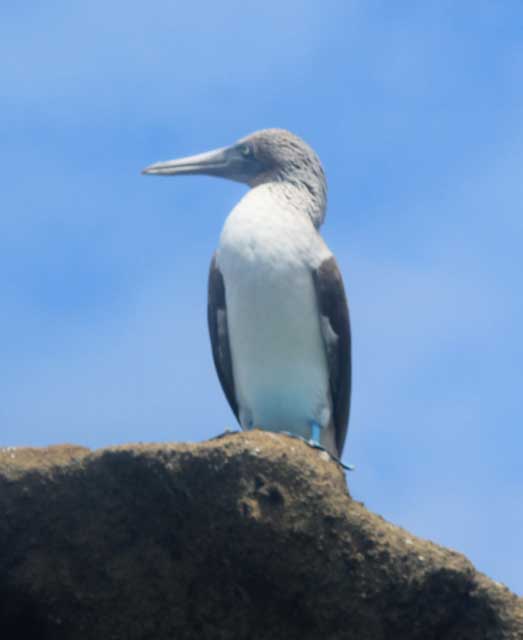 Manta Rays were jumping out of the water for much of the morning cruise.
Along the shores we saw Swallow-tailed Gulls and Lava Herons. A few American Oystercatchers with their long red bills and striking black and white colors added some contrast to the gray rocks. A few people got to see the Galápagos Hawk and Galápagos Penguins.
We also went snorkeling at the base of Pinnacle Rock. A diversity of fish was a real treat and a few students got to swim with Galápagos Penguins.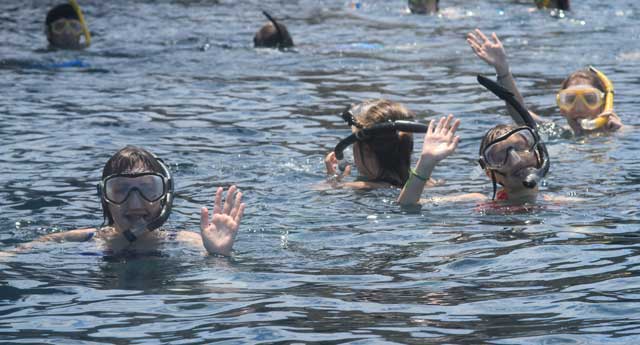
Tomorrow, we sail in the morning for the island of Isabela.