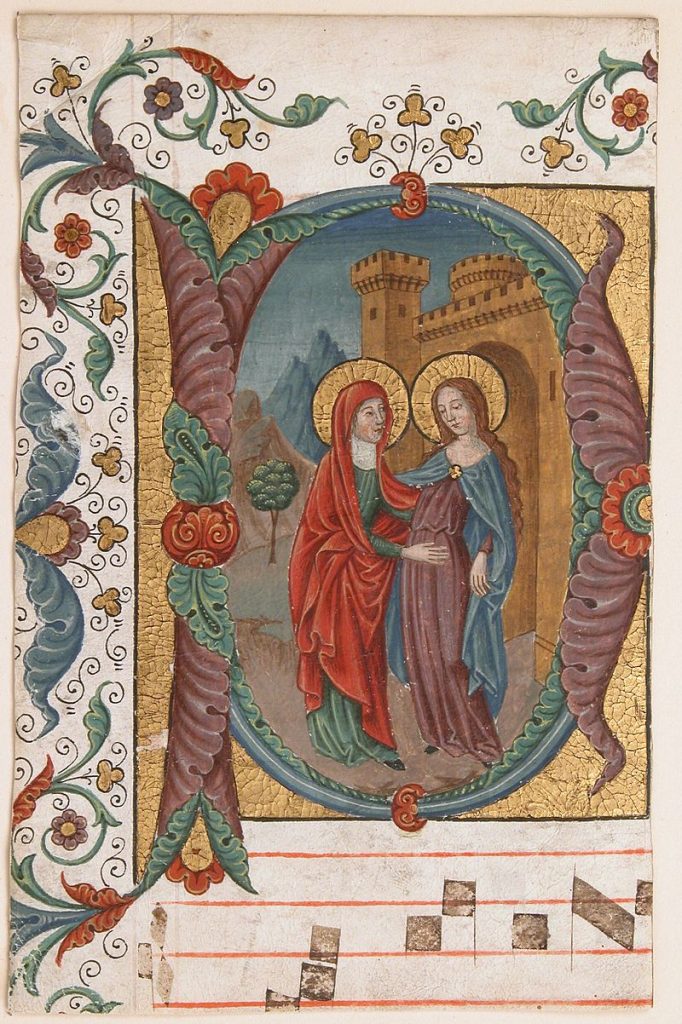
In 1930, Belle de Costa Greene, then director of the Morgan Library in New York, identified a forged medieval manuscript which had been misattributed to the Spanish artist Maestro Jorge Ingles. Since then, over 200 forged medieval manuscripts have been attributed to the same hand, now referred to as “The Spanish Forger.” Active in the late 19th to early 20th centuries, the Spanish forger combined stylistic and thematic elements from authentic medieval materials to create their convincing forgeries. The forgeries have since been identified by mistakes made in illustrating religious themes and their subjects with sweet facial expressions uncharacteristic of medieval manuscripts. Very little is known about the person behind these forgeries, they’re likely not even Spanish, but their impact is far-reaching as they have fooled many galleries, museums, and experts of art history. In 1978, the Spanish Forger was the subject of an exhibition at the Morgan Library, and they continue to be popular today with their works highly valued on the art market.
By Annie Muller
Sources:
Backhouse, Janet. “The ‘Spanish Forger,’” British Museum Quarterly 33.1/2 (1968): 65–71.
Lescaze, Lee. “The ‘Spanish Forger’—A Mystery Show.” The Washington Post, 21 May 1978.
Voelkle, William and Roger S. Wieck. The Spanish Forger. New York: Pierpont Morgan Library, 1978.