
Forensic scientists use several approaches to analyze crime scenes and evidence. Some techniques produce highly reproducible laboratory test results, while others are subject to varying human interpretation. Blood pattern analysis is one of those that is less likely to have the same results when analyzed by multiple experts.
Observation is one of the most essential steps in the scientific method and the basis of blood spatter analysis. Blood spatter experts observe blood’s shape, size, location, and distribution and use concepts from biology, physics, and mathematics, like blood behavior, capillarity, cohesion, distance, and angles, to provide information about what could or could not have happened. These inferences help the investigator understand the crime’s sequence of events, corroborate witness statements, and include or exclude suspects.
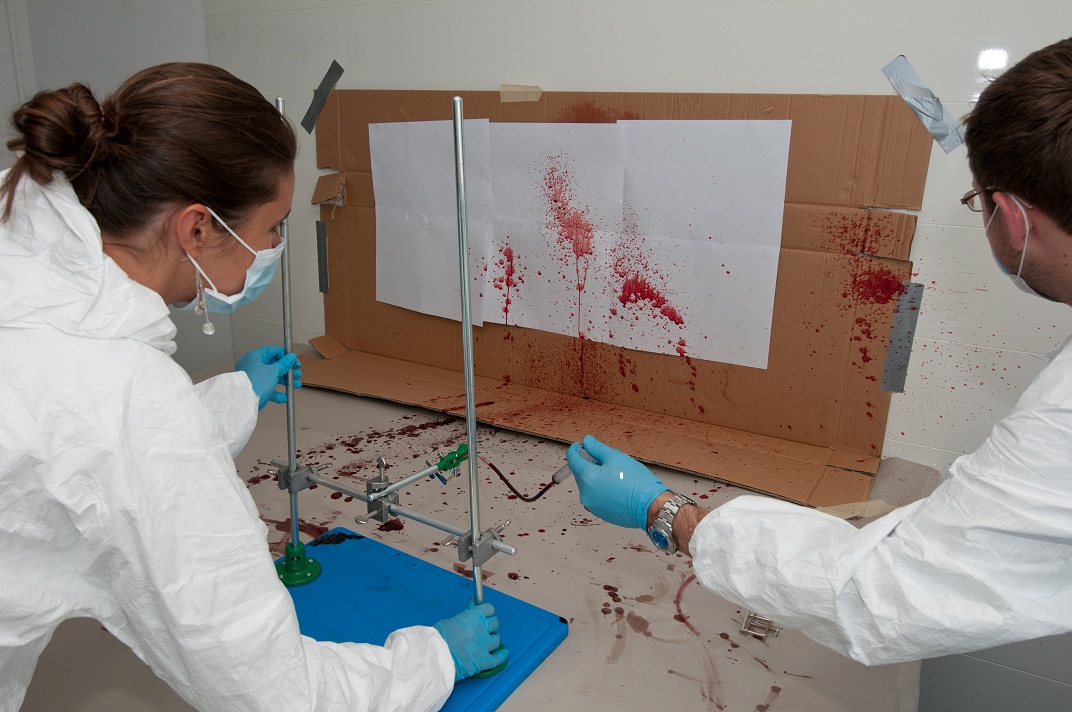
Considering the extent of scientific methods involved in the analysis of blood patterns, the inferences generated by different experts should be more consistent. However, this is not always the case. For example, in the 2003 murder case against Michael Peterson, as documented by the Netflix series “The Staircase,” blood spatter experts Duane Deaver and Henry Lee had opposing views on the same pattern, resulting in different opinions on what happened at the location of the “crime.”
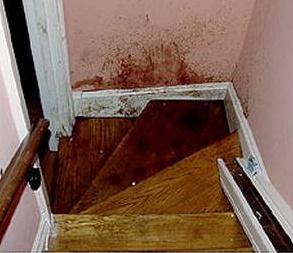
My hypothesis for the disparity in their conclusions is the plague of confirmation bias. The scientific interpretation of the pattern depends on what the experts observe, but I believe they saw what they wanted to see. Both experts possessed too much information about the case before scrutinizing the scene, which influenced what they chose to see and ignored. Deaver was technically working for the prosecuting party and inherently looking for evidence to prove that Peterson killed his wife. Furthermore, he tried reconstructing an improbable scenario based on his pattern interpretation to confirm the prosecutor’s theory.
On the other hand, Lee sought exclusive or exculpatory evidence to prove that Peterson’s wife died from an accident on the staircase. DNA expert Timothy Palmbach said, “He (Deaver) worked from the end result backwards. That’s dead, polar opposite to good science.” The blood pattern analyst should be shielded from bias-informing details about the case, whether from the prosecutors, defendants, or the press.
In conclusion, confirmation bias undermines and corrupts the science of blood pattern analysis. However, I wonder if an attacker with expert knowledge about blood patterns could alter the patterns to throw the investigators off their scent. That would make for an excellent documentary!
(Word count: 399)
Confirmation bias is a much more serious issue than I realized. The way you explained the effect of a confirmation bias within the “The Staircase” case, really made me question how blood spatter analysis is handled in specific cases. In the end, I find it very interesting how two people can be examining the same thing an get to very different conclusions.