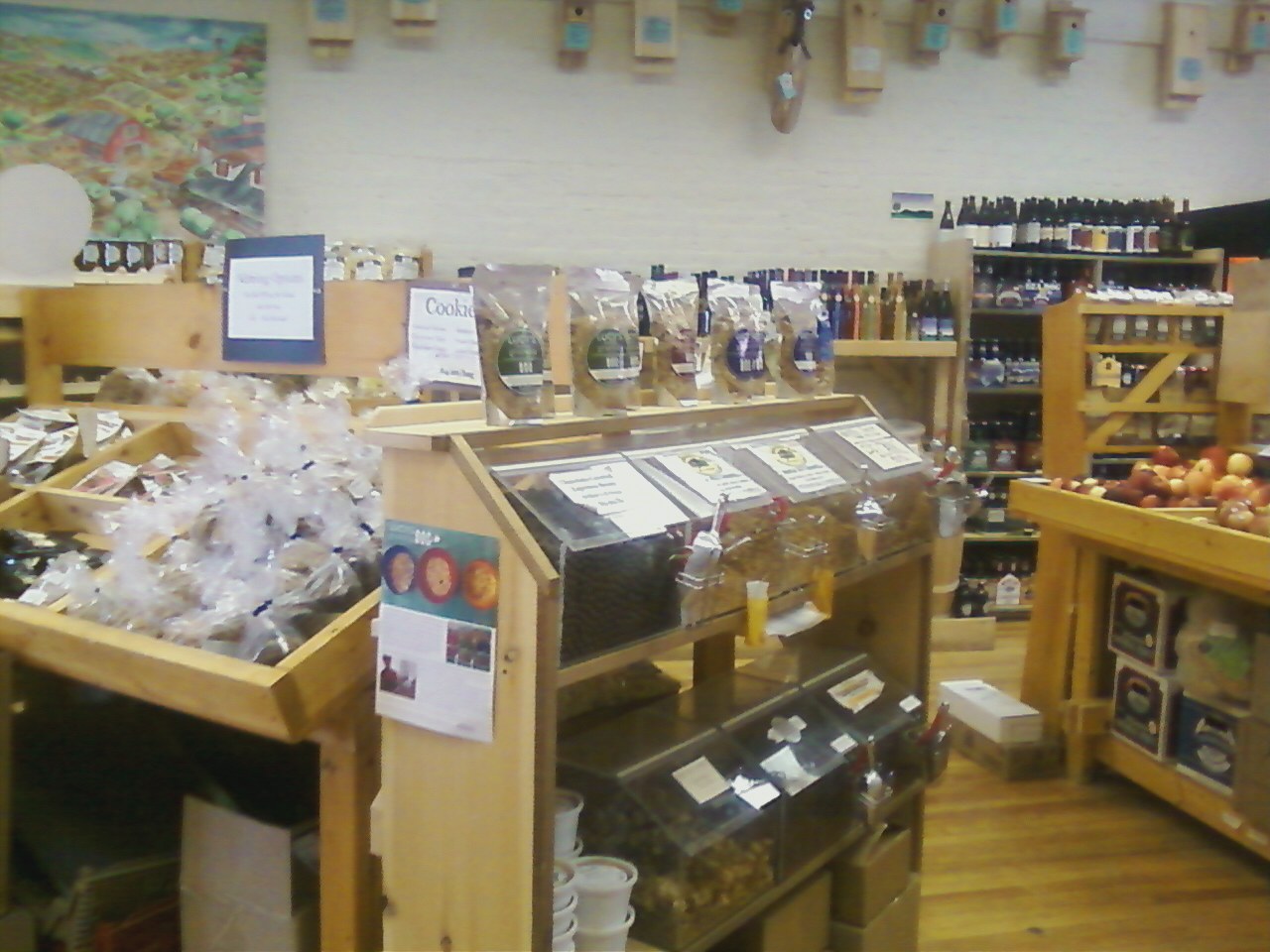
 Barrels Community Market is located in downtown Waterville, on Main Street. The façade of the store is a large window and inside, it is a brightly lit, friendly space. Colorful paintings and murals adorn the walls. Fresh produce, meat and dairy products and other foodstuffs are located at the front of the store. Crafts, including soap, candles, greeting cards and pottery, are located towards the back. There is also a small kitchen at the rear of the store, where employees make prepared food on a daily basis, and offer cooking classes to the community.
As Melissa, the assistant manager, explains, Barrels is designed to act as a “local foods market.” It operates with the mission of selling locally produced food and handmade crafts. “Local” is defined as “within shooting distance of the store”—in a twenty-mile radius of Waterville if possible, or within the state of Maine if not. The farms that sell their produce to Barrels are located in Albion, Winslow, Skowhegan, Pittsfield, and other nearby towns. Another key aspect to Barrels’ mission is to be actively involved in the Waterville community, through educational outreach to area schools and making high quality, organic, local food available to nearby hospitals and summer camps.
While Barrels is a non-profit organization, it sustains itself through its business. And as a business, Barrels provides a look at commodity flows in Maine that occur as the result of many factors including, but certainly not limited to, capitalist impulses. Not one person I spoke to, including Barrels’ employees, farmers, and customers, referenced cost-efficiency as a motivation for doing business with Barrels. As Lois, who works at the Snakeroot Farm in Pittsfield, said, “Economically, Barrels isn’t as good as the 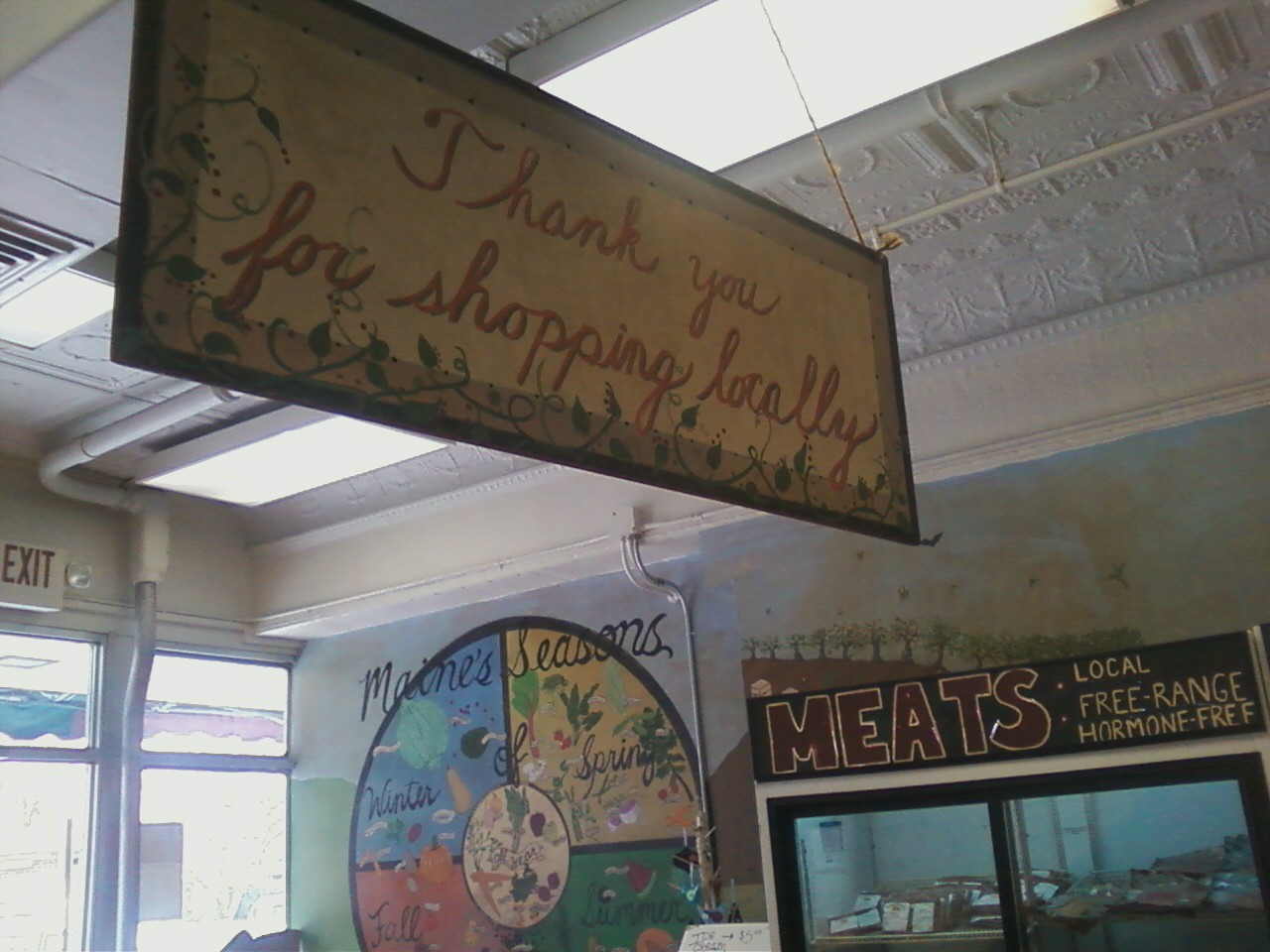 farmer’s markets, but I like supporting their mission, what they stand for.” This statement embodies the importance of examining motivations other than capitalist impulses in assessing sites of commercial exchange of material goods.
The first of these non-economic impulses is the desire, as an urban dweller, to feel a connection to the rural zones of Maine. Berol, a Colby student who shops at Barrels at least once a month, said that purchasing food there makes her feel more of a relationship with the Maine rural landscape and farms. “I grew up around farms in Vermont,” she said, “and I love being able to feel that connection by buying local vegetables.” Indeed, Barrels provides a welcome glimpse into the American collective understanding of Maine: painted trees cover the walls; maple syrup fills shelves in front of the door; a large sign proclaims, “Thank you for shopping locally.” Barrels is a welcome respite from the depressed (and occasionally depressing) Main Street of downtown Waterville. In fact, the desire to contribute to the economy of downtown Waterville is another major motivation for doing business with Barrels. “I like to support the local economy,” Berol said. “It’s important to me.”
Finally, both farmers and consumers want to support Barrels’ non-economic goals. According to their website, Barrels’ mission is “to support local farmers and craftspeople by providing an outlet for their products; to provide local, affordable goods to the greater Waterville community; to revitalize Downtown Waterville through an emphasis on local productivity; to offer diverse 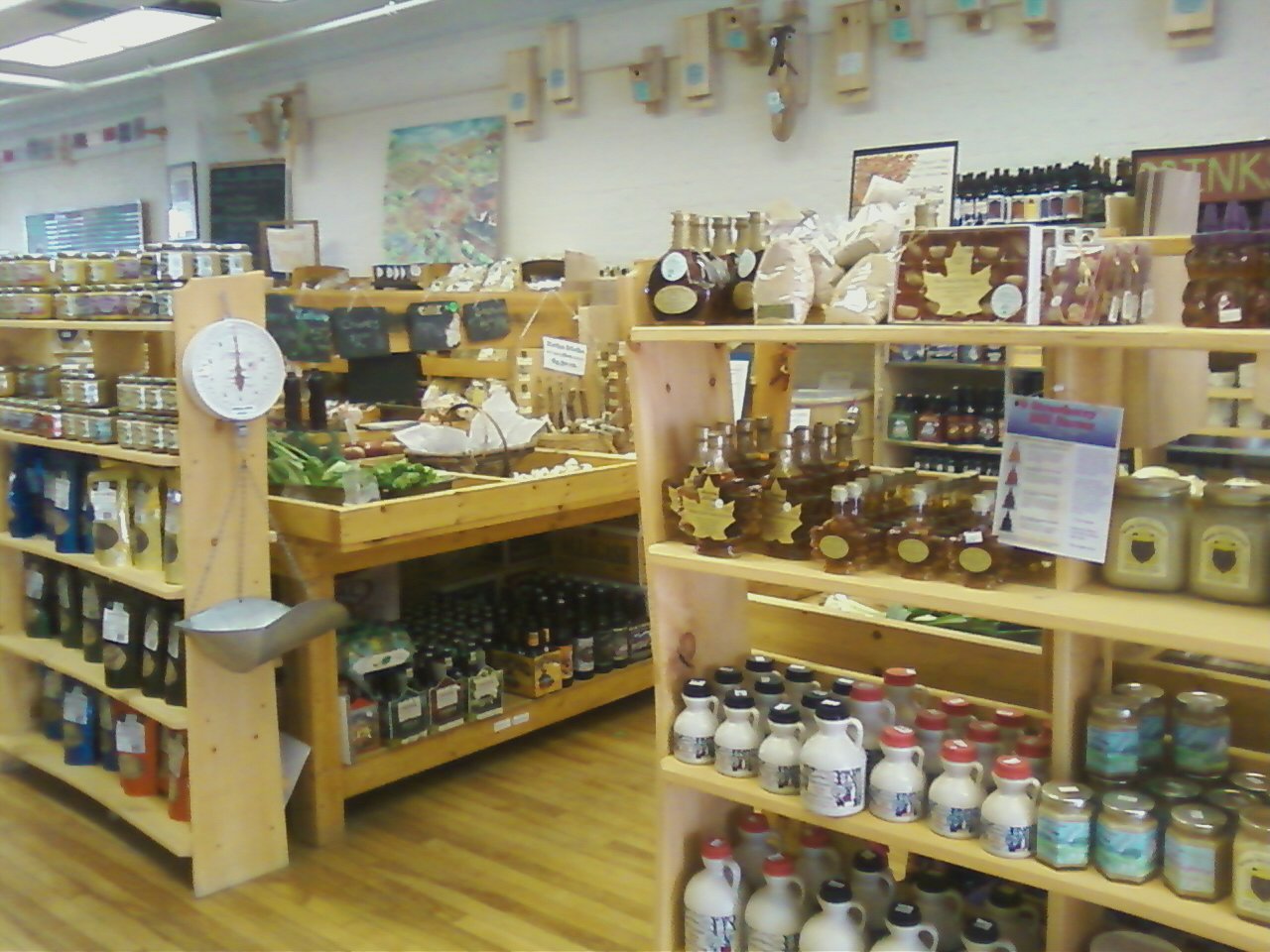 educational and community involvement opportunities.” This mission is an important factor in the decision of local farmers to sell their products at Barrels, as well as the decision of Waterville residents and Colby students to spend some extra money on groceries, instead of driving to Walmart or Hannaford.
Barrels Community Market functions as an exemplar of William Cronon’s argument regarding the inextricable connection between the urban and rural parts of America. However, Barrels also serves to call into question Cronon’s method of examining capitalism and the market as the exclusive forces acting upon commodity flows, and the development of both city and country. The individuals who do business with Barrels demonstrate that there are far more human motivations at play, even in the marketplace.
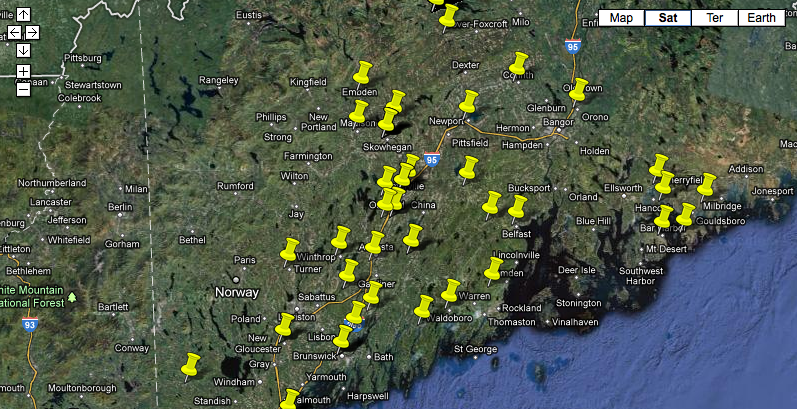 Map of Barrels Market’s local suppliers, courtesy of Barrels Market