The Occult Sciences: The Philosophy of Magic, Prodigies, and Apparent Miracles has been the center of my research for my pet book project. By just looking at the title, it’s easy to assume that this could be some sort of fantastical novel or a work of fiction. But through my previous blog posts, I have discovered that this is not the case. Based on the information I have found, I have a few ideas of who the target audience to this book might be. Personally I think that the audience for this version of the book (at least during the time it was first written) are students, academics, or people interested in medical information or practices.
First let’s talk about the book itself and how it clues us into who the audience may be. One important clue that you can’t look over is the content. The content inside the book isn’t fiction, but rather something more scientific in nature. Some of the chapters include topics such as “Preparations of Drugs and Beverages”, or “Invincible courage, produced by Meats and Potions”.The book also includes an extensive index, relating to the many references the content of the text makes. This index tells me that a lot of research went into writing and information present in this book. I view this as proof that this book is made for academic use (otherwise, why go through all this effort).
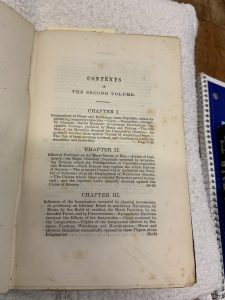
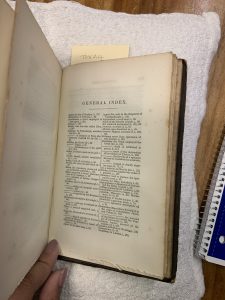
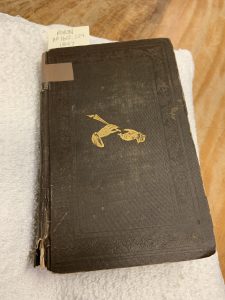
Physically, the book itself is not very big. It’s around the size of an average book or so. While typically when we think of academic books, we may tend to think of larger text books. But, I think that the size of the book might be for a specific purpose for the target audience. As mentioned in a previous blog, the cover is not exactly exciting (telling me that it is not a book that people would leave on a coffee table for decoration). It’s size leads me to believe that it is made for easier access and reference. Since some of the topics in the book are sort of “how to do” topics, it makes sense to me that a smaller book would be easier to have out.
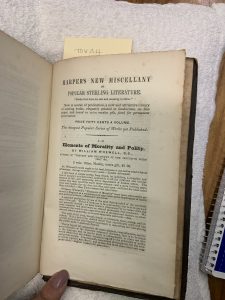
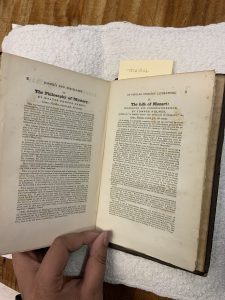
If you look at the very back of The Occult Sciences: The Philosophy of Magic, Prodigies, and Apparent Miracles, there are a few pages of advertisements by the Harper and Brothers Publishers (a New York based publishing company). While these books portrayed in the advertisements are not by Anthony Todd Thomson, they appear to be similar to this book. By similar, I mean more academic or educational in nature. Some titles from the advertisements are: Elements of Morality and Polity, The Philosophy of Mystery, and The Life of Mozart: Including His Correspondence. While clearly these are not anywhere near the same topic as my pet book, they do appear to be at least educational. This makes me believe that the publishing company was trying to target a specific audience by placing these specific titles in this book.
Another significant piece of evidence is the author himself. This book was translated from French by Anthony Todd Thomson. As one of my other blog posts explains, he was a general practitioner, had a prevalent reputation in the medical community, and was a popular professor. Almost all of the other books that he wrote or translated appear to be medical related as well. Based on his popularity in his field, I assume that his followers would also be reading the books he has written. Many of his followers were medical students, or medical personnel. So it makes sense to me that these would be the people reading The Occult Sciences: The Philosophy of Magic, Prodigies, and Apparent Miracles.

While I could not find anything related to what the price of the book would have been, I feel as though the evidence I have been able to find is significant enough to give me an idea of who the audience may be. Because of the book’s content, size, advertisements, and author, I think that it is safe to assume that the people reading The Occult Sciences: The Philosophy of Magic, Prodigies, and Apparent Miracles are students, academics, or people interested in medical related information.