By 1760, when my pet book was published, shipboard navigation had transitioned from being something more of an art to something more of a science. There was still a great degree of art involved, however it had for the most part become something more readily observable than it was a century earlier (looking at the precision of maps is enough to explain that much). It was, however, difficult work.
By the 18thcentury (especially the latter half), both France and Britain had established hydrographic surveying offices whose job it was to map coastlines and make the maps available to naval and merchant vessels. The greatest improvement by the time of the book’s publishing, however, was the sextant, which enables mariners to make a precise calculation of latitude using the sun (and by 1751, the moon). While latitude was deductible, it was not until later in the century that longitude would be as well, with the invention of the first marine chronometer, which enabled sailors to keep track of the time in Greenwich and thus make differential calculations (in fact, the first prototype was invented a year after Murray’s Rudiments was published). These improvements made navigation substantially more practical, although it also meant that navigation now required a substantial amount of knowledge in trigonometry, geometry, and arithmetic.

All this brings me back to Murray and his time aboard HMS Magnanime. On this ship, he served in the capacity of the ship’s schoolmaster, whose job it was to instruct the officers-in-training, also known as ratings and midshipmen, on the daily duties of a naval officer. They were often called “Young Gentlemen,” for which reason Murray specifically lists them as such on the title page of his work. At the time, officers were not promoted from amongst the regular ship’s company, but instead grew up in the sea service from a young age (typically around eleven). They would serve in this capacity for a few years, until such time as they made lieutenant, typically after about 6-8 years.
One of the main duties of ratings and midshipmen (the “young gentlemen”) on board a ship was to keep a log of the ship’s navigation. This log would be inspected by the other officers and graded during their Lieutenants examination. The schoolmaster would be responsible for this instruction, as well as teaching them the “Rudiments” of proper navigation— namely trigonometry. There is an excellent scene in the movie Master and Commander which depicts this instruction, and while I could not find a video, I was able to find an image (below).
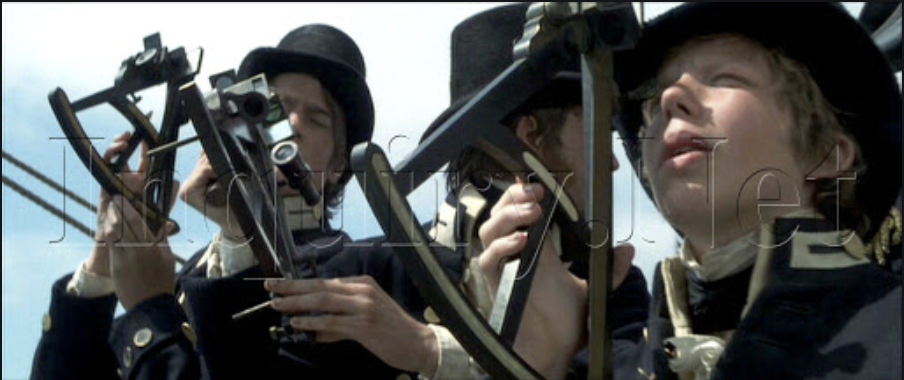
I was able to find out a little more about HMS Magnanime, as well as track down some information about one of the “young gentlemen” whom Murray would have instructed. He served on board the ship from 1758 onward (I was unable to find a date for his discharge, so very likely until 1763 when the ship was paid off), operating in the capacity of a schoolmaster from 1760. During this time, he fought in two notable engagements: the first was a raid on a French port which saw over 100 French vessels burned; the second was the Battle of Quiberon Bay, a major engagement that is a part of Britain’s Annus Mirabilis of 1759 and also is held to have heralded Britain’s rise as the world’s greatest naval power.
The only rating or midshipman I was able to find from Murray’s time was a midshipman by the name of William Peere Williams. He served on the ship with Murray from 1759-1762, until he was promoted to Lieutenant and posted to another ship. In time, Williams would be promoted through the ranks and attain the highest rank in the Royal Navy, Admiral of the Fleet. And all from the humble beginnings of a student of Murray!
Murray’s book would have been a useful aide to many ships. At the time, since no uniform training program existed, schoolmasters and ratings were expected to purchase their own materials. By 1800, the Royal Navy had 285 warships active, and with constantly shifting crews and the need to train more officers, Murray’s book was likely known through the navy. In fact, at the time, Britain was in the midst of a major war and would have been expanding its navy. Not just the Royal Navy, but the merchant fleet, too, would have need for such a book. There would likely have been a (more limited) audience in North America and the British colonies there, as well, as evidenced by the fact that the book arrived at Waterville College by 1820. The book is, however, focused on shipboard navigation, and would thus have a rather limited audience outside of merchant and naval shipping.
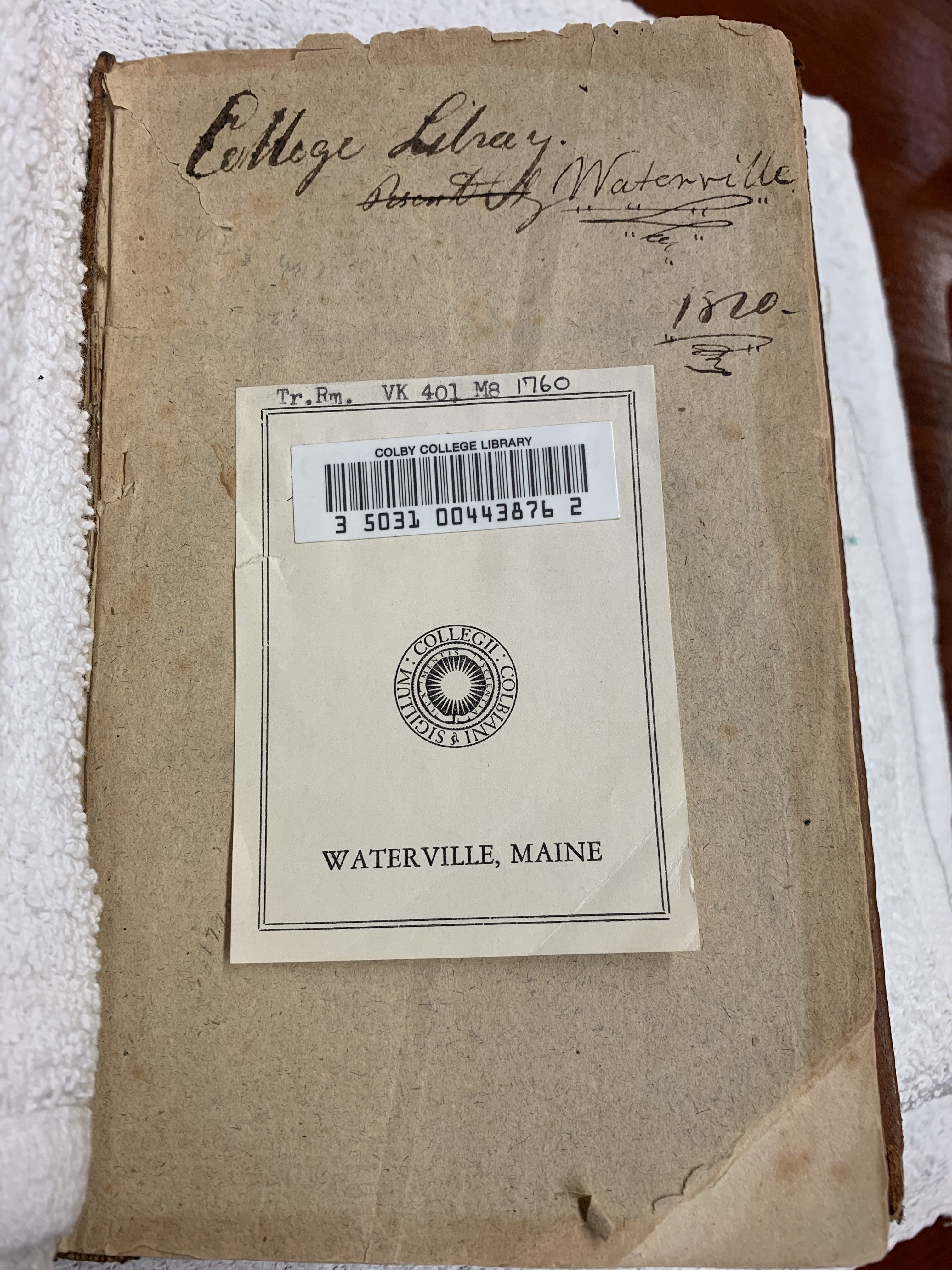
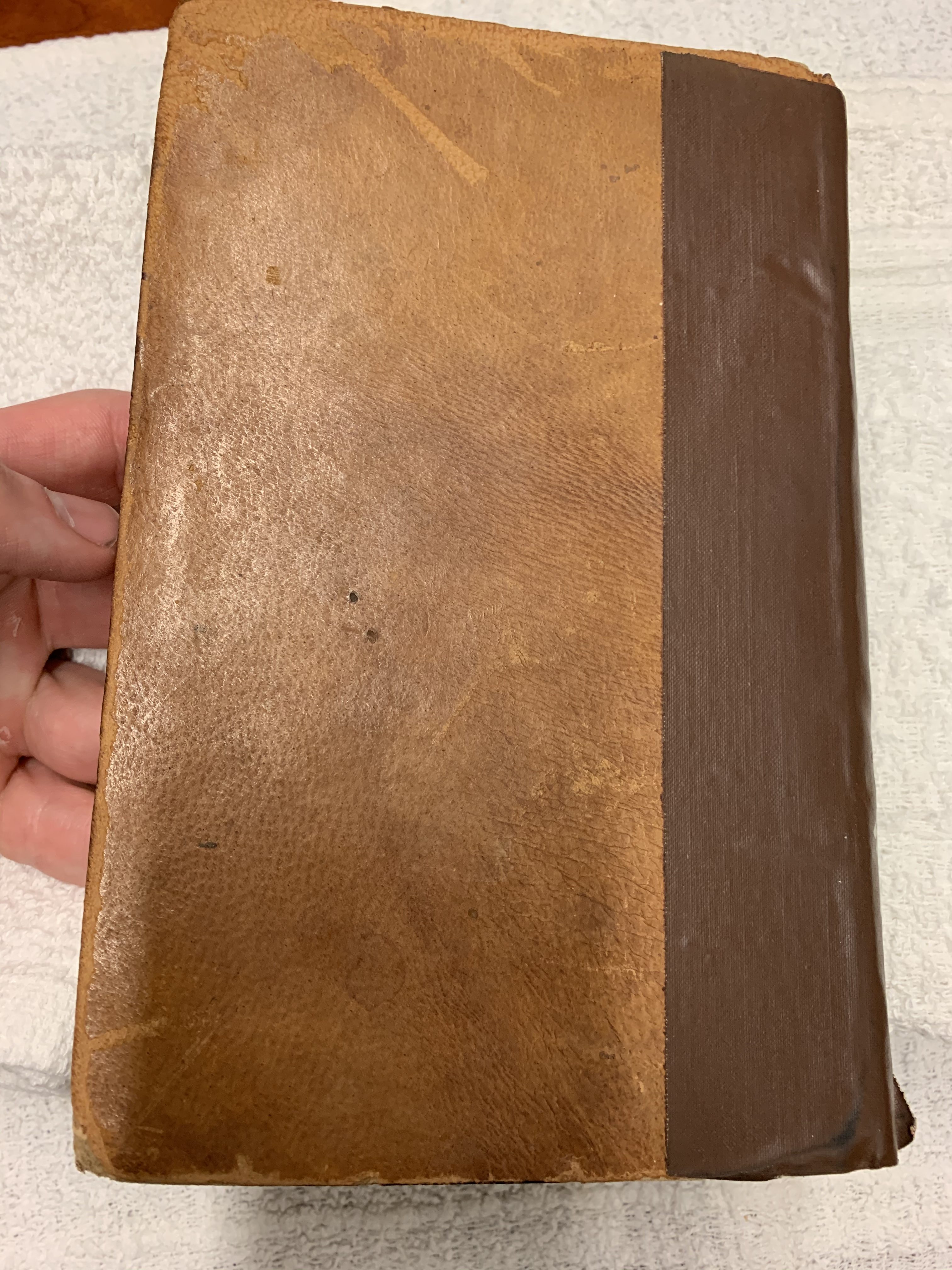
With the intended audience in mind, the book could not have been very expensive. Warrant officers and ratings did not have a great deal of disposable income during the period, and as such the book could not have cost a fortune. This is further evidenced by the cheapness of the binding that is present on the copy I have been using. Ultimately it is a manual of navigation, intended to be brought onboard a ship for years at a time and used rather heavily. By its very nature, the book is meant to be first and foremost functional.