
By Lizzy Gorence

Within the human body lives a diverse and abundant population of microorganisms. These microbes populate the surface and deep layers of the skin, the saliva and oral mucosa, the conjunctiva, the urogenital tract, and most significantly, the gastrointestinal tract. Although still not entirely understood and catalogued, studies conducted through the Human Microbiome Project (HMP), an initiative of the National Institute of Health, have revealed the presence of many thousands of species of bacteria, fungi, and archaea, which populate the human host. In fact, HMP studies indicate that there are at least ten times as many bacteria as human cells in the body, and that microorganisms account for approximately 1-3% of total body mass.
But we are in a human anatomy and physiology class, not a microbiology class, so why do we care? Well, without the presence and diverse composition of these microbial populations our own human cells would be unable to carry out the vital processes about which we’ve learned throughout the JanPlan term. Examining the mutually beneficial nature of the human-bacterial relationship is one of the central goals of the Human Microbiome Project. While the human microbiota varies in abundance, composition, and size among individuals, it is similarly vital for every human’s health and survival. Imbalances in our gut microbiota can have serious implications for our overall health because many bacteria in the digestive tract are able to break down certain nutrients that humans otherwise could not digest. Additionally, certain microbes that are ubiquitous in the gastrointestinal tract, such as Clostridium difficile, are also opportunistically pathogenic.
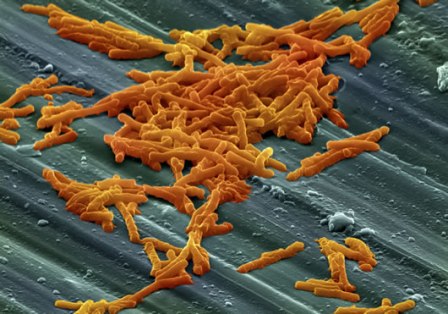
C. difficile causes illness in the human host when granted a competitive advantage over their cohabitating organisms. It usually gains this advantage in the bodies of people getting medical care, who may have taken an antibiotic that targeted an organism that competes with C. difficile for nutrition. It can also be transmitted through feces and is commonly transferred between patients on the hands of healthcare providers. Thus, C. difficile infections are categorized as healthcare-associated infections (HAI). While most types of HAIs are declining, C. difficile remains at historically high levels. When C. difficile populations increase to pathogenic proportion, the infection causes cases of diarrhea and intense abdominal pain linked to 14,000 American deaths annually. An estimated $3 billion in excess healthcare costs annually are spent on managing C. difficile infections. Therefore, finding effective and affordable treatment for this particular HAI is imperative.
Traditionally, when we think of treatments for infectious disease, we think of antibiotics. However, our developing understanding of the human microbiome has led many to believe that probiotic therapies will be just as (if not more) effective in the treatment of infections like Clostridium difficile. Personally, I’ve always found the concept of fecal transplantation completely fascinating. Once you move past the “ick factor,” it’s an incredibly effective and fairly intuitive treatment. By transplanting bacterial fecal flora from a healthy donor to an ailing recipient via enema, the competitive environment of the healthy gastrointestinal tract is restored. At the Mayo Clinic, the fecal transplantation program yields a 90% cure rate for C. difficile infections. While the practice of fecal transplantation has been streamlined over the 50 years since its introduction, companies like Rebiotix, out of Minnesota, seek to further standardize the treatment.
This small biotechnology company has developed a microbiota suspension that can be easily preserved, ordered on demand, and administered by medical professionals. In addition to sufferers of C. difficile, the Rebiotix treatment can potentially be effective for those afflicted by Crohn’s disease, Ulcerative Colitis, or Metabolic Syndrome. While their RBX2660 suspension is currently in phase 2 of its clinical trial, the product is poised to enter the market in early 2016. While products like this are still rare, and may seem foreign to those who grew up associating antibiotics with treatment and bacteria with illness, probiotic treatments represent a new understanding of the human body and the organisms it harbors. By augmenting microbial populations, probiotic treatments harness their power, and use it to improve the health of the host.
References:
- “Human Microbiome Project.” National Institutes of Health. NIH, n.d. Web. 27 Jan. 2014.
- “Clostridium Difficile Infection.” Centers for Disease Control and Prevention. Centers for Disease Control and Prevention, 01 Mar. 2013. Web. 27 Jan. 2014.
- “Clinical Updates.” Quick, Inexpensive and a 90 Percent Cure Rate. Mayo Clinic, n.d. Web. 26 Jan. 2014.
- “Powerful Therapy, Delivered.” About Clostridium Difficile Infection. Rebiotix, n.d. Web. 27 Jan. 2014.