Page 30 of 33

Museum Walkthrough

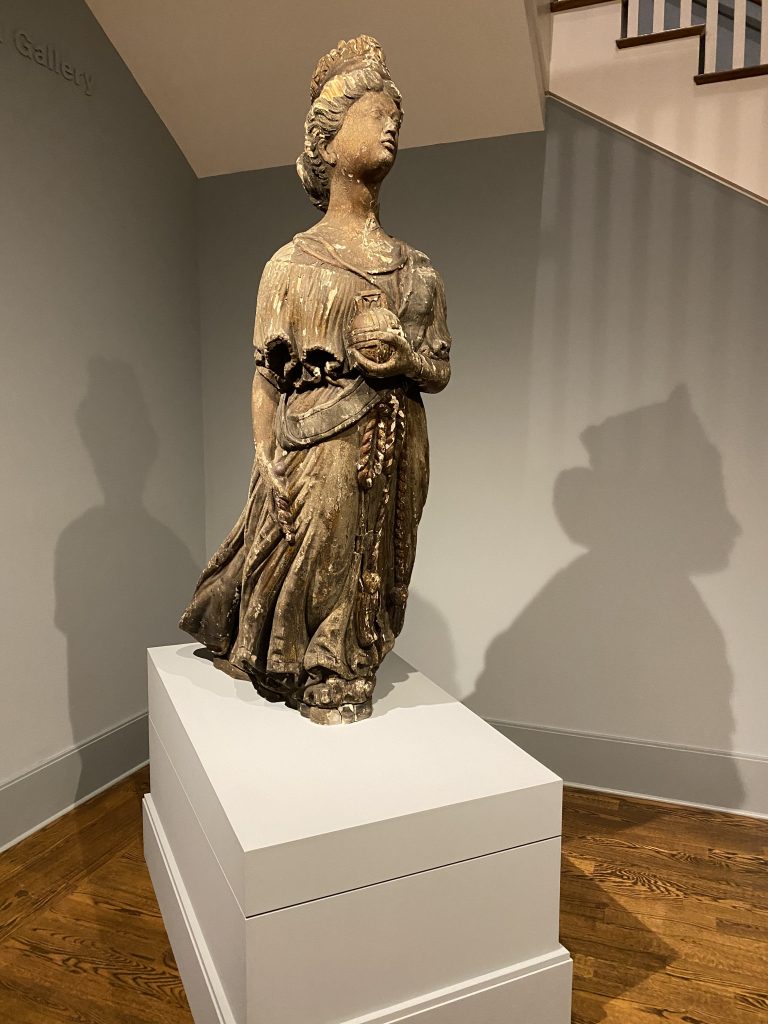
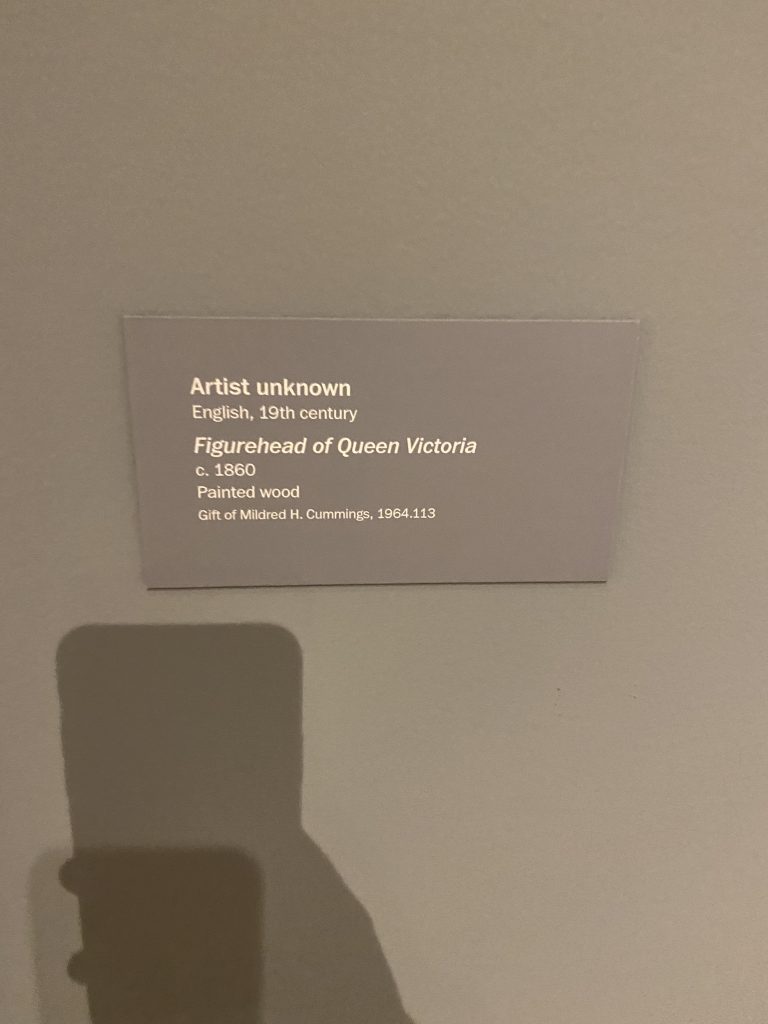
When walking through the museum, I took note of all the different mediums and craftsmanship. I wouldn’t be able to say definitively if certain pieces required more skill or not, as Professor remarked the other day that the stylistic choices didn’t always translate to artistic ability. In the area of the sculptural pieces, I would like to take into account the technologies of the time. I saw a wooden sculpture that had been crafted in 1860 and it was fascinating to see.

I saw many oil paintings, many of them on canvas and some on linen. Some of the paintings, depending on their style, gave me the impression that the craftsmanship was a bit higher but at the same time I’m not really wanting to say specifically if one needs more craftsmanship or not. I saw a good number of the sculptures made out of bronze but this one made of wood was amazing to me and it seemed to require a high amount of craftsmanship.
9/14. Ways to perceive the past

The most important takeaway from yesterday’s class is the idea of how we perceive the past. Ethnocentrism is something we try to avoid nowadays, which refers to judging other cultures with the values of our own culture, but it seems that we always do that unconsciously in regard to the past, judging the past, whatever its culture or lifestyle or anything else, with the modern values. Is that always true that human is continuing progressing throughout the history? Is every aspect of modernity superior or better compared to the past? One theory called the “teleological” point of view thinks that history is a straight line and things always get better and better while moving forward in time. But that may not be the truth. How should we define “better”, for example? The current meaning of “better” may refer to phrases such as faster, wealthier, life being more convenient and intelligent. But these are the values we contemporary people prefer and not necessarily what the ancient would feel needed. Just like the example raised in class, there is no absolute “good” or “bad” distinction between life in the modern city or within nature like lake and mountain–just a matter of personal individual temporal preference. These above thoughts and reflections are definitely insightful, for in the future when I think about the past, instead of being pitiful at the first second, I may ask, what it is like through the eyes of the ancient.

AR257 Day 2

Our second day of class was very enlightening, and I believe my favorite part was our short conversation on humanism. It seems to place a lot of things in perspective for me when I think of how the ‘progression’ in the art and the history of the Renaissance move forward in parallel, given that shift in mindset from “viator mundi” to “faber mundi”. When I think of the ways in which men like Vasari spoke of art, specifically Florentine art, it makes me see them in a much less favorable light if Im to be honest. Their arrogance makes me want to look more into the work of the Middle Ages and such to see what was so wrong with it.

I also really loved Professor’s callout about the naming of certain art genres and their origins, drawing from the Goths and other ‘barbaric’ peoples. It builds upon the shakiness of that teleological frame of looking at history.

Museum Observations

Entering the Colby College Museum of Art, I can feel a level of comfort. In relatively rural Maine, such a cultural center for the arts is rare, and furthermore, because of the traditional layout and amenities the museum has, I feel transported to a more urban city. The lobby itself is reminiscent of modern art museums across the globe, with a welcome desk positioned next to a small cafe. The floors are separated by time, genre, and in some instances, there are areas designated for singular artists. The lighting varies from gallery to gallery but fits the tone of the work I was looking at. One of the only peculiar things I noticed was that the walls sometimes were painted different colors for different piatinings. 

Something I enjoy looking at in museums is the acquisition numbers. I feel like which paintings a museum has out shows the current ambitions the institution has. However, when seeing the time the museum acquired the painting on display provides a more indepth look into the history of the museum’s culture. I have to admit that I did not spend enough time to gauge a sense of the College’s acquisition history, but I imagine this term I will reach that point. Also, curiously enough, I realized that this is only the second museum I have been in that was attached to academic buildings (the other being the Addison Gallery of American Art at my highschool). Going to museums in Yale and MIT, I think I enjoy being connected to academic space, especially when considering I am a student at the College. For me, I feel a sense of belonging more to the museum, and I hope that this emotion will only grow. 

Museum Craftsmanship

During my second trip to the museum, I took note of the craftsmanship of the works displayed there. One piece that really stood out to me and showed a remarkable level of craftsmanship and skill was “Bacchanale Russe” by Malvina Hoffman. This sculpture was not only well carved and detailed, but I was impressed at its engineering as well. It depicts two young boys mid- motion, each with one leg raised as they seem to leap across the ground. The proportions of the statue are done perfectly so that the statue can balance and not tip over. This is additionally impressive because the statue does not have a large base to counterbalance the weight of the figures. This is an especially masterful work not just because of the realism and aesthetics of the carving itself, but the engineering it took to allow the statue to be freestanding. When the statue was made in 1917, there were no computers to help the artist engineer the statue, all the calculations had to have been done by hand, lending even more to the impressiveness of this piece.

Museum Craftsmanship Reflection

After visiting the museum with the idea of craftsmanship in mind, my eyes were first drawn to the sculptures that stood at the center of the rooms. Seeing all the little details on the bronze statues left me in awe as I thought about the amount of time and work that must have gone into making them. The paintings were also subject to my questions. I saw how the colors blended together and how well they worked with their environment. I saw how the grass and trees were painted as if you could see some of the individual leaves. The little faces of the people in the paintings also just held so much detail along with the buildings that surrounded them. Seeing all these things just made me wonder how long they must have spent to create such an image and the difficulty of the work they did to make it.

Class Reflection

The question that arose in class Does art ever really get better? is one that I think it very interesting to consider. We talked about Vasari’s book and how he mentioned that the dawn of the Renaissance gave people a certain type of relief that art was getting “better”. This sparks the interesting question however, does it ever really get better? Professor Plesch brought up the argument that there was the capability for these types of works to be done at an earlier time; however, there was never a need for them so they did not happen. The idea that in most cases, it’s societal need instead of real innovation is one that most likely applies to many other cases outside of the art realm as well. I am also quickly learning that prospective can be everything when dealing with thoughts and ideas about art. When speaking about the Gothic period vs the Renaissance, it was clear that many authors are biased about which period was ultimately superior. These authors thought that the Renaissance period was a new innovation in art, the start of something that could not have happened in the Gothic period. Reality is, these paintings could have been produced in earlier times, but there was no demand for them.

Museum Reflection

Going into the museum, I instantly noticed how everything was laid out. It is not a crowded space, and the bigger the piece, the more wall space it had around it. Some works even had entire walls dedicated to them, as not the distract the viewer with too many things going on at once. The wide open spaces allow for people to walk in whichever direction they want, or to readjust your position so you can further appreciate the work at another angle. Lighting was all focused on the works. There were very few bright lights to illuminate the rest of the rooms, the majority of bright lights were spotlights on the works, so not to distract viewers from anything else.

When going between exhibits, one feature I recognized were the walls were painted or art was installed in places where the background color enhanced the art as a whole. Certain displays did better with darker or more colorful walls, while others were better in lighter colors and more natural light. It was clear that a lot of thought and time went into installing these displays, so that the works presented themselves the best.

9/14 Class & Subsequent Museum Visit

In yesterday’s class, we talked about the Middle Ages and how even the name of that time period suggests that it was a period of buffer between two greater (more noteworthy) periods—Antiquity and the Renaissance. We talked about the negative connotations of the Middle Ages versus the positive connotations of the Renaissance. As part of this discussion, I learned that the art of the Middle Ages is referred to as Gothic art because it was art that came out of the fall of the Roman empire (at the hands of tribes from the north—one of which was called the Goths). We considered our own perception of gothic art (dark, medieval) and began to understand that our initial feelings about that style of art likely come from the negativity that the prevailing group in the Italian peninsula assigned to the style of art. This also explains part of the reason why Renaissance art was greeted with such exuberance—it looked more like the art from antiquity and in no way resembled the Gothic art that had taken over the peninsula. When I returned to the museum, I found myself asking a lot of questions about the use of color in Thompson’s work. I wonder why he keeps the colors that we see in nature true for the landscape portion of his work, but then chooses to make the human figures all sorts of vibrant colors with very little detail on the body. I am also curious to understand why he sometimes gives his human figures natural skin colors and why other times he does not (particularly as much of his work is a commentary on the African American experience).

Museum Reflection

When visiting the museum to see the way the pieces are displayed, the first thing that stood out were the frames. Often times, the frames on a wall would either stay the same or get grander and larger as it gets towards the center of the wall as people generally understand the center to be the central piece, or the piece that gets a lot of attention. There were also instances where a room would be separated by subject matter where different walls would have different subjects whether that be male or female portraits, landscapes with or without people, people in moments of rest, or children. If an entire room was of one theme or subject matter and one was not, then that wall was also painted a different color to denote the difference in subject matter. Unique paintings were also separated as a way of showing how different they were from the rest. I also noticed that the size of the room in relation to the pieces was also very important. Larger pieces get placed more spaced apart and in a large room where you can step back and look at it completely. Abstract pieces were also separated from pieces with known shapes and images. Ultimately, each section was set up in a way to draw the viewers attention in certain directions depending on where they enter from.

« Older posts Newer posts »

© 2026 RENAISSANCE ART

Theme by Anders NorenUp ↑