Page 29 of 33

AR257 Day 3

In this class we dwelled a bit on the connection between the reverencial description of the museum by Goethe and the idea of a museum being a ‘temple for muses’. I found the conversation interesting especially taking into account the questions some might have about the craftsmanship and artistic legitimacy of contemporary art.

We then dove into a conversation on altarpieces. I found this most intriguing as I really love churches and it brought up a lot of questions for me, specifically as Professor made the contributions about these pieces being out of their ‘natural habitat’, being stationed in museums. The altarpieces, she described, as almost utilitarian which is so fascinating, especially because they were so beautiful and some of the earliest examples of art that I had ever seen. Im excited to talk more about altarpieces and the way they were thought up in next class. A cute aside that we got into as well was about frames and how the frames are a crucial part of any work of art, which I would’ve never thought of.
9/16 Class

In class on Thursday we began by by discussing the problems with the modern museum’s emphasis on the individual artist. We talked about how this makes folks gravitate towards art done only by the people whose names they recognize, and this led to a conversation about anonymous artists. Professor Plesch implored us to think about how many of these anonymous artists were women, and I began to think about all the art that our culture has not engaged with in the way we have engaged with works by famous male European artists. We went off on a fabulous tangent about the art market, and I learned a lot about the manipulation of prices in art auctions, which made me think a lot about the perceived value of works we treasure as a society. I wonder how some of these famous works rose to their present levels of heady fame and the reasons why they surpassed works by anonymous artists. I think that the glorification of the artist in the modern museum has a lot to do with the extraordinary fame of artists and particular works of art.

9/16 Class

In Thursday’s class we learned about names. People are attracted to well known names because the popularity of them give off the sense that they are somehow worth more or are better than lesser known names. This in combination with the rarity of the piece often influences the minds of the people to think that a piece is more important, or better, than than others. In addition to taking away from lesser known artists, it also takes away value from pieces that have anonymous creators. This name bias prevents people from appreciating the art itself and just leave them chasing after name value.

We also talked about the issues with the word art itself. These pieces that we call art were things that served a purpose but we took away their functions and placed them as things to admire. This in turn brought us onto the question of museums as they have taken art that were sometimes meant to be studio tools or public structures, in other words, things that were not meant to be in museums.

9/14

In the second class, we discussed how the term “middle ages” insinuates that the medieval time period was a period of transition and lacked individuality. The term renaissance as “rebirth” shows that there was a notion that the classics died and had to be revived during the renaissance. We explored this bias also in our discussion about Vasari. First, we talked about the context of Italy at the time and campanilism. Vasari was openly bias towards Florentine art and the superiority of Florence. This led to our discussion of how the emphasis placed on masterpieces can be harmful because it reduces artistic diversity as the more common, mass produced art is left out of conversations in art history. We also talked about the different views on life on Earth between the middle ages and the Renaissance , specifically between “Viator Mundi” and “Faber Mundi”. Art changed in the era of humanism as artists began signing their work and society became more secular than the middle ages.

9/16. Name recognition, deaccession, and contemporary art

The first important point of today’s class is what is called “name recognition”. When we walk into an art museum, the first thing shown on the label beside an artwork is the name of the artist. Such an emphasis on artists can create bias, for people would always pay more attention to the artist they know, i.e. the famous master such as van Gogh and Da Vinci, and ignore the art created by someone unfamiliar or anonymously. Deciding which artworks to pay more attention to and appreciate more based only on who created them can lead to some great anonymous work, for example, be out of sight. This reflection definitely makes me more conscious about my own bias on the artwork, and next time I visit an art museum, the names out of my radar may instead catch more attention since they now successfully raise my curiosity.

The next important concept is “Deaccession”, which refers to the act of museums selling their artwork to the public. That causes controversy and many people disagree with it, since masterpieces may be transformed into private property and disappear from the public. The reason also includes that artwork can not be protected well outside the museum or that the museum does not have the right to sell the artworks since they are not the creator.

We also discuss contemporary art, which is often be characterized as “a kid could do it” and “I don’t get it”. Instead of emphasizing more on the craftsmanship and skilled painting technic as in the ancient time, modern art underscores “idea” and “concept”. What it means is that people today are buying ideas of artwork for its metaphor or innovation. I guess there is no such thing as which one is better, the craftmanship or the embedded idea, for each one has its uniqueness and reason. Though contemporary art may seem to be easy to create without great skills, innovative ideas embedded within can be something we can learn from rather than mock at.

9/15. Great craftmanship

The followings are the craftsmanship that I felt really great about when I was wandering around the museum of art.

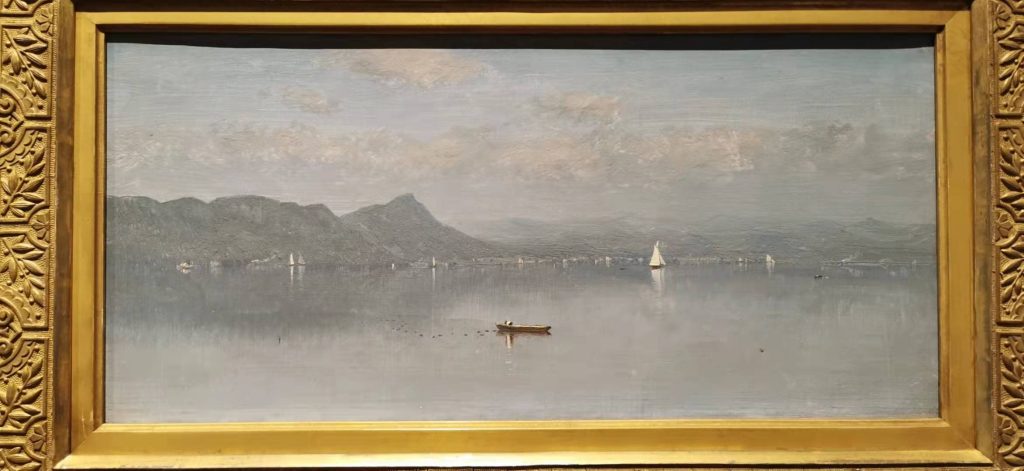
This is a landscape painting with the material being oil on canvas. The details are amazing. The man bowing on the ship is so vivid though the actual size of him on the canvas is only about half a cetermeter! That definitely represents a skillful practice of drawing tiny staff with oil from the artist. This painting comes from Gifford, an American who lived between 1823-1880.

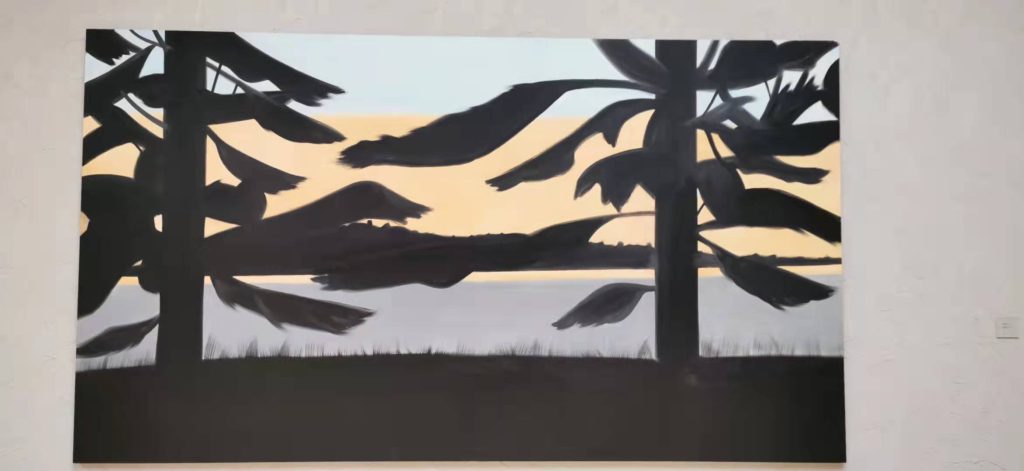
This painting of the sunset is great for it successfully creates a depressive while peaceful atmosphere around the painting and makes visitors stop and gaze for a long while. The color of trees is black, which is weird and rare in landscape paintings, so I guess that is why I feel depressed when I watch it. This painting is made of oil on linen and created by Alex Katz, who is an artist born in 1987, a much more modern-time painter.

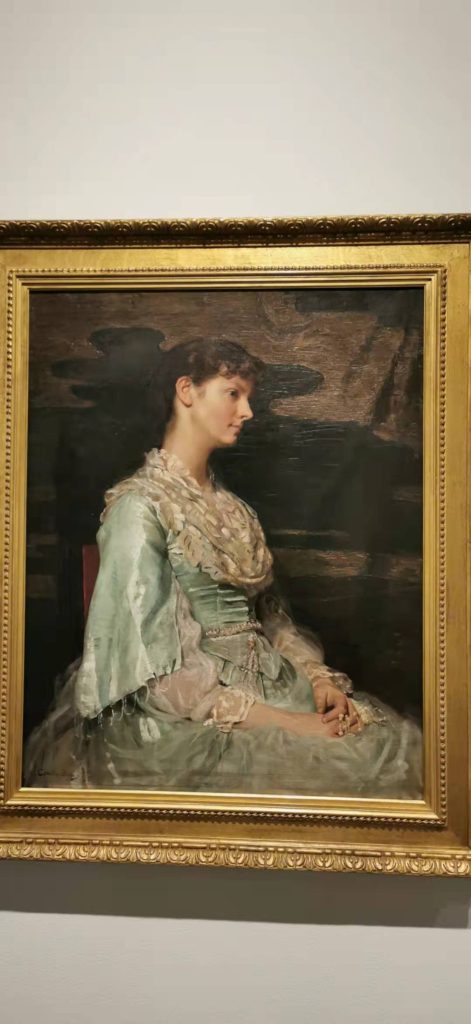
I favor this portrait painting because it depicts the peacefulness, soft and gentleness from the character’s eyes. The drapes on her dress are also detailed and vivid. The play of light and shadow shows the high skill of the artist’s portrait painting. This painting is made of oil on canvas and created by Beaux, who is an artist living from 1855 to 1942.

Museum Craftmanship 9/15

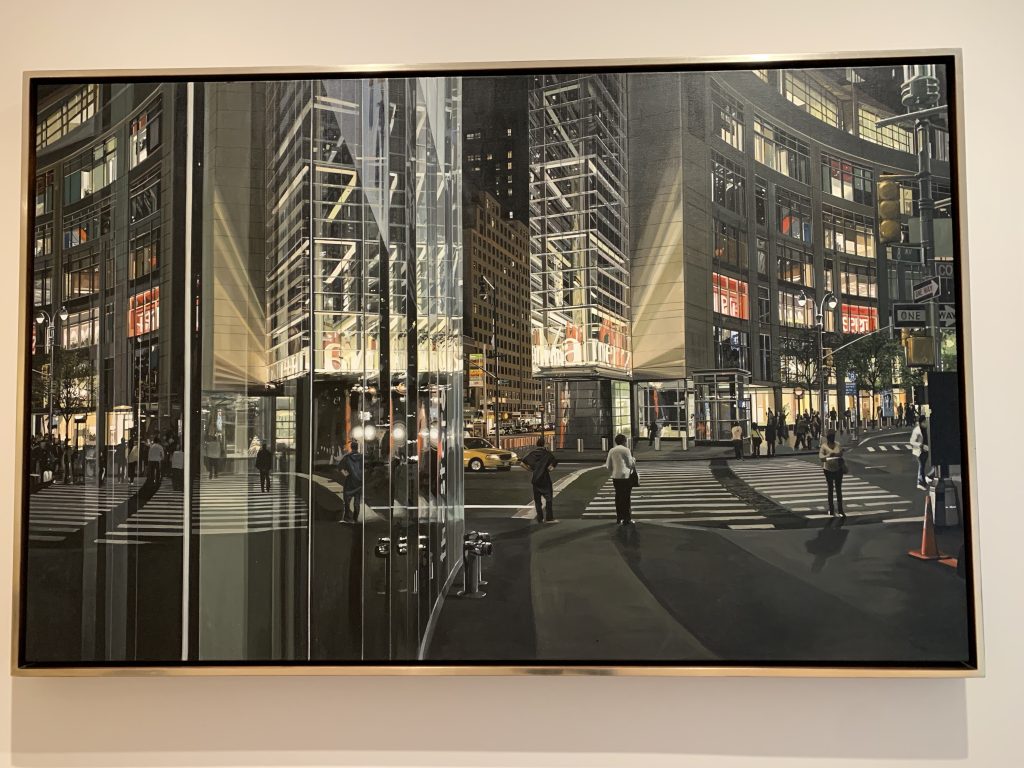
Just as Giorgio Vasari believed art from Firenze is above art created from all other city-states of “Italy” and beyond, I’ve always appreciated oil paintings more than other mediums of artwork. That’s why when I came across Columbus Circle at Night by Richard Estes, I was instantly drawn to look more. At first glance, I didn’t even think it was oil on canvas, but instead a photograph. This was due to Estes’s ability to paint the reflections of the street and building in striking, if not, perfect mirroring on the glass windows close to the viewers. Estes’s ability to paint the window’s reflection in such a realistic manner is something I greatly admire. I can imagine it must take such detailed skill to paint objects in mirrored reflections considering Estes would have had to take into account scale, color, and detail for all of the mirrored people/objects. Furthermore, coming from New York City, I really enjoy Estes’s ability to paint Columbus Circle (a very chaotic part of the city) into a very still and candid scene.

A sculpture by John Bradley Storrs also caught my eye during my visit. The sculpture made of travertine definitely would require a different type of craftsmanship. Since limestone is a very hard material, I would imagine Storrs would have needed the skill/tool to work with this type of material. However, I wouldn’t necessarily say this work depicts bad craftsmanship, but instead very different craftsmanship.

9/14 Class

In class on Tuesday, we discussed how the middle ages are defined by what came before and what came after. I was intrigued by the history of the name goth, originating from different tribes as well as the history of barbarians (Vandals, Huns, Vikings, etc.) In addition, we talked about the idea of progressiveness and perspective. It was interesting to think of the idea that progression does not truly exist since saying one thing is better than another is about the perception of the individual. I agree that it is unfair to judge something on progression since nothing is teleological in life. I am excited to revisit our discussion of the art museum as I felt connected with my Italian heritage via some of the art.

9/14 class

In this second class, we delved deeper into the language used when discussing art and periods of art. The Renaissance, as a rebirth of the Classical ideas which had been “lost,” inherently presents itself as “better” than what was produced between those periods. The definition of “best” art which Vasari and Palmieri establish is therefore extremely biased, as it not only focuses on specific Italian regions but also wholly discounts any art created during the Middle Ages. In history in general, the use of terms such as Gothic and vandalism to describe art inherently discredits it, as the Goths and Vandals are considered barbaric for their role in the fall of Western Rome. In truth, what people consider “good” art is based on the times in which they live and the values they hold. Renaissance art focused on themes and was created for purposes largely different from that of previous artists, but that does not make it “better.” Only by diving into the full context of a work, including the beliefs and desires of those who both created and viewed it, can we understand how and why it was created. “Progress” in art is really just change, and occurs due to shifting desires instead of a true natural “improvement.”

AR257 9/14

This class, we once again examined the language used by Vasari to define the art styles the art periods he saw. The period between Classical art and the Renaissance he deemed the Middle Ages. The wording, as we discussed in class, gives little credit to the artists of the period, instead positioning the time as more of a filler between the two ages he saw as having more significant advancements for art. We further examined how word choice reflected Vasari’s own opinions through his use of the word Gothic to define the style of art commonly associated with cathedrals. The Goths were one of the tribes of barbarians that brought the end to the Western Roman Empire, which, as you can imagine, comes with its own negative connotations. Palmieri mimics Vasari’s disregard of other art of the century, similarly believing that humans were “lost for 800 years”. Rather than understanding that people had other focuses and other values of what made “good art”, both men choose to place credibility in what they see as the aspects of good art. Lastly, we examined how the context in which art is placed, or the lack of context, can also have an influence on a culture. The example of the legend of Saint Wilgefortis, which was created context was needed for a piece mimicking an 800 year old piece of art. As we learn about Renaissance art, context and word choice continue to be important themes.

« Older posts Newer posts »

© 2026 RENAISSANCE ART

Theme by Anders NorenUp ↑