It is a well-established fact that teacher quality is the biggest school-level factor related to the success or failure of students and thus, the achievement gap between students. A 2006 study in Los Angeles, CA found that when students were taught by the top 25% of the most effective teachers, the students advanced approximately five percentile points each year compared with their peers. Those taught by teachers in the bottom quartile of effectiveness, lose, on average, five percentile points, compared with their peers. However, having access to quality teachers would not be possible without a skilled and dedicated principal. In order to have successful teachers, we must first focus on having a successful principal.
According to the article “Recruiting Expert Teachers into Hard-to-Staff Schools,” a quality principal is the number one factor in whether a teacher chose to teach at a high-needs school. According to the article, “the extent to which the principal would be caring, supportive, open-minded, committed to student learning, knowledgeable and ‘highly-qualified’ mattered most” to the teachers. Access to a hard-working and committed principal was more important than other factors such as a higher salary, a promotion, increased benefits and knowing that other teachers at the school are caring, unified and committed.
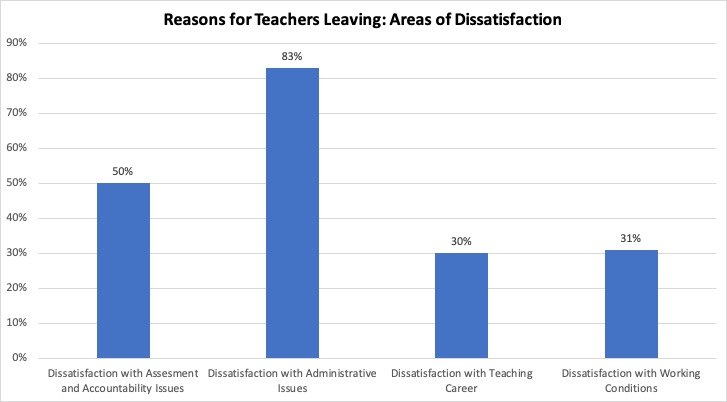
Recruiting high-quality teachers is only half the battle. Once a principal is able to recruit skilled and dedicated teachers, the principal must work to support these teachers so the school is able to retain these dedicated teachers. In a 2017 research report conducted by Learning Policy Institute, the researchers looked at factors teachers reported as being very important for leaving the teaching profession. The factors included dissatisfaction, family/ personal reasons, retirement, pursuing another job, or financial reasons. Of these factors, 55% of teachers reported that they left because of dissatisfaction. As seen in the graph below, when the areas of dissatisfaction were analyzed more closely, 83% of teachers that left were dissatisfied with the administration (Note: Percentages do not add to 100 as teachers may select more than one reason for leaving). The complex and multidimensional job of principals must not be overlooked as a factor in the achievement gap because principals have the power to transform students, teachers, and the entire school community. Effective school leaders have the potential to drastically decrease the achievement gap by both indirectly and directly improving teaching and learning through their influence on staff motivation, commitment, and working conditions.
The role principals play in schools range anywhere from being curriculum and instructional leaders to being community builders, conflict managers, policy enforcers and so much more. Teachers may be able to help a class of 30 students succeed but principals have the potential to affect anywhere from hundreds to thousands of students because principals are the ones who support and foster an environment of success and learning throughout the entirety of the school. We must first focus on recruiting quality principals if we want to ensure that the school has quality teachers.
Post by: Katharine Dougherty