In 2016, EdBuild, a non-partisan organization dedicated to education reform, found that predominantly non-white school districts received $23 billion less in funding than predominantly white school districts. Why do this inequalities persist? What solutions are being explored?
This organization’s report suggested that the funding problem lies in the school district borders. Some wealthy school districts are nestled between less wealthy districts, creating a clear funding divide. This method is used to separate wealthier districts so that their high property tax revenue can benefit their own schools. Working class communities, as a result, are unable to create the same level of funding, and their schools suffer. While schools are generally funded locally, some states try to subsidize working class districts. States do not always favor giving more money to less wealthy districts.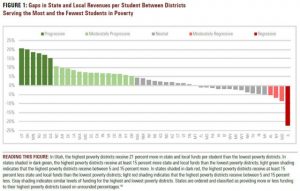
Part of this problem persists because of housing segregation.
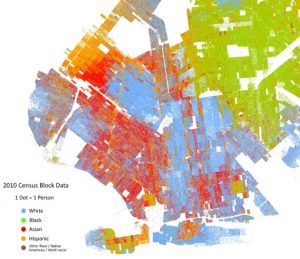
The report found that “more than half of the nation’s schoolchildren are in racially concentrated districts, where over 75 percent of students are either white or nonwhite.” The same report stated that predominantly non-white school districts receive about $2,200 less per student than districts that are predominately white. In many areas, this problem is worsened by school choice when wealthy parents to request that their children attend schools outside their potentially low-income or predominantly non-white district. Students whose parents’ resources would have likely granted them access to honors or gifted courses are no longer in the low-income school district, and therefore there are less rigorous courses. On the same note, these very involved parents are withdrawing from the low-income school system, leaving only the overworked low-income parents to advocate for school conditions.
To overcome this problem, some parents, teachers, and legislators have proposed to consolidate school districts. School boards are generally opposed to consolidation, but many argue that it would lead to more inclusive schools and therefore decrease wealth disparities. Christopher Berry, a professor at the University of Chicago, described the school consolidation movement as “One of the most remarkable yet least remarked upon accomplishments in American public education.” Many schools were consolidated between 1930-1970, and there were some unintended consequences. One of the greatest perks of school consolidation that Berry describes is the decrease in within-school and between-school variation. Increasing the reach of the school district allowed more instructional specialization, but research also suggests that increasing the school size can lead to an overall decrease in adult wages. In other words, while this decreases variability, it also decreases the average future attainment for the children.
Rebecca Sibilia, the chief executive of EdBuild, once stated, “When it comes to education it is a public good and people need to share their wealth with their neighbors.” Though there isn’t a clear answer as to how to create equitable funding for districts with such different needs, we can start by preventing wealthy school districts from hoarding their wealth at the expense of less prosperous districts.
Post by: Amber Churchwell