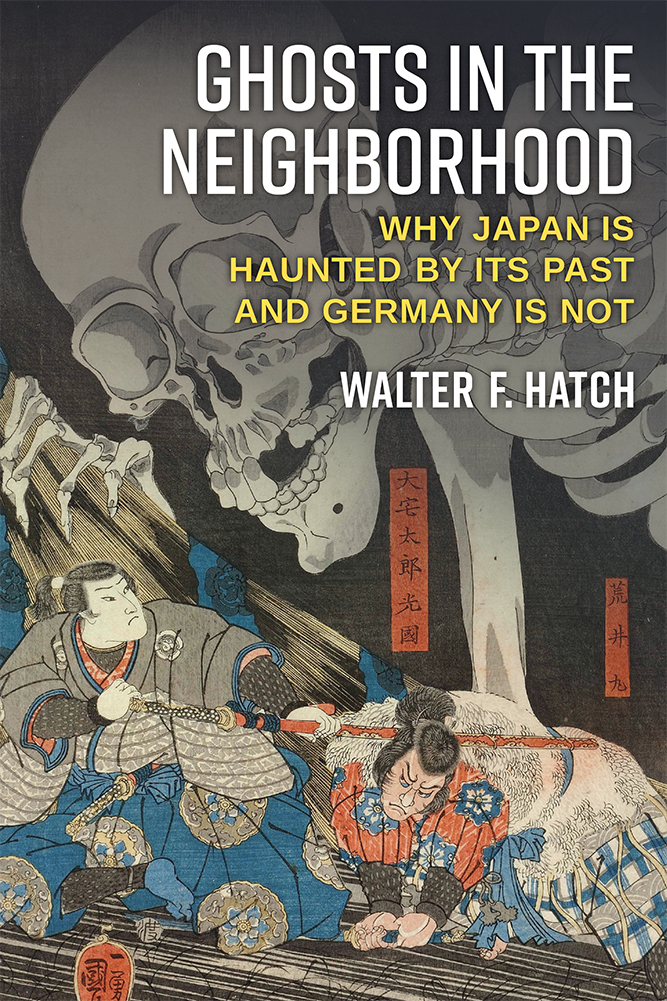
My latest book, Ghosts in the Neighborhood: Why Japan Is Haunted by Its Past and Germany Is Not (University of Michigan Press, January 2023), attempts to explain why Germany has achieved reconciliation with European neighbors it brutalized in the past while Japan has failed to achieve reconciliation with Asian neighbors. Using four case studies (Germany-France; Japan-South Korea; Germany-Poland; and Japan-China), the book shows that Germany’s success stems from political cooperation through regional institutions like the European Union and NATO. Japan, by contrast, has been restricted by a dearth of such regional institutions in Asia — a function of its dependence on a bilateral relationship with the U.S. This argument is backed by a rich array of empirical evidence. https://www.press.umich.edu//11683923
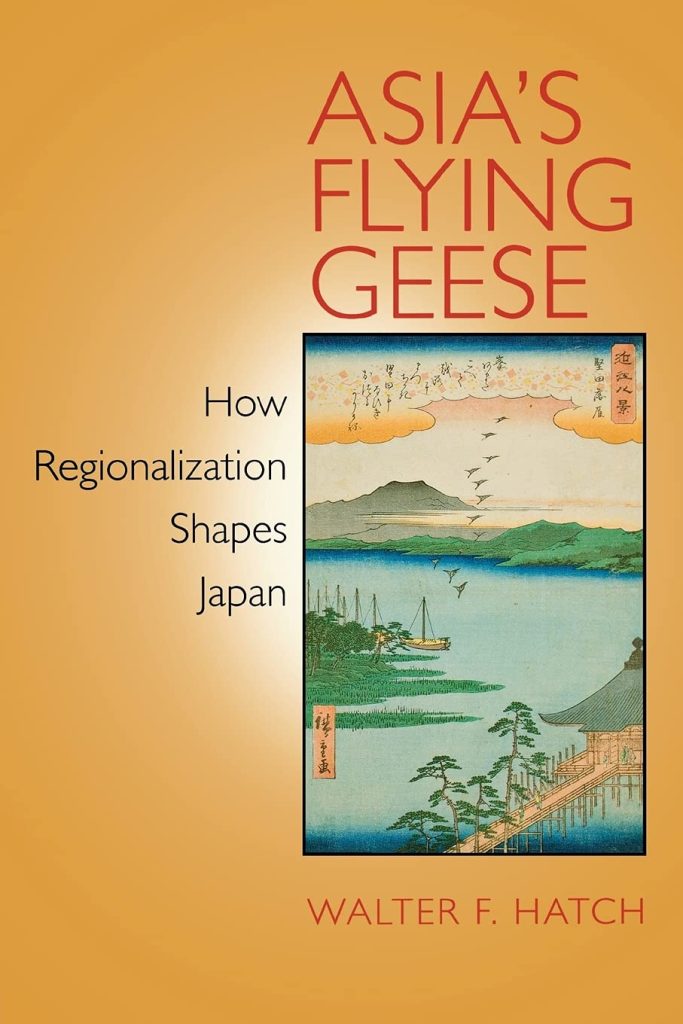
My earlier book, Asia’s Flying Geese: How Regionalization Shapes Japan (Cornell University Press, 2010), tackles the puzzle of Japan’s paradoxically slow change during the economic crisis it faced in the 1990s. Why didn’t the purportedly unstoppable pressures of globalization force a rapid and radical shift in Japan’s business model? In a book with lessons for the larger debate about globalization and its impact on national economies, I show how Japanese political and economic elites delayed—but could not in the end forestall—the transformation of their distinctive brand of capitalism by trying to extend it to the rest of Asia. For most of the 1990s, the region grew rapidly as an increasingly integrated but hierarchical group of economies. Japanese diplomats and economists came to call them “flying geese.” The “lead goose” or most developed economy, Japan, supplied the capital, technology, and even developmental norms to second-tier “geese” such as Singapore and South Korea, which themselves traded with Thailand, Malaysia, and the Philippines, and so on down the V-shaped line to Indonesia and coastal China. Japan’s model of capitalism, which I call “relationalism,” was thus fortified, even as it became increasingly outdated.
Japanese elites enjoyed enormous benefits from their leadership in the region as long as the flock found ready markets for their products in the West. The decade following the collapse of Japan’s real estate and stock markets would, however, see two developments that ultimately eroded the country’s economic dominance. The Asian economic crisis in the late 1990s destabilized many of the surrounding economies upon which Japan had in some measure depended, and the People’s Republic of China gained new prominence on the global scene as an economic dynamo. These changes, I conclude, have forced real transformation in Japan’s corporate governance, its domestic politics, and in its ongoing relations with its neighbors.
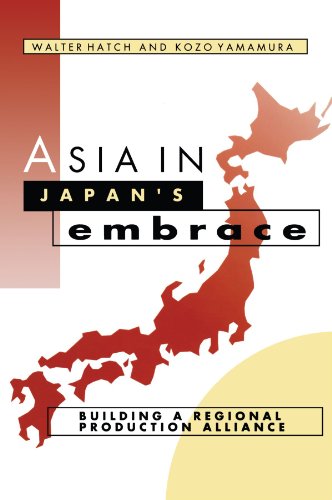
My co-authored book, Asia in Japan’s Embrace: Building a Regional Production Alliance (Cambridge University Press, 1996), is an incisive analysis of Japan’s deepening economic presence in Asia. It challenges neoclassical economists, arguing that instead of simply building a ‘yen bloc’ or responding to market forces, Japanese business and government elites are working together to build an expanded – and potentially exclusive – production zone. The authors suggest that the transplantation of many standard Japanese business practices in Asia is based on the concept of keiretsu (enterprise group) which allows a complex web of production networks to develop. The book shows that such strategic control of technology is a unique model of globalisation. While informed by economic theory, Asia in Japan’s Embrace is highly accessible, containing interviews and anecdotal evidence from factory floors and board rooms. It is comprehensive and controversial, outlining policy implications and the impact on global trade.