Biography:
Rachel Park is a Sophomore at Colby College, majoring in Biology with a concentration in Neuroscience. Rachel lives in Boulder, Colorado, and has two older siblings. She has an older brother, as well as an older sister who was born with a developmental condition significantly sculpting the beginning of Rachel’s life. Rachel’s parents are immigrants from Korea, making her and her siblings first-generation Korean-Americans. Rachel explains how she struggled to embrace her Korean heritage while attending predominantly white middle and high schools. She also shares how various forms of Korean music and entertainment helped her embrace and accentuate a crucial component of her identity.
Synopsis:
Rachel describes her upbringing in the United States while navigating life as a first-generation Korean-American. She highlights her struggle to embrace her Korean identity while attending predominantly white school systems. Rachel discusses her experiences throughout her childhood that allowed her to embrace her culture, such as creating a Korean club at her school, listening to Korean K-pop, and watching Korean dramas. She explains how these experiences allowed her to connect with her Korean culture and accept it as a part of her identity.
This interview covers various forms of Korean media and entertainment, identity, personal challenges living in an immigrant household, and Rachel’s personalized experiences that fueled her pride in being Korean.
Rachel volunteered to be my interviewee after I was recommended to contact the Korean club for an interview volunteer. This interview was conducted on November 2, 2023, via Zoom to curate the best environment for this interview.
Paige Larose, a third-year History major at Colby College, conducted this interview. I am interested in learning about the role one’s culture plays in identity and exploring oral histories that stem beyond the classroom.
Interview Recording:
Interview Transcript:
Full Written Transcript of the Interview:
Paige Larose: My name is Paige Larose. Today is November 11 2023. I’m interviewing Rachel Park through Zoom for the Colby College Korean Oral History Project. Do you agree to grant the college permission to archive and publish this interview for educational purposes?
Rachel Park: I agree.
PL: Okay, great. So how are you doing today?
RP: I’m doing well. I just got out of my lab, so I’m kind of tired. I apologize if my words are very scattered today.
PL: No worries! How are you feeling about the interview?
RP: Since I’ve already been through this process. I’m very familiar with what’s happening, so I’m not nervous.
PL: Do you have any questions for me before we start?
RP: No
PL: Okay, can you introduce yourself and explain your connection to Korea?
RP: Yeah, of course. My name is Rachel Park. I’m a sophomore at Colby College, and I am majoring in biology with a concentration in neuroscience. I am Korean, so I grew up with Korean culture since my parents immigrated as first-generation immigrants. I learned most of my history and culture through my parents, but also through friends, and the internet.
PL: How did growing up in an immigrant household shape your childhood experiences?
RP: There were definitely a lot of hardships that we had to go through. Definitely my parents had experienced that more. Since I was young, I didn’t really understand the concept of what my parents were going through. I would say the main struggle that I went through, while growing up was having to translate everything for my parents. My parents learned how to speak English because my sister has special needs. And so she was forced into that mindset of having to learn the language in order to go to hospitals and stuff like that. So she was kind of forced into it. And since I’m the youngest child, my parents went through this whole process with my older two siblings. So when I was growing up, I guess I could say I’m spoiled, but in a sense that like my parents have gone through, I have adjusted to the lifestyle of being an immigrant. Still to this day, I still help my parents out whenever they need with writing emails, and editing a whole bunch of stuff documents. I go to a Korean church back home [Note: Colorado]. There’s this program that we have where the students and children of immigrant parents help out with elder relatives and help them function better in society. It’s pretty cool.
PL: I did gather from your interview [Note: The interview that Rachel conducted with her mother for the Spring 2023 semester of oral histories on the theme of “Seoul Food”] that your sibling deals with a developmental condition. From what I’ve understood, it deeply shaped your life and the way that your family has moved here and have had to live in constant medical readiness. Could you maybe share how your childhood was shaped by these specific needs?
RP: My sister is nonverbal, so definitely communicating with her and knowing what her needs are. As a child … Having parents that don’t speak English that well, and a sister who, whenever she goes out, wants to do everything and run around, I felt like subconsciously I just felt sorry to a lot of people having to excuse our family and the people around us. As I grew up, I realized that there were people in America who understood the concept of special needs people while in Korea they don’t have that very welcoming environment. Which is why my parents decided to stay in America rather than going back to Korea. Growing up, I definitely felt sorry to a lot of people. And there was, of course me looking at my friends and not being able to have sleepovers at my house. I would always have gone somewhere else, and slept over because of our family dynamic. That was a bit hard when my friends would be like, “Hey, Rachel, let’s go stay at your house”. I would have to explain to them why it would be hard for me to do that. My parents definitely adjusted to that, whenever I had birthday parties they would accommodate and have my friends over and stuff like that.
PL: What were some of those needs? And reasons as to why your friends or you had to sleep over at your friend’s house?
RP: I guess that I always thought that my friends would never understand what I’m going through. In a sense, when I was young, I was sort of ashamed of my culture, in a sense, like having Korean food. There’s a very unique smell in our dishes. And that kind of drove me away from telling people that I was Korean in the first place. And now not knowing how my friends would react, I would sort of change the topic. Also, my mom has to take care of my sister. I’m not sure how it was, like, when I was young, but nowadays she has [to]. My sister is more curious about the world. She would go outside and stuff like that. And I think having my parents being able to take care of me and my brother, as well as my sister was definitely hard because 95% of parents’ brains would be on my sister. In a sense my brother helped me to adapt to school and stuff, because I could always go to him to talk at the end of the day.
PL: Is your brother older than you?
RP: Yeah, my brother’s three years older than me.
PL: What is your relationship with him now?
RP: I would say we still maintain that strong relationship and bond. Growing up, I’ve always heard that; “Oh, sibling relationships – it’s different for every family,” but with my friends, they wouldn’t have great relationships with their siblings. That was something I didn’t understand. Because my brother was always very welcoming and likable, and wanted to learn about what happened at school, and even now, he calls me at random times like, “I’m checking up. So I would say, I do have a stronger relationship with my brother than most people do. He also has a very fun personality. So there’s never a dull moment with him.
PL: That’s great. Did you mostly grow up in contact with other Korean Americans or relatives, or in relative isolation from those communities?
RP: From preschool to middle school, I went to a charter school. And so I was surrounded by mostly white people, so then I was very ashamed of my culture and my identity because there weren’t that many Asians around in general, not just Koreans. I felt like there was a lack of Asian population and community from preschool to middle school. However, in high school I moved schools to a different district. There, I was able to find a larger Asian community where I was able to connect with them more. I would say that’s like when I found my identity and wasn’t ashamed to be a Korean. I also went to the Korean church that I mentioned. I have been going there since I was young. I grew up within the church, and found my Korean community there. However, it’s an hour away from home, so I would only go there during Sundays and occasionally Fridays. Even though I did have a Korean community, I felt distant from them, because I would never see them until like the end of the week. Yeah, through finding my culture and identity in high school, I was able to start a Korean culture club at my school, and I’m involved in a Korean culture club here.
PL: What were some of the ways that your high school friends helped you embrace your Korean culture?
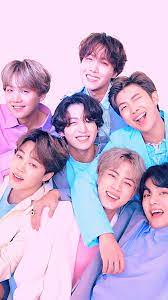
RP: There was only one other Korean that was in my grade at least, so I hung out with her a lot in the beginning. I would say, to backtrack a little bit during middle school summers there was this summer program called “Dawson”. I don’t exactly remember the context of it, but it was a summer program. And I met this one girl and hung out with her over the summer, and then kind of disconnected because I didn’t do it in the eighth grade summer. When I went to my high school, she was right in front of me during orientation, and that’s when I reconnected with her. In a sense, she helped me find myself in high school, and just helped me adapt to the new district, and stuff like that. Starting from her, I was able to connect more with the Asian community with that one Korean friend. Right. We talked about Korean culture and K-Pop. – K-Pop blew up around them with BTS [Bangtan Sonyeondan which translates as Bulletproof Boy Scouts], and BLACKPINK as well as. I feel like pop definitely opened the doors for Korean culture. More people know about it now than it was when I was growing up. So, my friends and K-pop blowing up helped me not be ashamed of being Korean, and being proud of my heritage.
PL: I’m not that familiar with K-pop, would you mind just explaining a little bit about their style of music, and maybe some themes that they sing about?
RK: Before BTS I was on the side with unknown styles and other artists but growing up, “Gangnam Style” [Note: PSY, Psy 6 (Six Rules), Part 1, 2012] was like the one that everybody knew. And then it was BTS. With K-pop the main difference between American artists, and Korean artists is that they sing and dance, they have their whole choreography that they do. Also, the whole training system to become a K-pop idol is a lot stricter. You have to go through years of a training period, and it’s very cutthroat where some people can spend ten years being a trainee, but still not debut. Even though some groups debut they’re not always successful. So yeah, it’s very cutthroat. I would say choreography and singing are the main difference between them. Every group has a different theme.The reason why they [BTS] blew up was, the whole concept of loving yourself, and not being ashamed of who you are. I think people were very attracted to that theme, and that’s why they blew up. I’m not sure with BLACKPINK, but I think they just had, like, that girl crush that nobody else had previously.
PL: Do you still listen to K-pop now?
RP: I occasionally do. I used to be a big fan in high school. I think now I just do not have the time.
PL: Do you still keep in contact with your friend that you met in high school?
RP: Yeah, I do. It’s definitely harder to connect with them since I live in different time zones and stuff. But every break we meet up with each other, and so that’s always nice. Having that strong relationship with my high school friends to go back home to and see someone.
PL: In your district. Like in your town?
RP: The funny thing is that I have this group of friends. The girl that I met during the summer program was named Hannah. She is the first one that I met during orientation in high school. That was a very weird coincidence. One random day during senior year, she was picking out baby pictures [to], put in the school yearbook. And she found this really old preschool photo and it turns out that me and Hannah and this one other friend went to preschool together. So that was kind of fun.
PL: Not to skew too far away from what we’ve been talking about, but have you ever visited Korea?
RP: Yeah, I visited Korea once in my life. I think it was back in middle school. I haven’t been back to Korea since because of COVID. Every year, my parents told me, “Oh, let’s go.” We were planning on going after my high school graduation, but Korea’s COVID restrictions are very strict and tight so I wasn’t able to go. Now that I’m in college, school life is pretty busy and I’m asked to do stuff for the summer. So I haven’t been since then, but I’m hoping to go to Korea for a JanPlan [Note: Colby College’s January academic term] or something.
PL: What was your experience like when you did visit?
RP: I don’t quite remember exactly since I was young. But during that time, I visited all of my grandparents, and all my cousins. And I would say, the whole lifestyle is very different from here. First of all, all of the students there take public transportations to go to school.
Here, it’s more like your parents drive you to school. The clothing is very different, like the style during that era was different.
PL: Like what? What were they wearing?
RP: I feel like Koreans were more modern, like modern clothes Also they have school uniforms until high school. You would see all the students. One very vivid memory that I have with my brother, me, and my mom were passing by this random store. The store owner came out of his store and was like, “Hey, are you guys from America?” We look Korean, so what was the reason why? And he looked at my brother’s shoes and saw Michael Jordan shoes that he was wearing, which didn’t come in Korea. He was just wondering why, or how, he got it.
PL: You talked about how your food is a lot different… Korean food is a lot different than American food because of the smell and tastes and stuff like that. How often, especially at college, are you able to have access to Korean foods?
RP: Within the dining halls, there is not that much, but I’ve adapted to the cafeteria now.
PL: Is the kimchi that they [Note: Colby cafeteria] have really bad?
RP: I believe it’s a Costco brand, but to me it’s not. It’s not good. If you’re really in need of some
PL: Yeah…I just know. I was just doing a lot of reading and one really specific thing that Koreans or at least like in this book that I was reading were very adamant about was their kimchi, and the cabbage that they use in it. I was just wondering how it lined up to the kimchi that I see in the dining halls… Yeah
RP: Yeah…
PL: Yeah, and then I also wanted to ask you about different kinds of forms of entertainment. I know we like we touched on K-Pop – were there any other forms of Korean entertainment or games that you took interest in playing? Either with your siblings or your friends that also helped you embrace your culture?
RP: Yeah, so other than K-pop I would say Korean dramas would be the very next step in entertainment that a lot of people know about. Before Squid Game, [Note: Created by Hwang Dong-hyuk, Netflix, 2021] I believe Train to Busan [Note: Busanhaeng, directed by Yeon Sang-ho, Next Entertainment World, 2016] was a hit here. For me, I do watch a lot of K-dramas when I do have the time. Some of them are really good, some of them are bad. Growing up, I don’t think I’ve played a lot of Korean games. There’s this one game called “Gongii”, which is when you throw rocks in the air and try to catch as many as you can. I guess I played it during high school one day because of the Korean Culture Club. My parents were like, “Oh this is like a Korean game where she learned how to play.” It’s pretty fun, you compete with your friends and stuff. I would say that Squid Game definitely had an impact on the world, and, Parasite won a Grammy or something. [Note: Parasite became the first non English-language film to win the Academy Award for Best Picture at the 92nd Academy Awards in 2020]. I’m not too familiar … I probably shouldn’t know.
PL: What were your thoughts on Squid Game?
RP: A lot of people spoiled that for me, so I didn’t get to finish watching it. But I think it’s a whole concept of poverty that during… Factoring the Korean War and during colonization… And … Yeah, I feel like a lot of Korean historical dramas are more heartfelt because we do have that whole history with being colonized, and like the Korean War, and the splitting between the North and the South. And so it’s very interesting to see how directors are able to use that modern day movies while being pretty impactful… Also, I can’t remember what year it was [Note: 2018 Olympics in Pyeongchang, South Korea.] There was this one year during the Olympics where North and South Korea played together instead of separately, and I think that was very impactful to see some unification going on between North and South Korea.
Also like different forms of entertainment, I forgot about sports … Ice skating with Kim Yuna, she’s retired now but growing up I was very proud to see her represent Korea. I believe at the last summer Olympics Korea’s archery team won. And it’s nice to see that there’s a lot of representation for Korea now within the Olympics. Because… Before it was just Kim Yuna and I believe some other athletes, but I can’t remember. And now with … Now with soccer, like Son Heung-min is still very impactful. Previous World Cup, or I believe it was last year’s World Cup. Korea made it to the rounds of sixteen which for Koreans was like very… A very heartfelt moment.
PL: How would you say watching … I guess … Korea’s unification in the Olympics, and just the ongoing success that they’re bringing to the Olympic Games. Do you see that being reflected in your community?
RP: Yeah … Now that you see Korean athletes in the Olympics people are more aware of Korean athletes in general and…I guess … Growing up seeing these Korean athletes like Kim Yuna with figure skating, it inspired me to do figure skating. And so seeing those athletes, it’s not just looking … Just watching them also sparks of curiosity and the sport itself. Like I was never interested in archery beforehand, but seeing Korea do so well I got more interested in it.
PL: When you were growing up as a child…Was this more relevant when you were a child? Or was this more so in your, in your, like adolescent life? When was this all going on in the Olympics?
RP: I would say it still has the same impact it did for me now that it was when I was a kid too. I just see more Korean representation of course for many reasons, but growing up the Olympics was a big part.
PL: Would you say that there’s more Korean representation as you kind of get older? Would you say that that is increasing overall?
RP: Yeah, I would say so. It might just be because I’m older now and more aware of what’s going on on the internet. And so, maybe when I was a kid I only understood some athletes because I was only exposed to those parts. But yeah definitely, you see the Premier League, it was mostly Son Heung-min who was the main representation for soccer, but now with Seol Ki-hyeon. Yeah, he’s like He entered the Premier League and I’m sure any other Korean joined national teams now
PL: That’s pretty cool. I know at the beginning you mentioned how the internet played a role in you kind of, expressing and understanding your, like Korean culture. What kind of forms of media helped you kind of come to realization …or that you used to help with that process?
RP: So I would say I didn’t have a phone until freshman year of high school, or eighth grade, or something like that. So most of what I would see would be on television. And so I was never that exposed to the internet… Like the world at a young age. But now with the internet in my hands with my phone and computer and stuff, I just feel a lot more aware of what’s going on in the real world. And makes me more aware of what’s going on politically, and just social through entertainment.
PL: What were some of the things that you noticed going on in the real world that sparked your awareness to those subjects?
RP: I would say … for history, I’d say the last Korean president made relations with Kim Jong-un ,and that was like the first… Not the first, but I still think about it to this day like, how far our relations have changed with North Korea. Other than that, I would say I just use the internet to look up K-dramas or listen to K-pop.
PL: In K-dramas and K-pop, would you say they incorporate a lot of cultural…they express a lot of culture and some history throughout the contents of their media?
RP: Yeah I would say with K-dramas, like historical K-dramas tend to look back at the history and try to portray it as much as they can. But it’s all fiction… Not all of it, most of what comes out is fictional now, but they do incorporate Korean culture with their clothes and such.
PL: What about your parents? Do you and your parents ever watch K-dramas together? Do they also find K-dramas entertaining?
RP: Yeah my parents, or my mom and specifically, we’ll turn on a random K-drama when I’m home, or when we are both doing our work. I’ll be making something or my mom would be doing something on the computer but semi watching K-drama that’s in the background. That’s like a unique memory that I have with my mom, that’s still going on. I would always watch videos with my mom. My parents would like to watch K-dramas whenever they’re doing the dishes or doing household work. They are more into variety shows now rather than K-drama.
PL: What are variety shows?
RP: Oh so they’re comedy shows I guess… But with actual people. I would think of an example but I don’t really watch that many, like American comedy shows.
PL: It’s okay, I do not either…Yeah that’s really all I had. But, I just wanted to thank you so much.
RP: Thank you for having me.
PL: Is there anything else that you want to talk about, or that you want to share?
RP: Not really I think I was able to talk about everything that I wanted to. Thank you for having me and letting me talk about my culture and what I’ve been through.
PL: Thank you! Okay… Well, I hope you have a great rest of your day!
RP: Thank you! Bye bye!