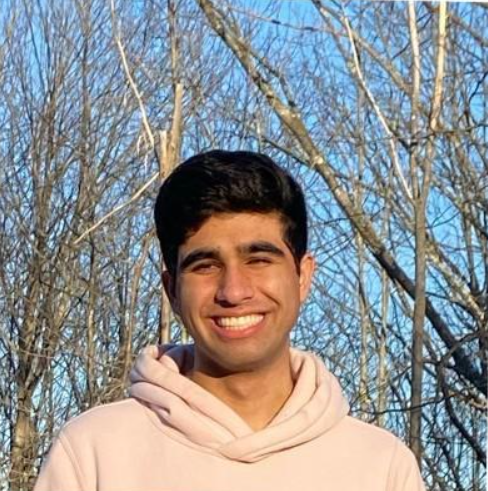
Interviewee: Tegh Khosla
Interviewer: Aaron Mills
Interviewee Biography
Born in New York City and raised in neighboring White Plans, NY, Tegh Khosla (22-years-old) is a senior Biology and East Asian Studies major who identifies as a South Asian, Indian, cis-male. Active in several diverse organizations on campus, including Acapella, Biology Club and Korean Club, he values forging close relationships with his peers at Colby and on the Peninsula that transcend, literal and figurative, difference. Studying abroad in Korea for around seven months, he seeks to work a transnational career that will enable him to incorporate his love for Environmental Science and Ecology into his love for Korean language and culture.
Interview Recording
Interview Summary
Focusing on intercultural contexts of “Play,” this interview covered considerable ground over the course of an hour and ten minutes, beginning with Tegh describing his contacts with South Korea prior to, during, and after his 7-months studying abroad in Seoul. He spoke extensively about how his identity as a foreigner—a visible outsider—affected his overall experience with the Peninsula, both in his daily interactions and on trips he took throughout the country. He also articulated how Korea fits within and inspired future plans. The interview’s scope included discussions surrounding foreign encounters of Koreanness and Korean encounters of foreignness in Korea, boundaries of (in)/(ex)clusion for foreigners or visible outsiders in Korea and how spaces of entertainment in Korean nightlife foster/challenge the formation of intercultural communal bonds.
This interview was conducted by Aaron Mills, a senior Government and History Major with a minor in East Asian Studies. Aaron has a keen interest in the politics of memory, and how these dynamics can be teased out through a range of approaches such as oral history interviews. These oral history interviews bring, albeit imperfect, voices often left out of consideration and study in historical scholarship. He see this process as critical to contemporary discussions about how to best understand the past, not taking for granted how the narratives that are interwoven (un)consciously into our imagined past came to be and constantly questioning the subtext they suggest. In his view, these narratives are not trivial. Indeed, they frequently translate into tangible policy that can lead to and or perpetuate structural harm—namely discrimination and violence—against marginalized groups. This fact underscores the vital importance of studying memory and its intersection with structures of power.