Maine Birds
A resource for Maine birds and birding
  • About

February 24, 2009 By Herb Wilson in Uncategorized

For the Birds: South Carolina trip II

This column is the second of two on the birds seen on a South Carolina coastal visit in late December. This column will focus on a trip to a forest tract near the Santee River north of McClellanville.
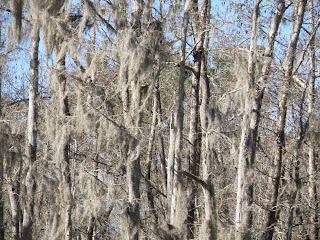
Although development pressures along the South Carolina coast continue to increase, significant tracts of land are protected. Much of the biologically rich area along the coastal Santee River is protected by holdings of the Francis Marion National Forest and by Nature Conservancy holdings.

We had the chance to explore a tract of preserved land north of McClellanville on December 31 on a warm sunny day.

We began with 
a walk along a boardwalk through a bald cypress swamp. These conifers have trunks that are swollen at their bases. Each tree puts up a number of knees, short woody growths that extend a few feet above the black water of the swamp. Water tupelos were also common trees, also having buttressed trunks. The surface of the water was a green, unbroken carpet of duckweed, a small aquatic floating plant. You may have seen duckweed in Maine.

The birds here were few, mostly Yellow-rumped Warblers. A small impoundment at the end of the boardwalk had no ducks. We did see a large number of Double-crested Cormorants and a lone Anhinga flying toward an adjacent impoundment.  We backtracked down the boardwalk and walked toward the second impoundment. On the way, a Red-shouldered Hawk called repeatedly overhead.

At the second impoundment, we found a number of cormorants. I was glad I had lugged my spotting scope along because we enjoyed leisurely views of two Belted Kingfishers perched on the bank in perfect light.
Lots of Hooded Mergansers were on the water along with a Pied-billed Grebe. A Great Blue Heron and a Great Egret were patrolling the shallows for incautious fish. Hundreds of Tree Swallows were hawking unseen insects above the water.

Walking around the impoundment along a woodland path, we heard the chip notes of Yellow-rumped Warblers and Ruby-crowned Kinglets in the upper reaches of the live oaks. I began to pish to try to draw the birds closer. (In case you have never heard a birder pish, the birder rapidly repeats “psssh” to mimic a general alarm call. Landbirds will often come close to investigate and possibly mob the intruder.)

Before long, 60 birds were close by. Ruby-crowned Kinglets were the most common although we picked out a Golden-crowned Kinglet, several titmice, a White-breasted Nuthatch and Carolina Chickadees. At least one Pine Warbler was among the many yellow-rumps. Quite a spectacle.

Continuing along the path, we came to a sluice that controls the level of the water in the impoundment. Forty feet away, two Wood Storks were perched on a tree adjacent to the outflow stream. They sat calmly while we enjoyed watching them through the spotting scope.

A Brown Pelican was on the water in the impoundment. Brown Pelicans generally occur in saltwater habitats but occasionally venture into freshwater habitats. A Pied-billed Grebe could be in the same scope view as the pelican.

It is hard to go for very long in coastal South Carolina without seeing vultures. A number of Turkey Vultures hovered during most of our walk. Black Vultures were present as well although in lower numbers. Telling the two species apart is flight is straightforward. Turkey Vultures hold their wings in a shallow V while soaring while Black Vultures have their wings extended horizontally like an eagle or Red-tailed Hawk. The tail of a Turkey Vulture is long while that of Black Vultures is noticeably short. When a Black Vulture spreads its tail, the tail seems to disappear into the hind margin of the long wings. Finally, Black Vultures have a large white area on the tip of the underwing. Seen in the right light, these white areas glisten against the black background.

We were pleased to see some butterflies on the wing. A Cloudless Sulphur, a larger relative of the Clouded Sulphur that is so common in Maine, flitted by. We saw several Red Admirals, perched on the ground. The butterflies were courting mates and occasionally flew up for a brief dogfight with another admiral. Red Admirals feed on sap and decaying matter so the rarity of flowers posed no problem for them. We saw a few Green Darners, a large dragonfly with a striking green head and blue body.

On the way back to the parking lot, we walked through an open field with scattered trees. This area looked like perfect habitat for Eastern Bluebirds and so it was. At least six were present. Extended views through the spotting scope of two males perched on the outer branches of a live oak provided a fitting end to a wonderful trip.

[Originally published on January 24, 2008]

February 24, 2009 By Herb Wilson in Uncategorized

For the Birds: South Carolina trip I

My wife and I took a holiday trip to North and South Carolina in late December. We spent five delightful days on the South Carolina coast with friends in McClellanville, South Carolina. The birding and the weather were delightful.

The maritime forest of the Carolinas is dominated by live oaks. These evergreen oaks rarely exceed fifty feet in height but have many large horizontal branches that extend out for tens of feet and then grow upward to the canopy. Foresters report that some live oaks can occupy a full acre! The trunks of these trees are large with diameters regularly exceeding six feet. The largest live oak known had a diameter of 11.5 feet.

The small fishing town of McClellanville is dominated by live oaks. The few roads through the village seem to be tunnels through these great trees.
The live oaks provide habitat for many birds. Walks through the village turned up Carolina Chickadees, Tufted Titmice, Carolina Wrens and tons of woodpeckers, the most common being Northern Flickers, Red-bellied Woodpeckers and Downy Woodpeckers.

Yellow-rumped Warblers are common wintering birds in this part of the world. Most warblers rely on insects gleaned from leaves for their food year-round. Most of the warblers that nest in North America are now on Caribbean islands or in Central and South America. The Yellow-rumped Warblers are more flexible in their diet and switch to fruit eating during the winter. These warblers depend on the fruits of the abundant wax myrtle bushes found along the coast of the southeastern United States. Of course, they will feed on insects if they can find them. But their ability to switch to fruit eating means they do not have to make the arduous migration to tropical climates to pass the winter.

My ears told me I was not in Maine when I walked out of the house on morning to hear the energetic fee-bee of an Eastern Phoebe. Like the Yellow-rumped Warblers, the phoebes will switch to small fruits when the flying insects they depend on are not easy to find.
An unusual sound in the village was the three-note song of a recent colonist, the European Collared Dove. The song is a set of three coos, with the second one longer and stronger. It has the same cadence as the word “united”.

The European Collared Doves are native to southeastern Europe. These birds were introduced in the Bahamas in 1970 and spread to Florida by 1982. The species has expanded in the United States reaching Veracruz, Mexico, the Great Lake states and even British Columbia. I know of a single record from Maine on Monhegan Island. The largest densities of these birds are in the Gulf coast states.

Some ornithologists think the Collared Doves are taking the place of the extinct Passenger Pigeon that was so abundant in the United States until the latter part of the 1800’s.
It’s too early to tell what effect if any the Collared Doves are having on our native birds. The expansion of their population seems slower than the explosive invasion of the birds into western Europe fifty years ago.

Our friends in McClellanville have s small skiff so we were delighted to take a bird excursion through the maze of streams that divide the huge salt marshes of the area. Buffleheads, Hooded Mergansers and Red-breasted Mergansers were the most common ducks. Occasionally, a Bottle-nosed Dolphin would break the surface of the water near the boat. Boat-tailed Grackles were common in the salt marsh.

Two Bald Eagles were a real treat. A Red-tailed Hawk perched atop a navigation pole and a Merlin streaked by at breakneck speed.

Brown Pelicans were common. I still marvel at the ability of these birds to glide effortlessly just above the water. We also saw a flock of 40 White Pelicans, regular wintering boards along this portion of the coast. Unlike the Brown Pelicans that dive to capture fish, White Pelicans are social hunters. A group of White Pelicans will form a semicircle just offshore and swim toward the shore, driving any small fish into the center of the semicircle where they can be captured by simply bobbing underwater. White Pelicans do not dive.

The exposed intertidal flats had a nice mixture of shorebirds. Sanderlings, Dunlin, Short-billed Dowitchers and Piping Plovers were seen. It was hard to miss the American Oystercatchers with their raucous calls and their striking appearance (black and white plumage and long red bills).

Double-crested Cormorants, Common Loons, a single Red-throated Loon, Northern Gannets and Belted Kingfishers made it to our list as well.

In the next column, I’ll describe a wonderful trip to the coastal forest of the Santee River.

[Originally published on January 10, 2009]

February 24, 2009 By Herb Wilson in Uncategorized

For the Birds: American Crows

Have you been seeing large numbers of American Crows converging from all directions shortly before dusk? Shoppers in Waterville and Augusta are often surprised as nocturnal roosts of crows start to build close to shopping malls. The roost in Waterville must number in the thousands of crows.

It often takes a spectacular aggregation of crows for us to even notice them. American Crows are common, seen every day by anyone with an eye for nature. We take crows for granted. Yet, these birds have some fascinating behaviors and traits that reward a careful look.

Let’s start with their roosting behavior. Night-time roosts may contain fewer than 100 birds to tens or hundreds of thousands. One well-known roost in Oklahoma contains around two million crows!

The reasons for roosting are unclear. A large flock of birds is certainly more vigilant against predators. A large bird of prey has little chance of sneaking up on a roost of crows.

A controversial explanation for roosting in birds is to provide a way to exchange information about food locations. However, no one has convincingly shown that crows exchange information at their roosts.

Roosts often occur, like the ones in Waterville and Augusta, in urban areas. We know that the minimum temperatures in the vicinity of human developments (houses, roads, parking lots) can be as much as ten degrees warmer than in undeveloped areas. On a cold Maine night, every degree of warmth can help birds make it through the night.

In the morning, crows leave their roosts but usually do not leave alone. Crows have a stable family structure. Groups of birds consisting of a mated pair (crows mate for life) as well as their offspring from several different years leave together. This group defends a territory against other flocks of crows.

American Crows are widely distributed in North America. They are found throughout the United States except for portions of southeastern California, western Arizona, and most of Utah and Nevada. American Crows are found broadly across the southern half of Canada.

American Crows occur in a variety of habitats but are most common in open woodland areas. With the clearing of eastern forests by European colonists, American Crows increased in abundance after European colonization. Regarded as agricultural pests, American Crows were persecuted for most of the 19th century and the early part of the 20th century. The crows found that towns and cities provided a refuge from hunters and began to use urban and suburban habitats. With their broad diet, American Crows have little trouble finding food to eat in urban and suburban environments.

Like most members of the family Corvidae (jays, crows and ravens), American Crows have a broad diet. One can aptly describe them as omnivorous because their diet includes terrestrial and marine invertebrates, amphibians, reptiles, small birds and mammals, the eggs, nestlings and fledglings of birds, seed crops of various types, fruit, carrion and the French fries and other food that humans discard.

Over 200 species of birds share the behavior of cooperative breeding. Offspring from an earlier brood or grandparents, aunts, uncles or cousins may assist a breeding pair in raising their young. Many of the best studied species that display cooperative breeding have exotic names to North American birders: Superb Starling, Superb Fairy-wren and Gray-crowned Babbler, to name a few. Yet, we have a cooperative breeder right in our midst. American Crows show this intriguing nesting behavior.

The nature of cooperative breeding varies across North America. In Massachusetts, 94% of American Crow pairs had helpers with an average of 4.2 birds helping raise a clutch of eggs. In Florida, the cooperating group was even larger with 7.2 birds on average helping to raise the young.

Young birds may help their parents for up to six years before they become parents for the first time. Helpers make themselves useful in a number of ways. Helpers may help with nest building, help keep the nest clean, feed the incubating female and the nestlings and guard the eggs and nestlings when the parents are away from the nest.

The vast majority of helpers are related to the young that they help raise to fledging. The helpers therefore share genes with the current brood. So by helping to raise brothers or sisters, they are perpetuating some of the own genes without reproducing themselves.

We are use to hearing the caw of American Crows but their vocal repertoire is actually quite large. Many variants of the caw exist and they can also produce other sounds including screeches, barks, rattles, grating sounds and clicks. Carefully study of the variety of crow vocalizations is amazing.

[Originally published on December 27. 2008]

February 24, 2009 By Herb Wilson in Uncategorized

For the Birds: Waxwings

With their silky sleek plumage, bold black eye stripes, black chins and prominent crests, waxwings are one of our most handsome birds. We have two species of waxwings in Maine, the Cedar Waxwing and the Bohemian Waxwing. Both species can be currently found in Maine.

There are just three species of waxwings in the world. The Cedar Waxwing is restricted to North America. The Bohemian Waxwing is found broadly across the boreal habitat of the northern hemisphere. Bohemians occur in North American and across the breadth of northern Eurasia. The third species, the Japanese Waxwing, This species nests in southeastern Russia and adjacent China and winters mainly in eastern China, Korea and Japan.

Waxwings are so named because of the bright red, teardrops of waxy material found on some of the wing feathers and to a lesser extent on the tail feathers. The function of these wax drops is not known.

The Cedar Waxwing is a common and widespread breeding bird in Maine. During the summer, they flit from tree to tree, giving their characteristic, buzzy zirr-r-r calls. During the summer, Cedar Waxwings eat flower petals, sap and insects as well as small fruits. During the winter, fruits make up most of the diet. The fruits of mountain ash are high on their list of preferred fruits in the winter although rose hips, juniper berries, hawthorn fruits and many ornamental berries are taken as well.

Cedar Waxwings are often hard to find in Maine in the winter. Most of our breeding Cedar Waxwings migrate to more southern states for the winter, often flocking in groups of hundreds of birds. A nice flock is gracing us with their present on the Colby campus now but will likely move south before the winter is over.

The Bohemian Waxwing is an erratic winter visitor to Maine. Befitting their name, these birds are known for their nomadic wandering in the winter in search of fruit. Bohemian Waxwings nest in western North America, mostly in Canada and Alaska. When fruit crops in western North America are poor, these birds move east searching for dependable food supplies. In some years, Bohemian Waxwings are absent; in other years, they may be abundant. Huge flocks may locate a good food supply and then depart as soon as all the fruit is eaten.

Flocks of Bohemian Waxwings are generally much larger than flocks of Cedar Waxwings. More than 3000 birds have been found in one Bohemian flock; Cedar Waxwings usually occur in flocks of fewer than 100 birds.

“Drunk drivers” can be found in groups of waxwings. Sometimes, waxwings will feed on fermented fruit. The alcohol contained in the fermented fruit intoxicates the waxwings, which then have difficulty flying and even standing when they overindulge.

The gut of waxwings is well adapted for fruit eating. The bill and esophagus are both broad enough to allow fruits to swallowed whole. Fruit eating poses a physiological demand on waxwings. Winter fruit tends to be high in sugars but low in water and nutrient content. The passage of this food through the gut upsets the water balance of the bird, forcing the bird to drink often.

The low nutritive value of waxwings’ food means these birds must eat a lot of fruit to meet their daily dietary needs. The result is a rapid passage of material through the birds. The next time you encounter a flock of feeding waxwings, listen for the near constant rain of bird droppings falling on the ground.

How can you tell the two species of waxwings apart? Bohemian Waxwings are slightly larger and grayer than Cedar Waxwings. Sometimes, both species occur in the same flocks so a direct comparison is possible. However, there are better ways to distinguish the two species.

The Cedar Waxwing has wings without the yellow spots that are found in Bohemian Waxwing wings. The belly of Cedar is yellowish while that of Bohemian is grayish. However, the best mark is to look at the color of the undertail coverts. These are the short feathers at the base of the underside of the tail. In the Cedar Waxwing, these feathers are white. In the Bohemian Waxwing, they are a bright cinnamon color. It is easy to pick out this difference at a great distance, making the color of the undertail coverts the most useful identification feature.

Waxwings are often described as birds of the woods but that claim is a bit misleading. Waxwings are generally found in open woodlands, on the edges of tracts of forest or in regenerating forests where their favored fruits are abundant.

[Originally published on December 13, 2008]

February 24, 2009 By Herb Wilson in Uncategorized

For the Birds: Bird Feeding Effects – Part II

Gillian Robb, an Irish ornithologist, and several of her colleagues have recently published a review of avian responses to supplemental feeding in the journal Frontiers in Ecology and the Environment. I discussed some of their points in the last column and will continue that discussion in today’s column.

Providing supplemental food to breeding females may allow them to spend less time looking for food and more time incubating the eggs or dependent young. Such an effect has been clearly shown in a study of Australian reed warblers and is likely a general phenomenon.

Given extra food, parents can either spend less time foraging for food to give their nestlings or use their extra time to find even more natural food for their young. In most species studied, parents simply spend less time looking for food rather than ambitiously trying to give their young even more food.

Chicks given supplemental food were much more likely to fledge than chicks without access to extra food in nearly two-thirds of the studies Robb reviewed. Black-legged Kittiwakes show one of the most striking effects. Adults fed supplemental food over two years, fed in turn to their chicks, fledged twice as many chicks in their first year and three times as many in the second year as kittiwakes that were not given extra food.

Given the difficulty of finding food for many birds, it is not surprising that supplemental feeding can alter the behavior of birds. Varied Tits (a chickadee relative) reduced their participation in winter mixed-species flocks when given extra food. Mixed-species flocks form when food is scarce and patchy.

The authors cite some of my research on Black-capped Chickadees in the North Woods of Maine. By providing supplemental food, I found that winter territorial boundaries break down. As many as 10 different winter flocks used the same feeders over the course of a single day.

Supplementary feeding may affect bird reproductive behavior. When House Sparrows were provided with extra food, the males stayed closer to their nests. Females cheating on their mates by mating with other males decreased because of the increased presence of the male.

Providing food to birds can alter the distribution of birds over large geographic areas. The northward expansion of Northern Cardinals may have resulted, at least in part, from backyard bird feeding. In Finland, ornithologists strongly suggest that backyard feeding explains a tendency of birds to overwinter in Finland rather than migrate south.

A contentious topic related to bird feeding concerns the degree to which birds become dependent on our handouts. In Finland, Great Tits feed most of the time from feeders and ornithologists suggest that these birds are so dependent on supplemental food that they could not survive without the freebies. So, feeding stations can be seen as ecological traps.

However, a study in Wisconsin with Black-capped Chickadees failed to find such feeder dependency. A population of chickadees that had been fed for 25 years was deprived of extra food in one winter. Those birds survived at the same rate as other chickadee populations close by that had never been given supplemental food.

Winter feeding can increase the density of resident birds in an area. These birds may stay in the area to nest during the summer, inflating the number of breeding birds. Jays and crows living close to humans take up to 75% of their food from human handouts. The local increase in these birds poses a threat to other songbirds because jays and crows are efficient egg predators.

Bird feeding can have indirect impacts as well. The gathering of large numbers of birds at one place increases the likelihood of the spread of diseases. The bacteria Mycoplasma and Salmonella are particular threats. The increased risk of disease at bird feeders in the United Kingdom is so high that the Garden Bird Health Initiative was begun, which prescribes bird feeding practices to lower the risk.

Some people that feed the birds are concerned that the high concentration of birds attracts birds of prey like Sharp-shinned Hawks or Cooper’s Hawks. Happily, research has shown that birds frequenting feeders are not more likely to be killed by predators. Large groups of birds are vigilant; the approach of a predatory bird or mammal is usually detected by the many watchful birds at a feeder.

We still have much to learn about the effects of bird feeding. Most studies have been conducted at a single feeder rather than at widely dispersed feeders, reflecting the distribution of households that feed the birds.

Should we feed the birds? To date, we believe the benefits exceed the risks. So, keep those feeders filled!

[Originally published on November 28, 2008]

February 24, 2009 By Herb Wilson in Uncategorized

For the Birds: Bird Feeding Effects – Part I

Feeding the birds is an activity that has increased greatly in the past 40 years. In the United States, 43% of households maintain bird feeders. In the United Kingdom, bird feeding is even more popular; 75% of households there feed the birds.

Homeowners in the United States and the United Kingdom purchase 500,000 tons of birdseed each year. This bounty is enough to support 300 million chickadees living on nothing else. In short, bird feeding represents a major subsidy to many species of birds.

We know that food often limits bird populations so bird feeding may have positive benefits for birds. However, we know surprisingly little about the effects of bird feeding, particularly on larger geographic scales. Most of the work that has been done, including some of my own, has been concerned with local effects.

Gillian Robb, an Irish ornithologist, and several of her colleagues have recently published a review of avian responses to supplemental feeding in the journal Frontiers in Ecology and the Environment. Today’s column is the first of two in which I will summarize the major points of the article.

The energetic costs of reproduction are huge for birds. Favorable times for nesting are often brief in birds so an early start may be beneficial for breeding birds. In 34 of 59 studies reviewed by Robb, bird feeding resulted in earlier nesting. In most cases the shift was less than a week but in some a shift was as long as a month earlier.

Unfortunately, earlier nesting can sometimes result in negative impacts. Birds given supplemental food may begin nesting before their natural food supply becomes abundant enough to provide enough nutrition for their nestlings. As an example, chickadee adults do well feeding on sunflower seeds but their nestlings need caterpillars and other sources of animal protein to allow the nestlings to grow and thrive.

Food supplementation can affect the quantity and quality of eggs laid by female birds. In 44 studies reviewed by Robb, 28 presented evidence that bird feeding increased the number of eggs laid.

As an alternative (or as a second effect), a female bird with access to supplemental food may increase the quality of her eggs by laying larger eggs. Larger eggs cool more slowly than smaller eggs when the adults are off the nest; larger eggs have a greater chance of hatching than smaller eggs.

Florida Scrub Jays given high-fat, high-protein food laid eggs with more water and protein in them. Some popular bird foods may be a rich source of macronutrients. For instance, peanuts are high in vitamin E. This vitamin E can be passed into the eggs by a female bird. These enhanced nutrient levels result in better immune responses by nestlings to the threats of disease.

Supplemental food may increase the chances that a pair of birds can have two clutches during a single breeding season. For instance, when Black-throated Blue Warbler females were given food after their first clutch, all of the females started a second clutch compared to only 50% of the females that were not given supplemental food. This effect even carried on into the next year. Two-thirds of the females given extra food in one year had two broods the following year compared to none for the females not given extra food in the prior year. This striking result shows the dramatic and long-lasting effect that bird feeding can have on bird reproductive success.

In humans, the sex of a baby is determined by the sex chromosomes. Females have two X chromosomes whereas males have a single X chromosome and a much smaller Y chromosome. In birds, sex is determined in the opposite way: males have two similar chromosomes (called Z chromosomes) while females have a Z chromosome and a smaller W chromosome.

Birds differ from mammals in that female birds have the ability to control the sex ratio of their young. The kakapo, a flightless parrot found only in New Zealand, provides an interesting example. The kakapo is an endangered species whose population declined to as few as 70 individuals.

Wildlife biologists decided to try to increase the nesting success by giving the female kakapos supplementary food. Unfortunately, the kakapo females that received the extra nutrition responded by producing more male offspring! So the wildlife biologists had to lower the amount of extra food provided to strike a happy medium: enough to increase the nesting success of the female but not so high as to cause the females to produce mostly male offspring.

Stay tuned until the next column for more information on the impacts of feeding the birds.

[Originally published on November 14, 2008]

November 23, 2008 By Herb Wilson in Uncategorized

For the Birds: Recent Ornithological Research

In today’s column, I will recap some of the articles that have been published in major North American ornithology journals this year. The emphasis will be on birds that occur in Maine.

All of us are thrilled when Evening Grosbeaks come to visit at our bird feeders. For readers who have been birding for at least 20 years, you will no doubt remember times when Evening Grosbeaks descended in large flocks, quickly devastating the sunflower seeds in your feeder. Sadly, these large flocks seem a distant memory.

In a recent article in the Condor, David Bonter and Michael Harvey of the Cornell of Laboratory of Ornithology used 18 years of Project FeederWatch data to quantify the changes in Evening Grosbeak abundance. Their analysis confirms our impressions: Evening Grosbeaks seem to be in a population decline. Over the past 18 years, the number of sites reporting Evening Grosbeaks fell by 50%. Flock sizes decreased by 27% at feeders where the grosbeaks still visited.

The authors do not know why the population is decreasing but argue that the reason for these declines needs urgent investigation.

The Boreal Chickadee has a more northerly distribution than the Black-capped Chickadee. Boreal Chickadees also prefer coniferous forest. In Maine, these chickadees occur in the mountains, in the spruce-fir forest of northern Maine and in the spruce-fir coastal forests from Mount Desert Island eastward.

Adam Hadley and Andre Desrochers of Universite Laval recently described the effects of logging practices on Boreal Chickadee habitat use in Quebec. They clearly showed that Boreal Chickadees prefer the taller (greater than 7 meters in height), commercially valuable stands of conifers (mostly balsam fir in their study area) during the winter. The birds typically move in stable flocks of four birds. The average flock territory is around 50 acres. Boreal Chickadees occurred less often in regenerating forest where the trees were between four and seven meters tall. The chickadees avoided clear-cut areas and younger stands with trees less than 4 m in height.

The authors expect that forestry practices in Quebec will result in substantial loss of prime Boreal Chickadee winter habitat over the next 20-30 years. Boreal Chickadees will likely show apparent habitat declines although the population may remain stable. The reason is that the winter flocks will need to expand their territory size in less preferred areas and therefore will be harder to detect.

On the positive side, Wild Turkey populations have risen rapidly over the past 20 years. In the early 1990’s, the sighting of a Wild Turkey was an unusual event in Maine. Seeing flocks of Wild Turkeys now is commonplace and many of us have them digging through our flower beds and vegetable gardens.

During the breeding season, male turkeys display and gobble to attract female mates. The toms have no parental role and therefore a tom seeks to have as many female partners as he can attract. We think that female turkeys may have multiple male partners as well so eggs from a single clutch may be fathered by multiple males.

Alan Krakauer of the University of California has made a fine contribution to our understanding of turkey mating systems in an article published in the Condor. His work was done in central California; one expects that similar results would be seen in eastern turkeys.

Krakauer used DNA fingerprinting techniques to examine the paternity and maternity of nestling turkeys. The DNA results do not lie. Krakauer took DNA samples from all the eggs of 32 nests. He showed that Wild Turkeys at his study site did not have as many partners as one might expect. Nestlings in 15 of the nests had the same mother and father. The broods from 14 nests were often half-brothers; they had the same mother but a different father. In seven nests, the embryo DNA showed that the eggs were produced by more than one female. Clearly, a sneaky female dumped one or more of her eggs into the nest of an unsuspecting female.

In songbirds, the female usually incubates the eggs. She develops a brood patch, an unfeathered area with an extensive blood supply to allow the female to transfer heat to her eggs. Margaret Voss and colleagues from Penn State described male incubation in Barn Swallows. Unlike female Barn Swallows, the males do not develop a brood patch. As a result, they are much less efficient in keeping the eggs warm than the female. Nevertheless, male incubation is better than having no incubation at all so male incubation gives the females the chance to feed for a longer period of time when she takes a break from her incubating duties.

[Originally published on October 31, 2008]

November 23, 2008 By Herb Wilson in Uncategorized

For the Birds: Review of Roger Tory Peterson Biography

All students of nature are familiar with the name Roger Tory Peterson. Peterson is given much credit for the rise of field birding in this country and abroad. In 1934, he published his Field Guide to Eastern Birds. This book was a vast improvement over earlier identification guides to birds that were too bulky for field use, sparsely illustrated or incomplete in their coverage. Peterson’s guide was meant to be taken in the field. In later years, Peterson was always delighted to be asked to sign battered, well-used copies of his guide because that meant the field guide was used as he intended.

Peterson was innovative in painting birds from the same perspective, usually a lateral view looking to the right. The male was typically shown in front with the female partially overlapping behind the male. Perhaps his most useful innovation was the use of arrows to point to characteristics that are most useful in identifying species. His text descriptions were to the point and easy to understand. For instance, to identify the Snowy Egret he told the birder to look for the golden slippers.

Over the years, Peterson revised his eastern bird guide three times and a fifth edition was completed posthumously by colleagues. He also produced bird guides for western North America, Mexico, Europe as well as a wildflower guide. He painted the illustrations for all of these guides. For this 1980 revision of his eastern bird guide, he painted very bird anew. His publisher, Houghton-Mifflin, used these books a starting point for the Peterson Field Guide series. Specialists in other groups of organisms prepared field guides using the Peterson arrow system. I am sure you have seen these guides on such diverse groups as ferns, trees, reptiles and amphibians, butterflies, and mammals.

Peterson’s contributions to birds went far beyond the field guides. In his nearly 88 years of life, Peterson was an educator, photographer and conservationists as well as a popularizer of birds. His accomplishments can be appreciated by reading the newly published first biography of Peterson written by Elizabeth Rosenthal. The book is titled “Birdwatcher: The Life of Roger Tory Peterson” and it is a gem.

Rosenthal dug deeply in her exploration of this rather complicated man. She interviewed well over 100 people including this two sons from his second marriage, borrowed letters from a number of Peterson’s correspondents, scoured the archives of the Roger Tory Peterson Institute in Peterson’s hometown of Jamestown, New York and mined the literature for information on Peterson.

Rosenthal chronicles formative events in Peterson’s childhood and early adulthood, including his joining the Bronx Bird Club, a loosely organized group of boys and young men with keen interests in birds. Peterson had moved to New York City to take some design courses to hone his artistic skills and discovered this club. Several of the club members went on to distinguished careers in ornithology and wildlife biology.

Through a series of events, Peterson taught at the Chewonki School in Wiscasset, Maine where he began the strong interest in nature study there at persists to this day. Peterson also regularly participated as a leader at the fledgling National Audubon Society camp on Hog Island in Maine during summers in the mid 1930’s.

Rather than providing a strictly chronological account of Peterson’s life, Rosenthal covers his adult with a number of thematic chapters. Chapters overlap broadly. I think of each chapter as a layer of Peterson’s life. By the end of the book, the reader has a good understanding of the man’s accomplishments, ambitions and personality.

I knew about Peterson’s cross-country trip with the British ornithologist, James Fisher in 1953, chronicled in the book “Wild America”. I did not know that a tour guide, Gus Yaki, recreated the trip 30 years later and that Peterson joined portions of that tour. That is the mark of an influential person.

We learn that Peterson was not a confrontational man but held strong views about the importance of bird conservation. We learn of his efforts to protect the million flamingos that use Lake Nakuru in Kenya, the diverse Coto Donana region in Spain and early efforts to sound the alarm about the negative impacts of DDT on birds and other animals. He played a major role in the development of the World Wildlife Fund.

We discover that Peterson had his share of human foibles. He was a poor driver and a forgetful person. His concentration on his painting and his travels once he became a celebrity came at the cost of his family life.

By the end of his life, Peterson had been awarded 21 honorary doctorates and the Presidential Medal of Freedom. By reading Rosenthal’s biography, you will understand why.

[Originally published on October 18, 2008]

November 23, 2008 By Herb Wilson in Uncategorized

For the Birds: Fox Sparrow; Citizen Ornithology Science Opportunities

In the grand spectacle of the fall bird migration, the arrival of October signals the end of the migration of most warblers and other insect-eating birds. For songbirds, I think of October as the month of the sparrows. Relying on the seeds of grasses and other plants, sparrows can find sufficient food through the fall. There are slim pickings of caterpillars for warblers and other insect-eating birds now.

I keep a sharp eye on the ground these days, particularly below our bird feeders. I’m looking for a noticeably larger sparrow than the Song Sparrows that are so common now. The sparrow I am seeking is the Fox Sparrow, one of the largest sparrows in North America.

Our Fox Sparrows share with the Song Sparrow a strongly streaked breast. As befits their name, Fox Sparrows in the east have a strong reddish cast to their upperparts and head. These are handsome birds.

Although Fox Sparrows nest sparsely in the northwestern part of our state, most of the Fox Sparrows we see are passage migrants. That is to say, the birds nest to the north of us and winter to the south. We see them coming and going during their spring and fall migrations.

Fox Sparrows nest in a large swath across the northern portion of North America from Labrador in the east, across the Canadian provinces into most of Alaska. Breeeding populations are also found at altitude in the Rocky Mountains into Colorado and in the Sierra Nevada down to central California. The wintering ground is essentially the southeastern quadrant of North America with some wintering in the lowlands of California.

Audubon saw Fox Sparrows in Labrador in 1834. The Fox Sparrows in Labrador have the rufous feathering of the birds that pass through Maine. Audubon had no idea how variable Fox Sparrows are across their breeding range.

This striking geographical variation has resulted in the description of 18 distinct subspecies grouped into three or four larger groups. An ornithologist at the University of Minnesota, Robert Zink, has analyzed the DNA of Fox Sparrows from many of these groups. His results suggest that there may be as many as four species all currently called Fox Sparrows. Common names have been given to these distinctive forms: the Reddish Fox Sparrow of eastern North America, the Sooty Fox Sparrow that nests from the Aleutian Islands of Alaska south to Washington state, the Slate-colored Fox Sparrow that nest in the Rockies and the Thick-billed Fox Sparrow nesting from Oregon south to southern California.

I find Zink’s recommendation that Fox Sparrows be split into several species compelling. However, the American Ornithologists Union Check-list Committee, the body that approves all taxonomic changes of Western Hemisphere birds, is not fully convinced and so far Fox Sparrow is considered to be a single, highly variable species. Stay tuned; I expect Fox Sparrow will be split into several species in the not too distant future.

The different types of Fox Sparrows show markedly different migratory strategies. The Reddish Fox Sparrows have a long migration from northern Canada breeding grounds to wintering grounds as far south as the panhandle of Florida. Californian Thick-billed Fox Sparrows migrate only short distances, sometimes just descending the mountain that they nest on to spend the winter.

Despite the broad geographic reach of these sparrows, significant gaps in our knowledge of their nesting biology exist. On the breeding grounds, Fox Sparrows are somewhat shy. Furthermore, they tend to nest in short, dense shrubs making nest-finding and observations of parents at the nest extraordinarily difficult. Add to these factors the fact that Fox Sparrows tend to nest where human density is low.

Winter Bird Counts

It’s not too early to think about the joys of winter birding. Any Maine birder has two opportunities to participate in an organized winter bird count. The first is the National Audubon Society Christmas Bird Count, which will occur from December 14 until January 4. A list of the dates for many Maine counts can be found at: http://www.mainebirding.net/events/cbc

Birders of all skill levels are welcome. Find a count on the list above close to you and give the compiler a call or email to join up. We now have over 100 years of data on the abundance of birds in the early part of winter.

A second opportunity is The Great Backyard Bird Count, organized by the Cornell Laboratory of Ornithology and the National Audubon Society. This count will be held in the deep of winter on February 13-16, 2008. Participants count the birds at their feeders and report their counts online. To sign up for this valuable citizen-science project, visit http://www.birdsource.org/gbbc/

[Originally published on October 4, 2008]

November 23, 2008 By Herb Wilson in Uncategorized

For the Birds: Spencer Baird and the Army Surgeons

Careful study of shorebird flocks at this time of year can yield sightings of peeps that are a bit larger than the Least Sandpipers and Semipalmated Sandpipers that are so common this time of year. This larger sandpiper has wings that extend beyond the tail and tends to feed in the upper portion of the intertidal zone or lake edge. This species is the Baird’s Sandpiper. This species has been seen this fall in Fryeburg, Appledore Island, Cape Elizabeth, Scarborough, Reid State Park, Machias and Lubec.

Today’s column is not about this sandpiper but rather it’s namesake. Spencer Fullerton Baird was one of the great scientists of the 19th century. He made great contributions to ornithology and ichthyology. A prolific author, he also wrote papers on geology, botany, anthropology and general zoology.

Baird’s accomplishments are commemorated not only in the name of Baird’s Sandpiper but Baird’s Sparrow of the western U.S., Baird’s Trogon from Costa Rica and Panama, Baird’s Beaked Whale, a number of fish species and even a species of crab.

Baird was born in 1823 in Reading, Pennsylvania and graduated from Dickinson College in Carlisle, Pennsylvania in 1840. Baird became interested in birds in his mid-teens and began to assemble his own bird collection. He visited the Philadelphia Academy of Natural Sciences in 1839 to read the works of John James Audubon. Baird gathered the courage to write to Audubon in 1840 about a flycatcher that Baird thought might be a new species. Audubon responded in short order and the two became friends.

After graduating from Dickinson College, Baird began medical studies in New York City. Medical studies failed to captivate him and he discontinued his medical education after three months. Baird returned to Dickinson College where he accepted a position as professor of natural history. Baird was an extremely popular professor, leading students on long field trips and maintaining the natural history museum.

In 1847, Baird learned that the Smithsonian Institution was opening. He wrote to Joseph Henry, the first secretary of the Smithsonian, asking for a position as a curator. Baird heard nothing for a while but Henry eventually decided the Smithsonian should have a museum. He offered Baird the job of organizing the museum. Baird eagerly accepted in 1850. He shipped his collection to the Smithsonian, a collection that filled two railroad boxcars! This collection included over 500 species of birds. This generous donation became the core of what is now the United States National Museum of Natural History.

Baird served as the assistant-secretary of the Smithsonian from 1850 until 1878. He became secretary in 1878 when Joseph Henry died.

At the Smithsonian, Baird developed a large network of collectors and natural historians in this country and abroad. Their numbers were in the hundreds. He prepared detailed instructions for the collection and preparation of various kinds of organisms. These instructions were distributed to his network of collectors. He offered encouragement, advice, supplies and money in exchange for the steady stream of specimens arriving regularly in the museum. Baird described many of the new species the collectors found in honor of the collector.

During Baird’s tenure at the Smithsonian, westward exploration was capturing the imagination of many Americans. From 1850 to 1880, the U. S. government initiated a number of expeditions to map the regions and find suitable areas for roads and railroads. Many of these expeditions were conducted by the U. S. Army.

Baird realized a good opportunity when he saw it and recruited physicians with interests in natural history, especially ornithology and mammalogy, to accompany these army expeditions. These physicians collected specimens in their free time, often with the assistance of enlisted soldiers and even sometimes their commanding officers.

These physician/naturalists will be familiar because their names are memorialized in the names of western birds. Elliot Coues was probably the most influential of all of these surgeon/naturalists. The Greater Pewee was formerly called Coues’ Flycatcher. Born in New Hampshire, Coues published his first ornithological paper before his 20th birthday. He spent time in New Mexico and Arizona. Grace’s Warbler in Arizona was first collected by Coues in Arizona. The species was formally described by Baird and named in honor of Coues’s sister, Grace. Baird also named Virginia’s Warbler after the wife of another physician/naturalist, William Anderson.

Other surgeon/naturalists in Baird’s network were John Xantus (Xanthus’s Murrelet), Charles Bendire (Bendire’s Thrasher), William Hammond (Hammond’s Flycatcher) and Adolphus Heermann (Heermann’s Gull).

Baird retired from the Smithsonian to Woods Hole, Massachusetts. He played a major role in the creation of the Marine Biological Lab there, one of the most respected marine laboratories in the world.

[Originally published on September 20, 2008]

«‹ 39 40 41 42›»

Categories

Subscribe2


Recent Posts

  • Movements of Red Crossbills in Maine (2023-2024)
  • Review of New Finch Identification Guide
  • The Most Astounding Vagrant Birds in Maine
  • Maine Vagrant Birds
  • Effects of Human-Created Sounds on Birds
  • Tracking Migrating Birds and Leapfrog Migration
  • Types of Bird Migration
  • North American Check-list Committee Report
  • Umvelt and Understanding Bird Behavior
  • Migration Adaptations
  • Grassland Bird Declines
  • Conserving Habitat Versus Conserving Particular Species
  • Variability Within Bird Species
  • Itinerant Breeding in American Woodcocks
  • Thoughts on Earth Day

Archives

June 2026
S M T W T F S
 123456
78910111213
14151617181920
21222324252627
282930  
« Jan    
Maine Birds
© Maine Birds 2026
Powered by WordPress • Themify WordPress Themes

↑ Back to top