Artist’s Statement
I was putting down paint and then finding images on the paint. For a while, I was finding faces. I hoped the faces in the images were particular, not generic. This seemed like a still from an English movie. It’s kind of foggy. The lady looks as if the weather is damp and cold. She had to button her coat up tight.
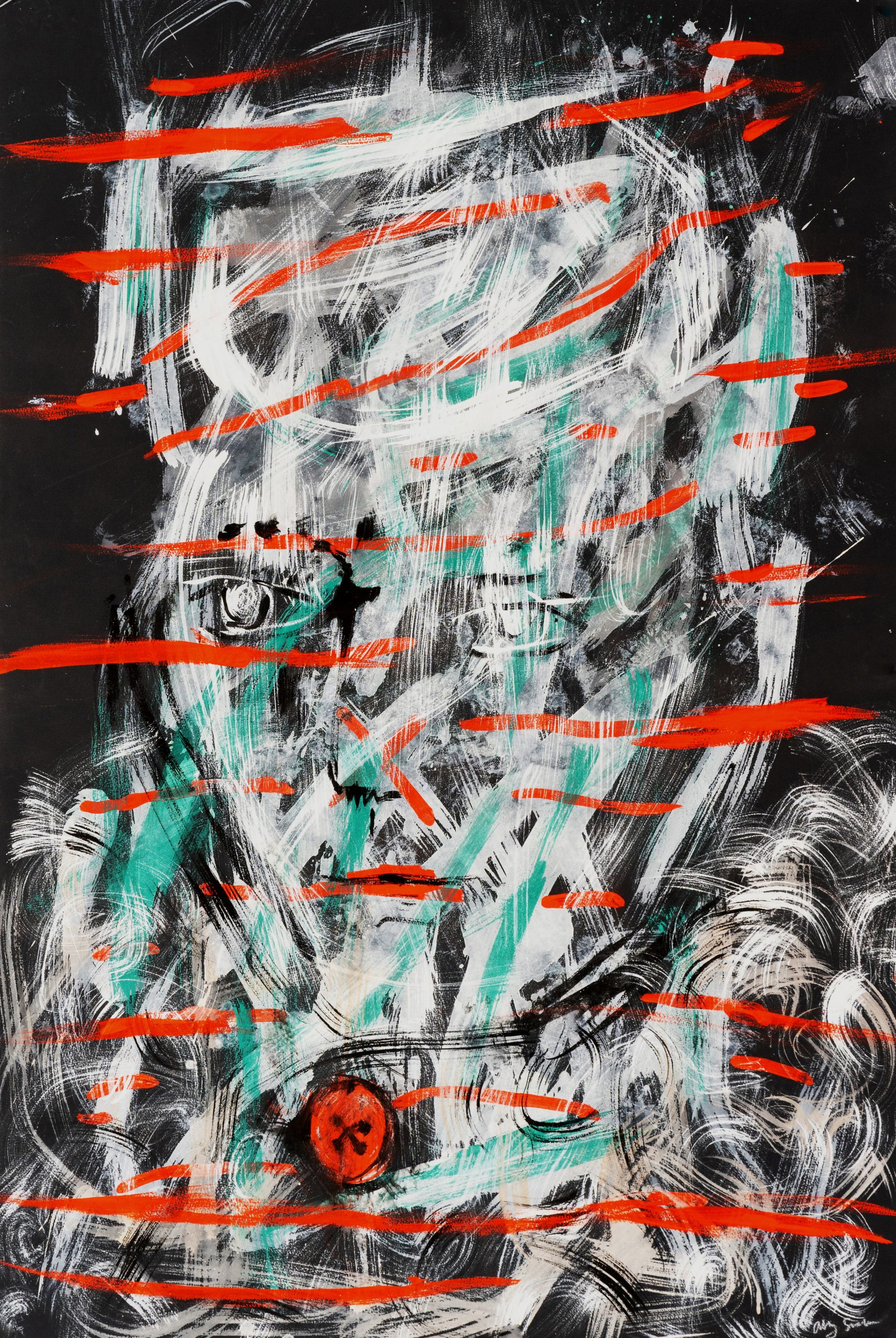
I think it was Mozart who had played a piano piece he had just composed for a small audience. He was asked to explain it and he played it again.
That said.
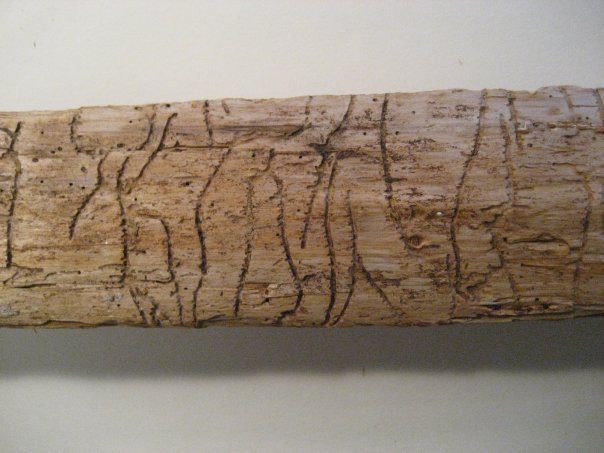
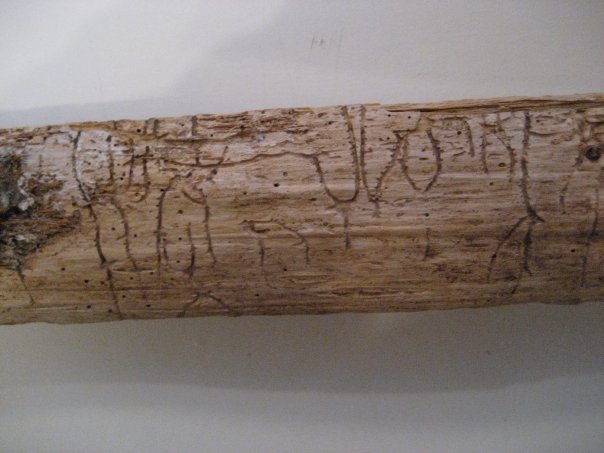
I started looking at the bug writing many years ago. I found the lines beautiful. When I named it “bug writing” it took on another function—it became script.
The fact that I didn’t have any meaning to ascribe to the lines seemed important to me. I often find that when people explain paintings (and what they mean) something is stolen from them. Something that existed in another realm—beyond meaning—is tied down and limited by the supposed meaning. Sometimes words have a way of taking phenomena and capturing them in verbal cages.
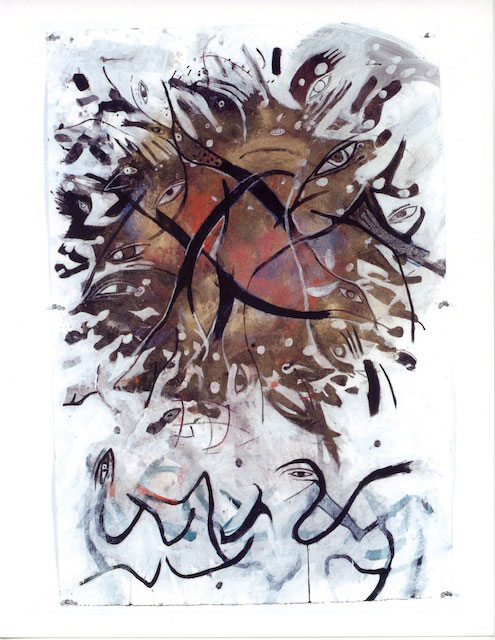
I began to copy bits of the bug writing and put them into my paintings, to take the place of script and to say: “I don’t know what this painting means. If it means something that you can transcribe into verbal meaning, well . . . that isn’t what it means.” So I began to incorporate bug writing into my paintings. If you look at the bottom of the painting that I’ve named Fibroid, you will see little bits of bug writing script. A friend had a fibroid tumor removed. She told me that it consisted of a mass that had many various body parts in it, but shuffled, out of order. Maybe it was like something someone once described to me as an homunculus, but maybe he had it wrong. The bug writing seemed a perfect description of the image that I had conjured up in my brain, based on that description. The other title, Fibroid, seemed too scientific, and to limit the meaning and content of the picture.
View more of Abby Shahn’s work in her collaboration on Our Book with Véronique Plesch.