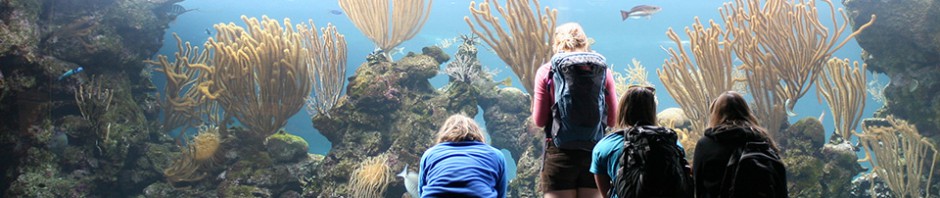
I love Bermuda! Everything is so beautiful here, from the clear blue water to the adorable little skinks on Nonsuch Island! Continue reading
-
Recent Posts
Recent Comments
Archives
Categories
Meta
I love Bermuda! Everything is so beautiful here, from the clear blue water to the adorable little skinks on Nonsuch Island! Continue reading
One of the highlights of my trip so far has been visiting Nonsuch (pronounced none such) Island. Nonsuch is an island with a rich history that has in recent times been the home of ecologist David Wingate’s project to restore an ecosystem modeling pre colonial Bermuda. In centuries before David arrived the island was used to quarantine yellow fever victims, and later as a reform school for wayward boys. All projects on the island have used Nonsuch for the same reason: its remoteness. Currently there isn’t even a legal dock on Nonsuch so we had to swim in from the boat like the victims of a shipwreck. David himself, being an elderly man, used the one dock, a cool half sunk wreck that was placed at the shore for that purpose. While he gingerly walked the few planks placed where the deck used to be and into tunnel dug by the wayward boys in the cliff shoreline, we were told that for us to use that gangway would be against the law. So into the water we went even though it wasn’t very inviting, and the prospect of returning the same way while the sun went down was even more disturbing.
The tour of the island more than made up for the challenges getting to it. David has been coming to the island for fifty years, tearing out species known to be invasive and planting ones that were native but missing. It was amazing to hear of this cyclopean task which at times involved killing thousands of cane toads, uprooting millions of Suriname cherries, burying hundreds of turtle eggs, and poisoning countless rats. The rats and toads are a constant problem because they unbelievably swim from the mainland at regular intervals. I can’t imagine what these creatures are thinking when they set out for that swim, but the impetus must be strong. David also deals with reestablishing Cahows on the island, wondrous birds who spend years at sea before returning with GPS precision to the nests where they were born. David and his assistants transplanted fledgling Cahows to nests on the Nonsuch, feeding them everyday and becoming imprinted until the birds teach themselves to fly and push off. All in all the island was a beautiful nature preserve and one that I felt privileged to be able to see. I just hope David’s energy isn’t so rare that a successor won’t come around to keep the invasives in check.
In non natural news, today we got to see two cool boats. One was the vessel used by the Biostation for oceanic research. It was interesting to see all of the expensive scientific equipment and a modern bridge. I could see we are far beyond the days of wooden steering wheels. Later we had a chance to view the largest personal yacht in the world, a stupid large affair costing hundreds of millions of dollars, the toy and apocalypse haven of some Russian billionaire. The boat, christened Eclipse, features paparazzi-shooting lasers, a submarine, and a German built missile defense system. It houses 70 something crew and 14 passengers.
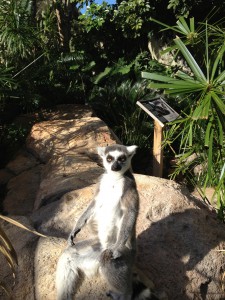 Ring tailed lemur
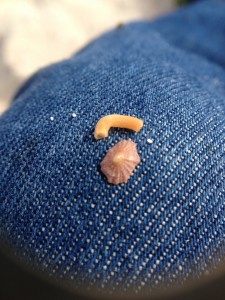 Carbonate organisms
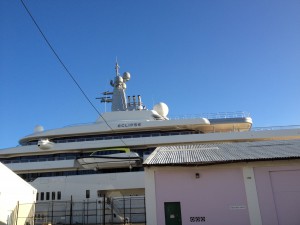 sweet boat man
Today was straight up amazing. Started out with another great breakfast (which is key), then without much further ado we headed off to the Grotto Bay Hotel for some exploring… no, really. The hotel is surrounded by sweet caves!
One cave we wanted to explore was closed off because of some excavation project or something, but we found another sweet one right on hotel premises! It was larger than the first caves we went in, and minimally built up (and therefore safer, which I think Bruce liked). It was great. We found some calcite…. shocking… some limestone… also shocking… and water! Wild! On the way out we met another adorable cat who Sarabeth seduced with some cat food.
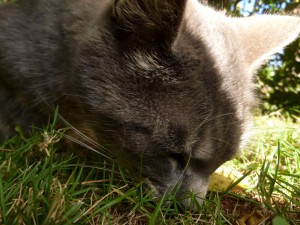
kitteh
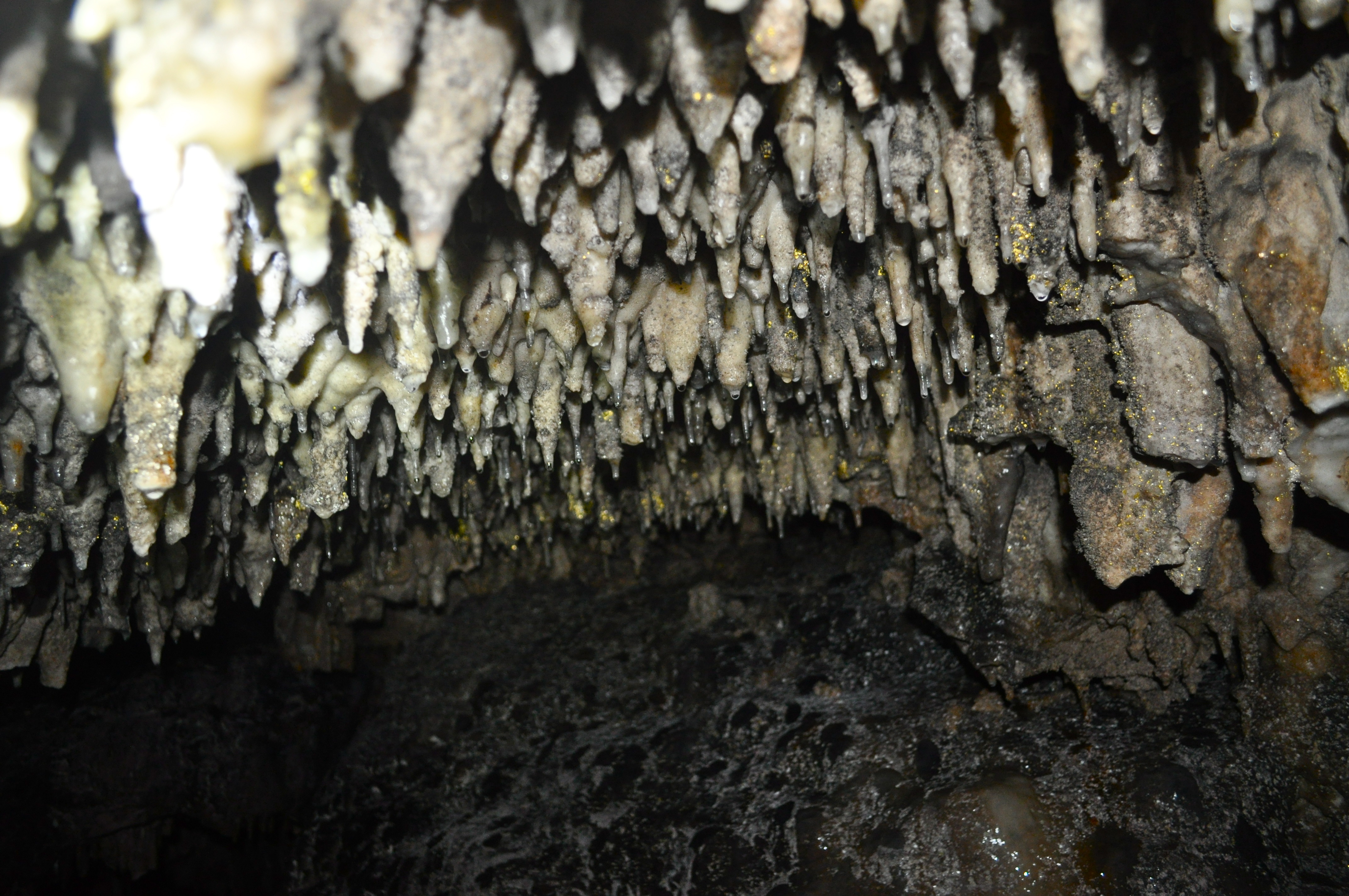
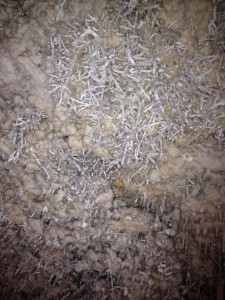
Today was cave-crazed. In the morning we visited Prosperos Cave which is near & maybe part of a resort. It was fairly renovated–it had man-made stairs and a ladder into a pool of water (for swimming). There were millions of awesome stalactites with a certain algae on it that we thought was possibly a mineral deposit, but upon further inspection I’m 88% sure it’s algae.
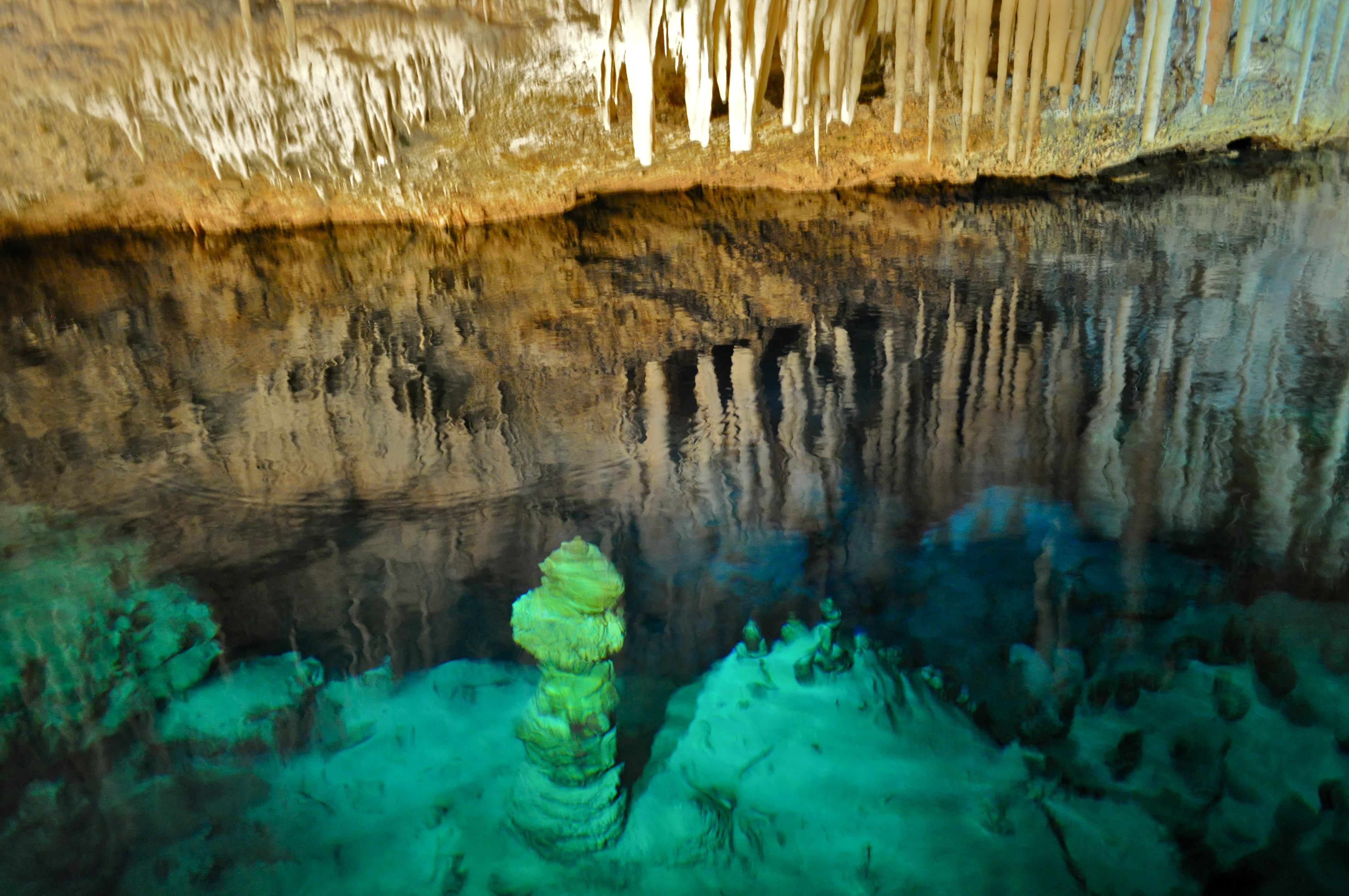
 Then we took a more commercial route and toured the Crystal Cave, discovered by 2 boys playing cricket about 100 years ago. Good thing they had rope. The water inside was beautiful blue and CRYSTAL clear, and also where 4 iPhones had met a watery grave. More gorgeous stalactites too. I gotta say though I prefer caves that are left alone. The cave we went to a few days ago by Tom Moore’s Tavern was in a relative jungle (which was cool & unusual after seeing so much of Bermuda that has been developed), and we went in and turned all our flashlights off and it is so absolutely black. An unmatched feeling. However the Crystal Caves had much more well-developed speleothems. And they’re protected now which is good.
the afternoon was a blast also; we swam INSIDE a cave!! It was chilly and quite salty, but there weren’t any deep sea creatures looking around to nibble at our toes which was good. You just never know in the Triangle. The bottom of the pool of water was pretty silty and lifeless. Until I tried to take a picture upside-down and my mask and snorkel slipped off and also met a watery grave…or so I thought!! But Matt was very heroic despite the deep & kind of eerie water and retrieved them. Not without teasing me, but I probably deserved that. I also found the $80 that I had lost earlier on this trip today. Hooray!
After that drama, we zipped down to St. George’s and saw a HUGE yacht owned by a Russian gazillionaire, complete with swimming pools and helicopter pads. Plural. Wild! I tried to go up close to it, but someone on deck waved me away.
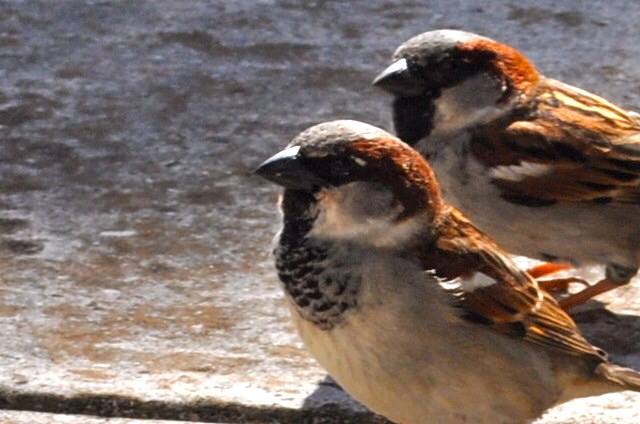
Also there were lots of cute seed beaks at lunch!
It’s also really exciting to be getting better acquainted with the island of Bermuda and the lay-out of things. And to feel more comfortable on the lefty roads! Look right, then left.
Miscellaneous: Saw three cats.
Today we had the opportunity to swim in a cave! It was amazing. This was in the afternoon, but in the morning we also got to visit a few caves. It was a cave filled day.
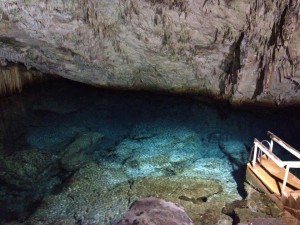 We started out the morning at Prospero’s cave. This cave is actually used by a hotel as the indoor swimming pool. We asked a staff member of the hotel if we could check out the cave, and he happily pointed us in the right direction. The cave opens up to a lake of crystal clear salt water (it is connected to the ocean). If you look beyond the lake and climb a few stairs, however, the cave continues as a dry cave. We spent a while looking around in all the crevasses, admired the stalactites hanging from the ceiling, and then made our way to Crystal Caves.
Crystal caves were found in 1905 by two young boys looking for their lost cricket ball. While they never actually found the ball, they ended up discovering an impressive cave system containing deep lakes. Since the discovery, this cave system has been a tourist attraction. Today you can only take a guided tour through the cave, and you cannot touch anything. This is a precaution to keep the cave as pristine as possible and not harmed by any human touch.
While on the tour we noticed some very interesting looking stalactites. Instead of pointing straight down, they went sideways in different direction. Our tour guide could not explain why they do this, but Bruce said it is due to the wind patterns in the cave. Pretty cool!
After the morning caves and a quick lunch, we went back to a cave we found yesterday that looked perfect for swimming. Fun was had by all! I think this might be the only time in my life that I have the opportunity to go swimming in a cave. Clara dropped her goggles into the deepest part of the cave, but thanks to Matt, even they ended up back at BIOS at the end of the day.
Tomorrow is our last full day here in Bermuda. I am not looking forward to leaving, but would rather stay for another week and continue to explore. I can’t wait to see what Bruce has in store for us on our last day in this paradise.
We made a small research presentation of Bermuda’s carbonate organisms. My assignment was to look something about Bermuda snails.
Continue reading
today was an especially enlightening experience, as I went inside a cave for the first time in my life, and met the man responsible for re-establishing pre-colonial animals and vegetation on Nonsuch Island (one of Bermuda’s finest)
So not wanting to retire after my last post, I wanted to think about some lighter thoughts and light in general.
Looking back over the past week, I think we have had some incredible experiences. We have learned how to drive our scooters and today we traveled the length of the island. In addition to the distance we experienced sun, wind, cloudiness, salt spray, cold and rain. All arrived back in time for dinner.
Traveling to the south shore beaches and the dockyard took us to some new spots with new geology. At Warwick Long Bay, we took a look at the coarse sand grains in the lag left behind by the wind. We tried to determine the diversity of the organisms out in the water by looking at the fragments left behind in the sand. We came to the conclusion that one of the missing components in the sand was coral and realized that most of the grains we were looking at were too small to have easily identifiable coral pieces in them.
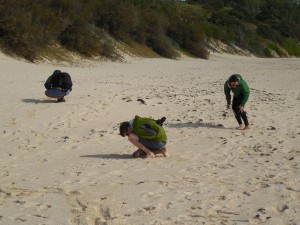
Identifying carbonate grains in the beach at Warwick Long Bay
We also tried to do a point count on the number of Homotrema rubrum (the foram that make the sand pink on Bermuda) and found that there were anywhere from 30 to 60 grains per square inch.
From there we travel over to nearby Stonehole Bay and did the same thing there and found that the grain-size was a little bit smaller and there were more gastropods in the sand. We also found more chiton fragments in the sand along with some larger coral fragments that were easy to identify.
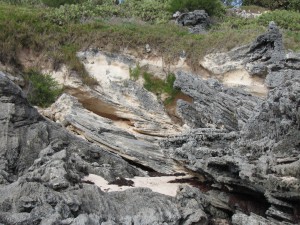
At Stonehole Bay we also talked about the development of the cross-bedding in the rocks exposed near the water. From there we went to the back of the beach and looked at the dunes that were developing there and made the connection between the sediments and rocks.
Dune cross-bedding at Stonehole Bay
From there we headed southwest along the South Road to Church Bay. At Church Bay we were able to see the boiler or cup reefs close to shore. Had we not gone out on the boat to see some off Tucker’s Town, we would have thought about doing some snorkeling here today (the weather was also not so conducive to snorkeling either). So we looked at the boiler reefs and looked at the sediment and found much bigger pieces of coral and pieces of the cup reefs. From the fragments of the cup reefs we could readily see the constituent organisms, red algae and vermetid gastropods.
Boiler reefs close to shore at Church Bay
Church Bay (and most of this section of the coast on Bermuda) has exposures of some of the youngest rock on Bermuda, the Southampton Formation. The Southampton Formation is just barely a rock! It is only about 80,000 years old and is very crumbly. That is because the dune sediment that makes up the unit is not very well cemented. We are learning that one of the ways to identify the five units on the island are by how “hard” the rocks are. Basically all five units are pretty much the same, but the older they are, the better cemented they are and are “harder”.
Southampton Formation at Church Bay
From Church Bay we headed on a more northerly course into the wind to Boaz Island. Boaz Island has an outcrop of a fossil boiler reef that is exposed on the west side of the island. In the outcrop on can see the very porcelain looking red algae and the brownish vermetid gastropods that grow within the algae. These two organisms make up the majority of the reef. We also realized from our snorkel that the top of the boiler reef was pretty much at sea level. If we were standing on this one, it meant that sea level in the past (about 125,000 years ago) had to have been about a meter and a half higher than today.
Fossil boiler reef exposed on Boaz Island
I continue to be struck by the enthusiasm of the students on this trip. They are eager to learn and everywhere we go, they are crawling over the rocks and have their hand lenses out and are looking at the sand and chasing the organisms around in the tide pools (the chitons and gastropods are not much of a challenge). We are having a great time traveling the island and learning about the geology and the organisms responsible for producing the majority of the sediments.
Tomorrow we are heading to Walsingham to look at some native and endemic plants, karst landscape, mangroves and caves in the morning and then to Nonsuch Island in the afternoon.
I have been behind in my blogs so this one will start off yesterday morning. Our day off began with a trip into Hamilton, the largest city on Bermuda. After downing much needed smoothies we started off our sight-seeing at the Anglican cathedral. Beautifully constructed out of Bermuda stone, Bermuda’s main church has stood since 1905. The interior features above average stained glass but I found the outside even more striking due to the limestone’s propensity to dissolve and form pockets. Unless they seal or paint the cathedral it will eventually crumble, but in the mean time the visual effect created by the rain is awesome. The detailed, living pattern reminded me of gothic architecture and the scattered plants growing right out of the stone added to the organic flavor. You gotta see it.
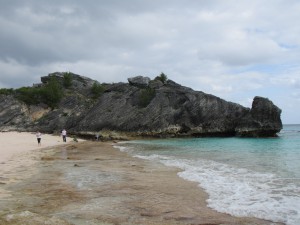
Later we zipped over to a beach on the south shore of Bermuda. What’s distinctive about beaches here, besides the pink sand, is the caves, rock pillars and lithified patios scattered across the sand. Its often like a maze–there is always a sand floor to walk on but you can almost get lost in the grottos and hardened sand dunes. The “Bermuda Stone” occupies a hazy place between sand and rock. It can be easily carved with a key and I have been disappointing to discover that it is not fit to climb on. An inviting hand hold will suddenly crumble in a puff of dust leaving me on my butt in the sand. All of Bermuda stands in a brief equilibrium between the sand it formed from and the sand it will eventually become. Its one big sand castle.
Adding to Bermuda’s unlikeliness, each grain of sand here was once part of the exoskeleton of some ancient marine organism. These organisms include clams, sea-worms, crabs, coral, homotrema (who make the sand pink), and pretty much anything with a hard shell. To one of these little guys the beach is a gigantic graveyard. They started building the reef that became Bermuda millions of years ago on top of a volcanic seamount. These reefs and the products of their erosion have piled up to heights of 400 feet on an island 27 miles long, all made from carbonate and calcium extracted ion by ion from seawater. These facts really give a sense of geologic time, especially considering this all happened after the breakups of Pangaea, and the even older supercontinent Amasia, and so on.
Last night some of us had the pleasure of heading back into Hamilton for a night on the town. We left the scooters in the lot, instead opting for a cab ride with a genial driver who couldn’t stop bringing up his love of spliffs. We got to town chests puffed out and looking dapper and all managed to have a good time. Whoever said Bermuda was expensive though was right. I’m not accustomed to spending $60 dollars for a night of drinks, and I didn’t, but it was in the realm of possibility.
Despite the scooter fumes being a little extra acrid this morning, today has been an equally great day. We made it all the way out the to west end of the island and back, a considerable round trip of approximately 150 minutes of scooting. I feel indebted to Bruce for taking us on this journey after having done it with his family just yesterday. Thanks!
While we have been on Bermuda, there has been a lot of sunshine, very little rain and lots of WIND. The wind seems always to be in our faces as we drive, but we are surviving. Somehow it seems really hard to visualize Bermuda as being anything but paradise. However, when I travel out the the west end of the island my thoughts sometimes realize there is another part of Bermuda. When in the west end, I always make it a point to stop at one or more of the various military cemeteries that seems to make up the majority of the greenspace out that way.
The one that I usually stop at and spend a few minutes reflecting is the Royal Naval Cemetery, just before the gates to the dockyard (see below). It is always a somber place to visit, especially when one stops to read the inscriptions on the markers. What impresses me most or causes me the realize the history of this part of the island are the inscriptions on the markers. Very few of those interred in the cemetery actually died of natural causes. Such wonderful descriptions include died of yellow fever (ok, I guess that is sort of natural), fell from the rigging, crushed on deck by cannon, crushed while careening (look that one up), and accidental drowning (however, I don’t suspect many did it on purpose). Ages of the dead are also usually very young, mostly between 17 and 25 years old.
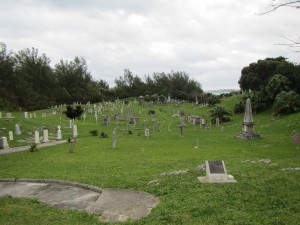
Royal Naval Cemetery
Today I found one on Watford Island that I never knew was there. It was a small one, with a carefully made limestone wall around it and a very impressive plaque at the entrance (see below).
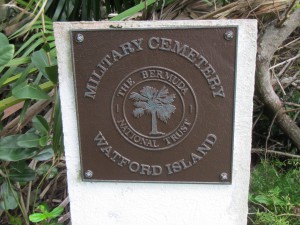
Bermuda National Trust marker at the beginning of the short trail to the Watford Island Military Cemetery
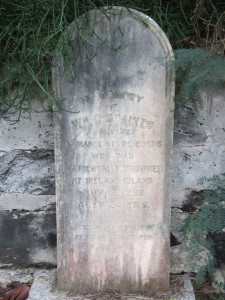
Private Wm C. Staines who was accidentally drowned, aged 24
Makes you feel really good that such attention has been given to these young men who gave their lives for their country while so far from it.
There was also marker for a prisoner at the dockyard who was buried in “unconsecrated ground”.
So while I am visiting this paradise and sharing with others about the geologic evolution of Bermuda, I am also aware that others came here and never left.
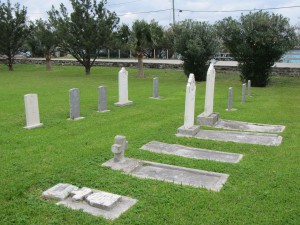
Somerset Island Military Cemetery
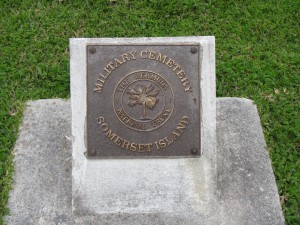
Somerset Island Military Cemetery plaque