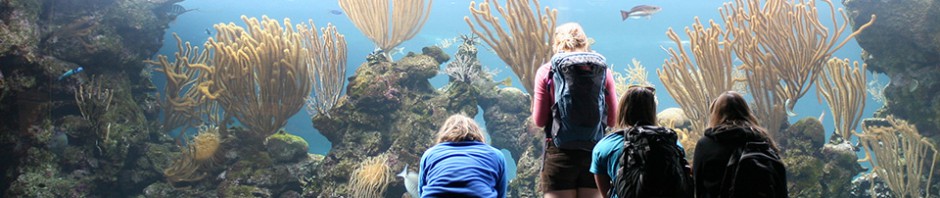
So Bruce asked us to summarize our second presentation about carbonate organisms in a post, and I plan to talk a little about stony corals. After seeing them in reality while snorkeling at North rock, I found them even more interesting than I expected, especially in variety and color. In this post, I will write about the characteristics and classification of stony corals, introduce a few species, and end with some life stories about stony coral.
Characteristics & Classification
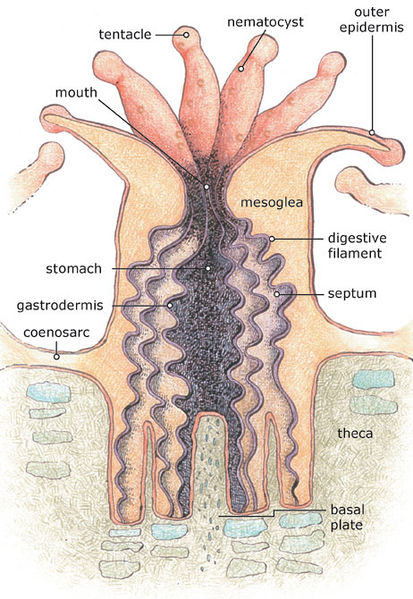
Scleractinia, also called stony coral, possesses a solid, carcareous skeleton on which the living tissue rests. They are generally marine animals, some major reef builders. All stony coral have polyps that secrete a cup in which they live, and they withdraw back into the cups for protection. These polyps have smooth tentacles, organs that serve for gathering food and sensing the surroundings.
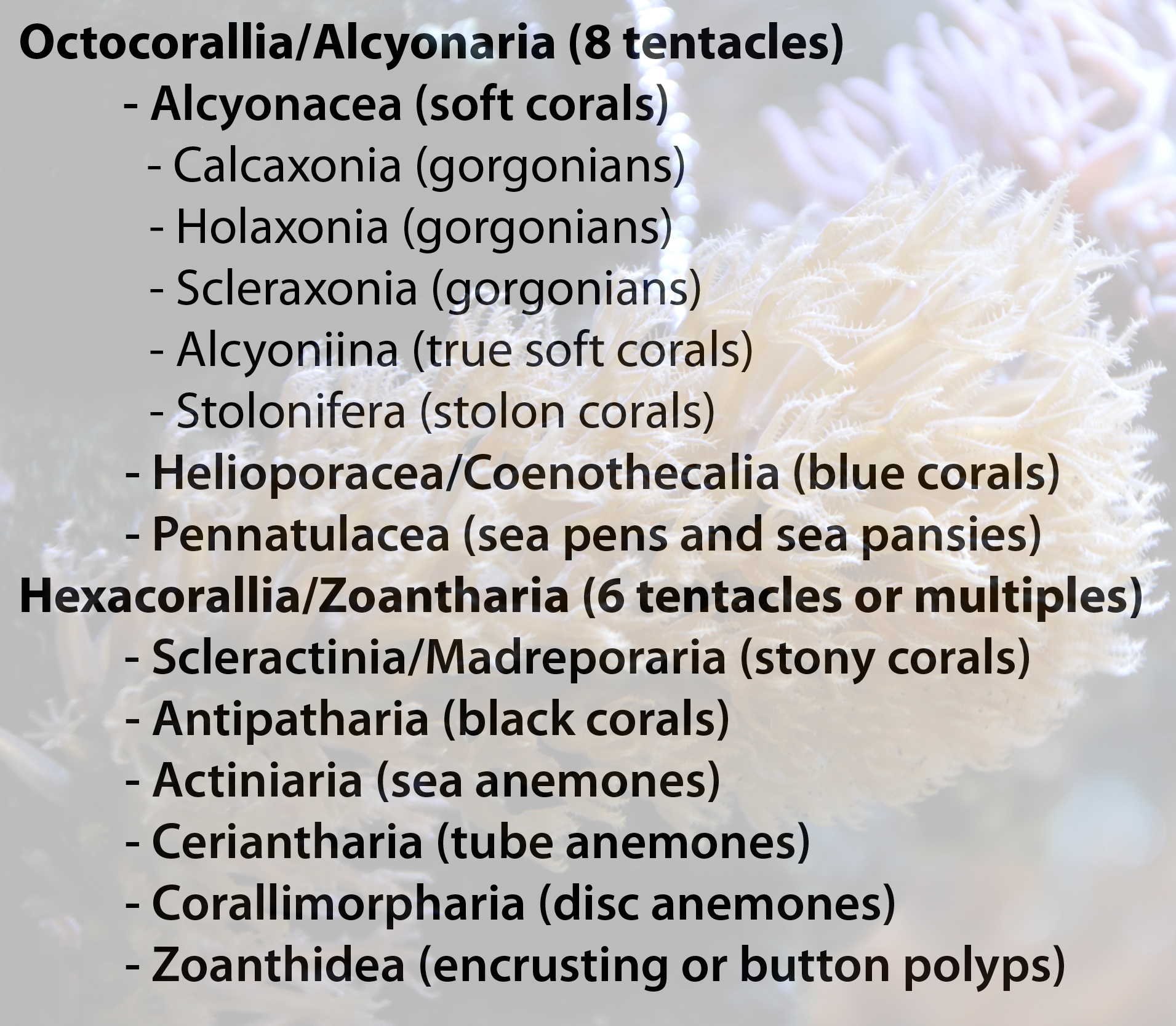 Most corals belong to the class Anthrozoa, which is divided into two subclasses: Hexacorallia and Octocorallia. Subclass Hexacorallia is split up into six orders. Scleractinia, stony corals with calcareous skeletons, is one of these orders.
A Few interesting species
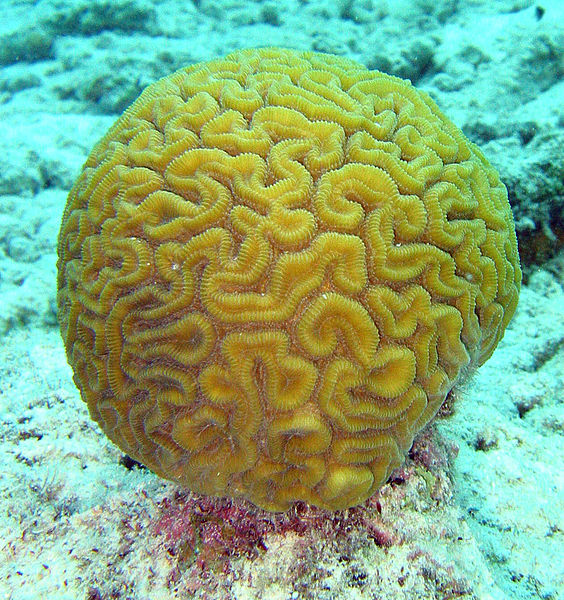 There are 21 species of stony coral in Bermuda, some of them helped forming the colorful reefs that we’ve seen when snorkeling. One of the major reef builders is the brain coral, which has a spheroid shape and grooved surface that resembles a brain. Its polyps are tightly fused and form long meandering bands. Due to the difference in the shape of the bands, there are two species of brain coral: symmetrical (Diploria strigosa) and grooved (Diploria labyrinthiformis) . While grooved brain corals have a groove running around its apex, symmetrical brain corals have smoothly rounded ridges that goes radially across the surface. Brain corals are very abundant in Bermuda, existing in many shallow water areas that range from 1 to 30 meters. They are so common that I’ve even seen some of them on the sides of a shipwreck 🙂
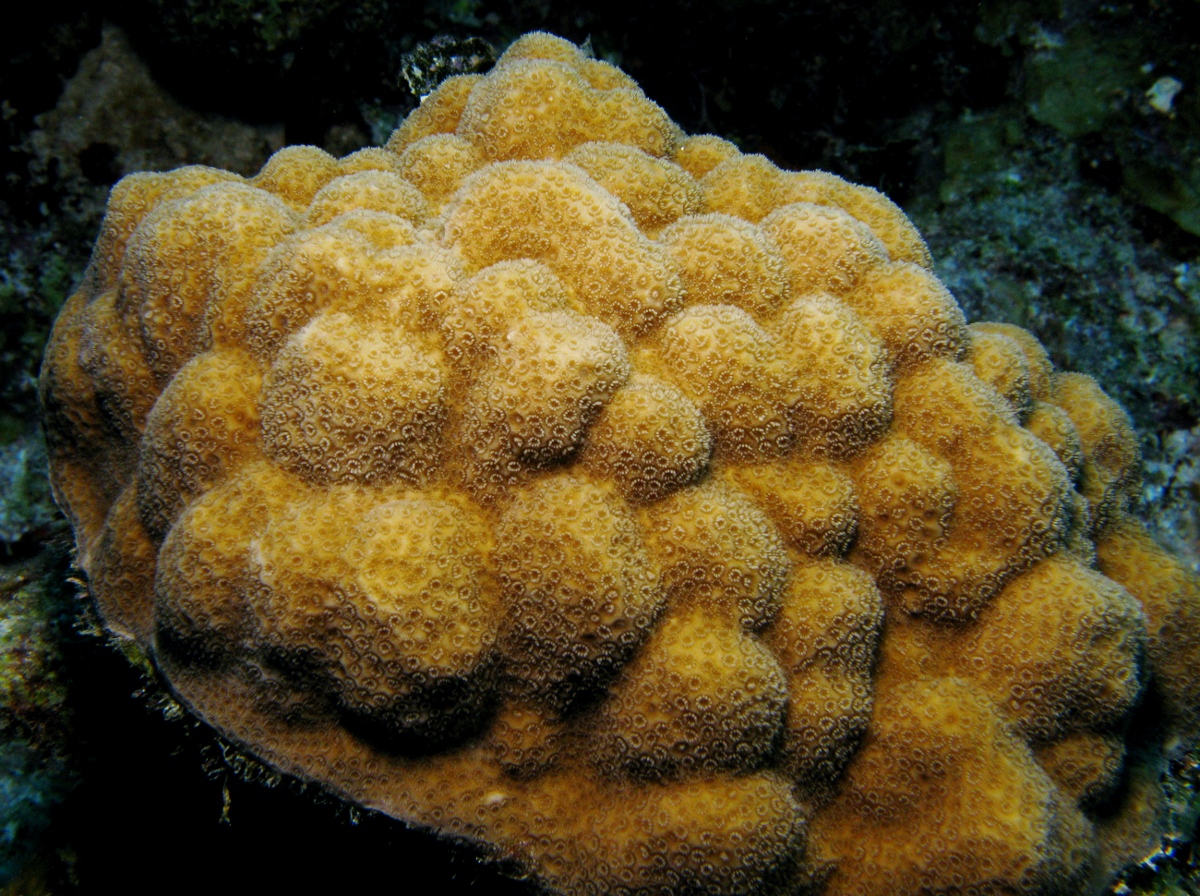 Another common coral specie is the mustard hill coral, whose name is derived from its mustard yellow (sometimes grey) color. It’s lumpy in appearance and can be found both in reefs and inshore rocky areas. This coral has cups of approximately 1-1.5mm in diameter and usually contains a number of overgrown specimens of Ceratoconcha (a type of coral inhabiting barnacle)
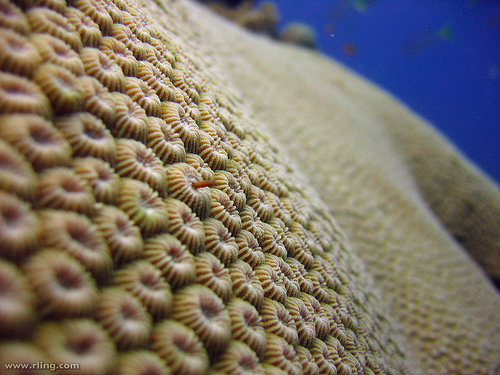 The great star coral, a significant reef builder, also thrived in the shallow to moderate waters of Bermuda. Colonies of the great star coral form into massive boulders and sometimes develop into plates. The well-developed polyps of the great star coral are usually withdrawn during daylight hours, but open at night to feed on plankton.
Life Stories
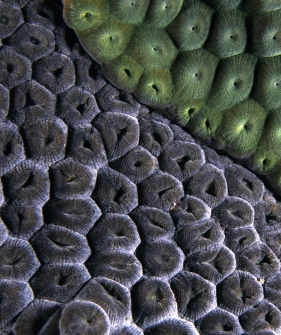 Though corals seem to be living harmoniously together, many compete aggressively for space whenever their growing edge met. One colony of corals may win a victory by erupting in fleshy threads that cover and digest each other’s tissues. The slowest-growing species are often the most aggressive and vise versa.
As for reproduction, Stony Corals can reproduce both sexual and asexually. Sexual reproduction results in the birth of a free-swimming planula larva that eventually settles to form a polyp. In colonial species, the initial polyp then repeatedly divides asexually, to give rise to the entire colony.
Corals are also predators that use stinging tentacles to catch food, such as planktons and algaes. Tropical corals additionally get energy from small algae living symbiotically inside the polyp.
References: http://marinelife.about.com/od/invertebrates/p/Stony-Corals.htm
http://www.coexploration.org/bbsr/coral/html/body_basic_coral_biology.html
http://www.liveaquaria.com/product/prod_display.cfm?c=597+321+429&pcatid=429