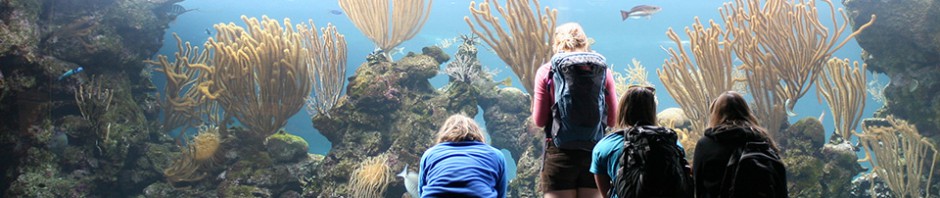
We made a small research presentation of Bermuda’s carbonate organisms. My assignment was to look something about Bermuda snails.
I could discover only a few about land snails. There is Amber Snails, which apparently found only in a form of fossil; there is Bermuda land snail, and there is Rosy Wolfsnail that has been brought from outside.
Bermuda land snail, scientifically Poecilozonites, is an endemic genus of pulmonate land snails in gastrodontidae family. It’s very small, where even an adult snail can grow as big as 10 mm in its shell size. They were believed to be settled in Bermuda at least 300,000 years before present. There is no certainty as to where they come from, but scientists think the snails’ origin is in North America. If the scientists’ understanding is right, they traveled across Mid-Atlantic using flotsam. How brave!
In the recent ages, however, its population has fallen to a critical level in the wild. Bermuda land snail has four sub-branch species, namely, Poecilozonites bermudensis, nelsoni, reinianuns, and circumfirmatus. Unfortunately, the first three kinds were already extinct, and therefore circumfirmatus is the only species that may still be alive.
That, too, is considered endangered species, where Zoological Society of London describes, The “sole survivor of a once diverse range of endemic Bermudian snail species, are being driven to extinction by the introduced predatory snail, Euglandina rosea (rosy wolfsnail), and Argentine ants.”
In 1958, Wolfsnail was brought to Bermuda. People intentionally brought it because they wanted to control the pesky garden snails that was also introduced in the late 1920s. The Wolfsnail, however, isn’t capable of distinguishing between endemic and alien snails, resulting in a huge decline of the population of endemic snail.
In a response to the extinction crisis, London Zoo decided to bring some of the living snails to U.K. and save the colony. According to the BBC News report on March 5th, 2004, “The 56 Bermudian land snails were flown” and raised in London.
Now that time has gone by, there were some follow-up. Bermuda Sun (BDA SUN) covered the success in its lifeboat project on April 25, 2012, saying that “its colony had increased to 70 adults and 158 juveniles.” It was also remarkable to mention their timing in a decision to rescue the snails, because the “survey completed in 2012 could not find any wild population of this endemic snails in Bermuda; as a result the only snails [they] have of these species are housed at London Zoo.”
Compared to critically endangered land snails, Bermuda has got more snails that live in ocean. There is purpose ocean snail, Janthina janthina. It can grow up to about 3.5 cm, and you’d be able to find them in Bermuda often after storms or when the wind consistently blows for a few days. It has also got a similar cousin, Janthina pallida, but its shell is more highly doomed and lavender color.
Little snails also lives in the shore of Bermuda: Lettered Horn Shell, False Cerith, Zigzag Periwinkle, Angulate Periwinkle, Beaded Periwinkle, and Prickly Winkle. They look quite similar to one another.
Reference:
- “Bermuda Animals & Wildlife.” Bermuda Animals & Wildlife. N.p., n.d. Web. 14 Jan. 2013.
- “Mission to save Endangered Snails.” BBC News. BBC, 03 May 2004. Web. 15 Jan. 2013.
- “News – Bermuda Sun News … Beyond the Headlines – Bermuda.” News – Bermuda Sun News … Beyond the Headlines – Bermuda. N.p., n.d. Web. 14 Jan. 2013.
- “Research.” Snail Fossils. University of North Carolina, Wilmington, n.d. Web. 17 Jan. 2013.
- “Snail Mail from Bermuda.” ZSL. Zoological Society of London, 4 Mar. 2004. Web. 15 Jan. 2013.
- Sterrer, Wolfgang. Bermuda’s Marine Life. Bermuda Natural History Museum and Bermuda Zoological Society. 1992. 121-125.