
A great blue heron, one of the few birds that frequents the Caye, fishes in the shallows near the mangroves. Photo by Sarabeth George.
After one short ocean swim yesterday afternoon, we were all eager for our first day on the island and our first snorkeling adventures. Birding on South Water Caye is limited, so our wake up time was, for the first time in two weeks, pushed back until 7:30 for breakfast. This was great in theory, but few were able to sleep late after so many consecutive 5:45 mornings. The girls’ room was stirring by 6, many of us anxious to experience our first full day of island life.
After a hearty breakfast of tortillas and beans we began our first snorkeling trip: 20 pale swimmers pulled flippers, masks, snorkels, writing slates, and fish and coral identification guides into the water. Due to the abundance of yellow stingrays, we were taught to do the “stingray shuffle,” scooting our feet through the sand in the hopes of alerting the rays to our presence, to decrease the chance of a painful sting through bottom of our feet. Once in the water, we followed our guide through fields of turtle and manatee grass to the reef. We were amazed at the overwhelming diversity on the reef, from the spiny lobsters, crabs and Christmas tree worms beneath every ledge to the flamboyantly colored parrotfish crunching away on the coral. All too soon, it was time to head back inside for lunch.
After lunch, we spent some time discussing the various flora and fauna we’d seen during our morning swim. Our list included 48 different organisms including corals, invertebrates, and fish! Next, we headed back out to the same area again to search for a student’s lost camera (we found it!). On this trip, we saw the invasive lionfish and several giant hermit crabs walking along the seafloor inside enormous conch shells.
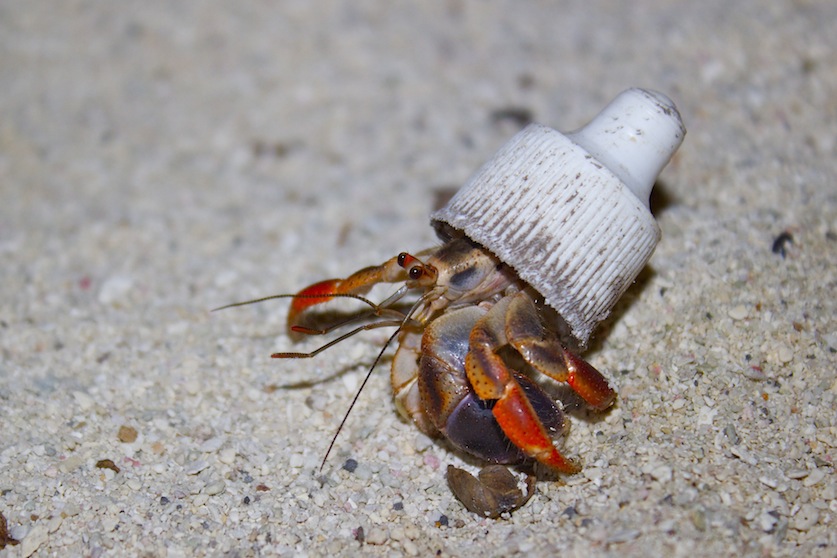
A Coenobita clypeatus hermit crab uses a plastic glue cap in the place of a gastropod shell. Photo by Sarabeth George.
Unfortunately, today we also saw firsthand the effect of marine plastic pollution on the animals of South Water Caye. During an après dinner walk, I noticed a glue cap shuffling down the sandy path in front of the cafeteria. Closer inspection revealed that it was actually a land hermit crab, using a discarded glue cap in the place of a proper snail shell. Hermit crabs typically occupy the shells of deceased snails, but in the face of a decrease in the local population of snails due to a variety of human pressures (and hence a decreased supply of dead snail shells), hermit crabs are forced to use plastic debris instead. Fortunately, the little crab looked no worse for his odd choice of shelter and happily munched the pile of coconut shavings I shared with him.
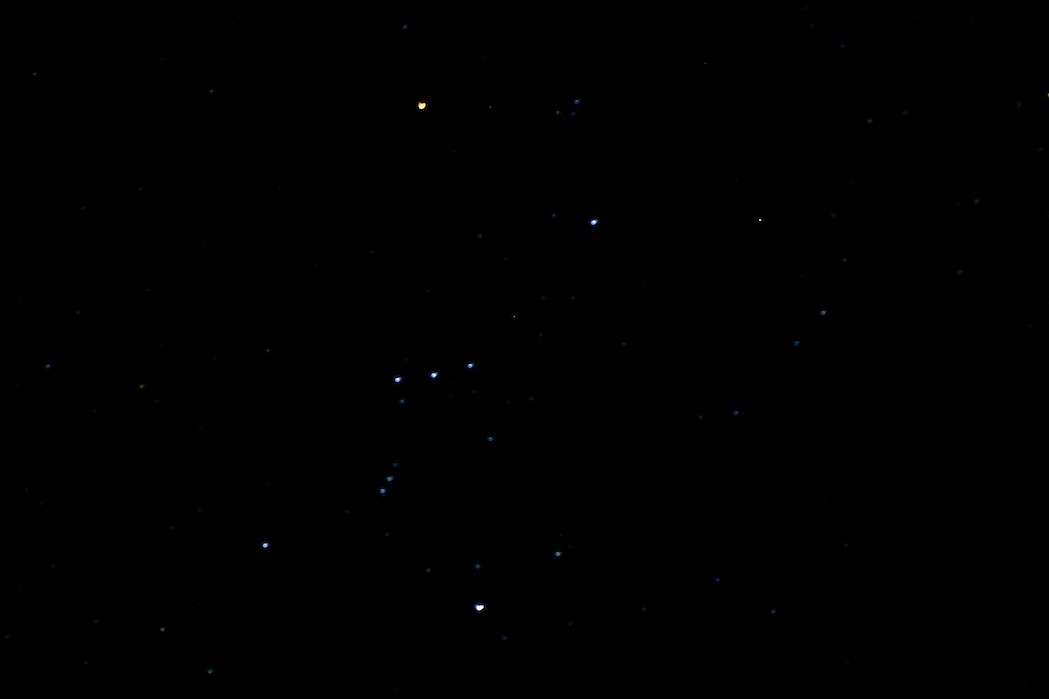
The Orion constellation shines bright over South Water Caye. Photo by Sarabeth George.
Our day concluded with fireside presentations on the astronomy and geology of Belize. It was lovely to sit next to the crackling fire and stare at the stars. A perfect conclusion to a wonderful day in tropical paradise!
~Sarabeth and Erica