Saturday January 18 was our first full day at Blue Creek, our third site on this trip. This was our most incredible day so far! Blue Creek has surpassed all of our expectations; we came anticipating dampness, bugs and rustic living conditions. It is damp and the conditions are slightly more rustic than the Programme for Belize locations, but there are almost no bugs! Like at the other locations we are in cabins and there is a central area, which we use for meals and meeting. The pavilion we eat in overlooks Blue Creek. The creek is a beautiful tropical river, deep enough to jump into and big enough to do laps in.
Our morning activity was an ethnobotany walk with local, Mopan Maya guides. Our guides Geraldo and Eusebio took us into the rainforest around camp to see the local plants and learn how they are used. This walk was especially interesting because the guides actually took plants apart and demonstrated their uses. In total we saw 14 species and learned about their uses as foods, medicines and building materials. Some of the most interesting were the Tie Tie and cohune palm. Tie Tie is used to make baskets, as well as used in roof thatching. We also got to eat the tender interior of the young Tie Tie shoots; they were a bit like celery or asparagus. The cohune palm is one of the most incredible plants here. It produces edible nuts, which taste like young coconut. The 50-foot fronds of the cohune are harvested and used as the material for all of the local thatched roofs. We also got to make out own pinwheels out of the young fronds, just for fun.
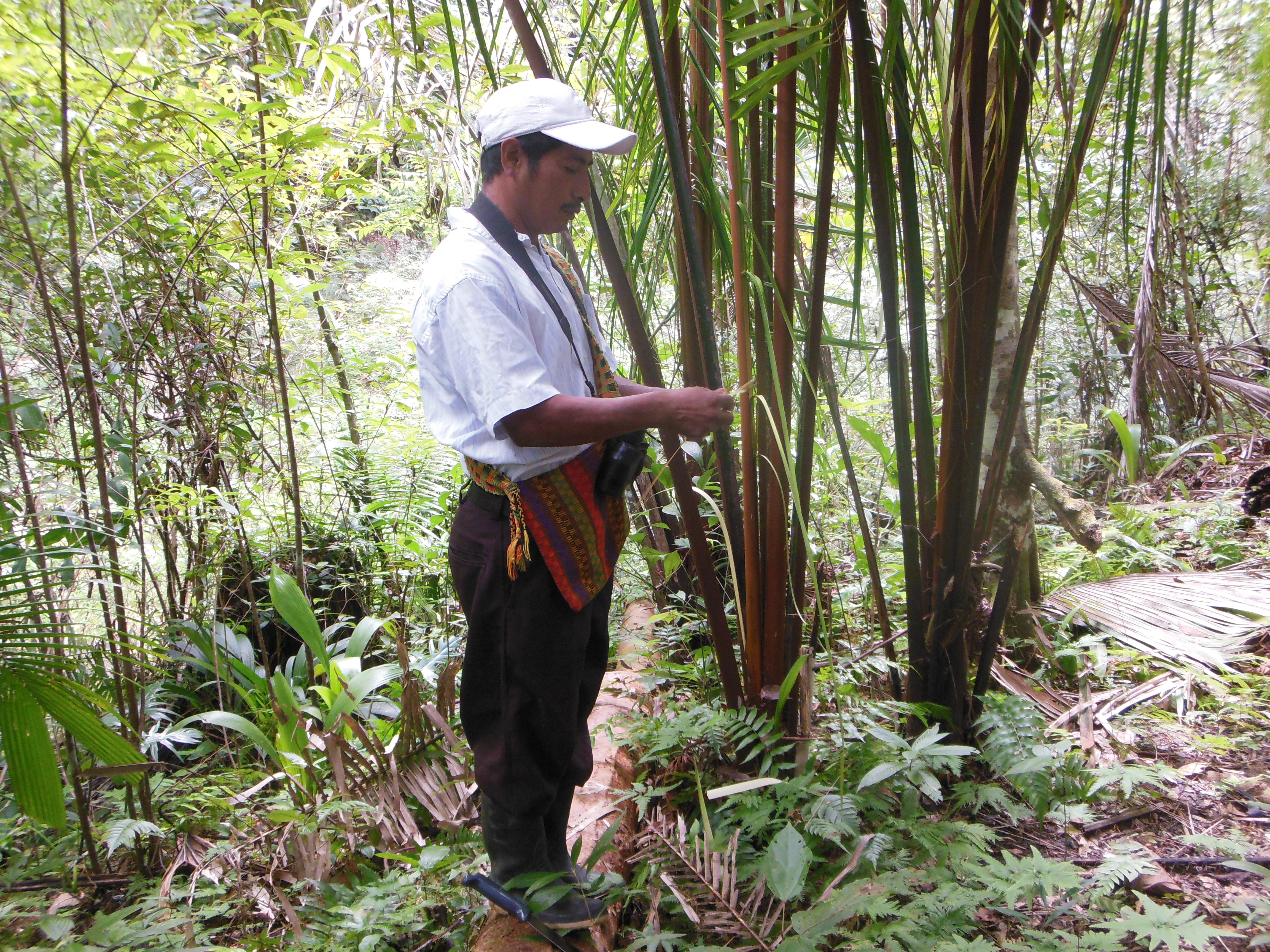
Geraldo demonstrates making whirligigs from the young fronds of a cohune.
After lunch Geraldo and Eusebio took us on a hike to a cave about ten minutes hike upstream from the Blue Creek field station. Clad in brightly colored hard hats, tattered lifejackets, and patterned swimwear, we marched along a mossy, rocky trail to reach the Blue Creek rapids, passing by a large group of ill-prepared spelunking strangers en route. Once at the rapids, we clambered gingerly along the waterfall’s periphery to reach the cave opening. Long stalactites hung precipitously from the cavern ceiling like anglerfish teeth. At Geraldo’s signal, we all plunged eagerly into the cold, rushing water, turned on our waterproof flashlights, and swam into the cave.
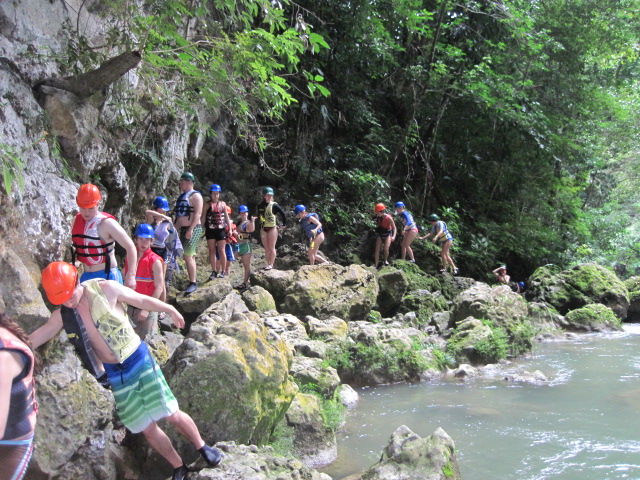
Students hike along the edge of Blue Creek toward the mouth of the wet cave.
After swimming along the twisting cave walls for about five minutes, we reached a rocky outcrop and pulled ourselves out of the water. Peter, our guide, instructed us to shut off our lamps and listen to the cave. One by one, the light beams vanished until all was pitch-black. For about five minutes, we listened to the water percolating drip-by-drip through the limestone into the creek. Our guides then instructed us to turn our flashlights back on and we dove into the water again, swimming even deeper into the cave. After reaching a small, subterranean waterfall, we turned back and floated with the current back to the cave entrance. For many of us, this was the highlight of our Belize trip so far.
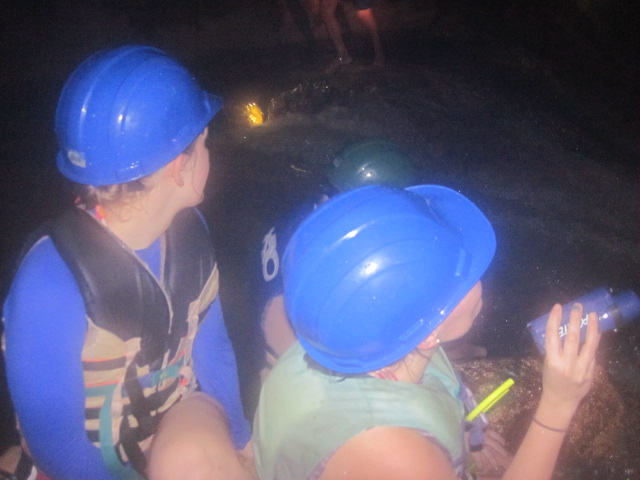
Spelunkers use their waterproof lights to observe cave formations such as flowstone and stalactites.
We spent the afternoon playing in the river. We swam up the cool, refreshing water to a small waterfall where we got to play in the bubbling pools. Students who were less excited about swimming in the cool water got to kayak around the swimming hole and to the waterfalls on either side of it. Thrill seekers cannon-balled off the dock and swung high above the water from the rope swing. The most motivated students used the swimming hole as a workout opportunity by water-jogging and swimming laps. The lack of modern amenities even had students using their biodegradable soap to bathe in the stream.
After dinner, Florencio, the Blue Creek manager, took us on a brief night hike on forest trails around the field station. Along the trail we saw a few nocturnal arthropods, including two stick insects mating upside down on leaves and a tailless whipscorpion perched on a tree trunk. We also spotted bioluminescent fungi in leaf litter. After about a half hour in the forest, we returned to Blue Creek to conclude an awesome day.