In order to analyze the audience of my book, the main aspect of the book to focus on is its purpose. As we understand the purpose of my pet book, we will be able to infer from the purpose the type of people who needs my pet book.
As I discussed in the last blog post, there’s an extensive use of summaries across three levels-book/chapter/page. In my opinion, I believe the reason for this wide use is to better allow the reader to follow along with the book. Rather than knowing nothing before each section of the reading, the reader would get a basic sense of what the book will talk about next, which can better prefer the reader mentally.
At the same time, having an introduction here would make this book a good tool for reference when somebody needs a more precise record of a particular event in Captain Cook’s voyage. In that case, the person would be able to locate the content quickly.
- The title page introduction
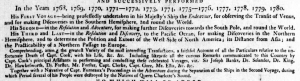
- The chapter introduction

- The page running title

With further reading, one aspect that attracts me is its goal in faithfully recording the voyage taken by Captain Cook. As a historical book, unbiased recording style is very meaningful and will further convince me about its target audience.
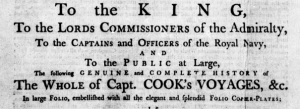
This is an image from the title page, and in this image, you can see a phrase saying: “The following GENUINE and COMPLETE HISTORY of The WHOLE of Cap. COOK’s VOYAGES”, which is the first evidence telling me that this book is truly a non-fictional piece of work.
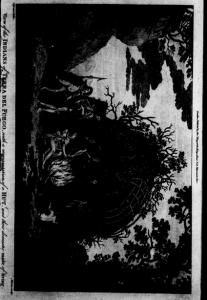
In the other pages of the book, we can see engravings of different places. These engravings all represent the places the Captain Cook and his crew went to. In this case, these pictures make the record of Cap. Cook’s discovery more complete and trustworthy, which is a great thing for people who want to refer to this book for their paper or other assignments.
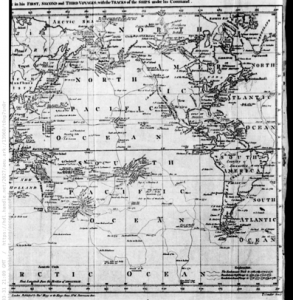
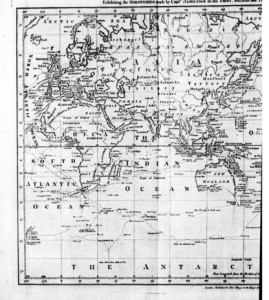
There are also evidences that made this book more professional than other regular non-fictions. In the beginning of my book, two pages are dedicated to the maps which allow the reader to understand how the world was at that time.
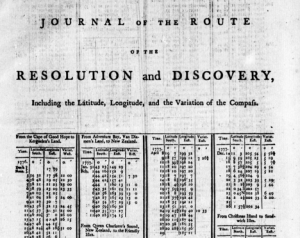
One page that surprised me more is this page of latitude and longitude, and the variation of compass. Those are not the material that readers need if they are merely trying to know what happened during Cook’s discoveries. In this case, I am more convinced that this book is mainly for people more professional than regular readers.
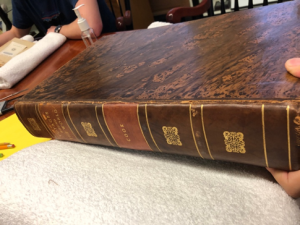
Besides the content within this book, the binding of this book can also be analyzed. As we always talk about: “form affects meaning”, the appearance of this book affects its meaning to different people.
Since this book doesn’t have decoration on the front of the book while there are a lot of decorative details on the side of the book, I believe people like book collectors wouldn’t buy this book as this book is attractive when displayed. However, this book is preferred when put in the bookshelf since its title would be very explicit on the side.
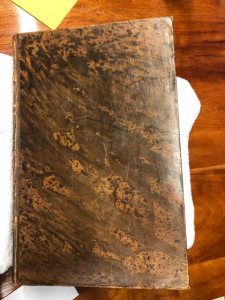
After looking through these evidences, I am very sure that my audience would be more professional than regular reader. This is because that in this book, there are a lot of materials that normal user may not need. However, since the author includes these materials in the book, I believe he is intending to show these to a more professional group of people.
Besides that, due to the fact that its title is on the side, it’s very likely that this book was in a bookshelf. Combining with its professionality and this characteristic, it’s a plausible guess that this book was in a college library where books are placed in bookshelves and professionality of books is required.
In this case, the intending audience would be student coming to the library to research materials for their assignment. Due to its accessibility to the content that made the book easy to follow, though not limited to, people can also read it for entertainment or curiosity, which will be another audience group for this book.