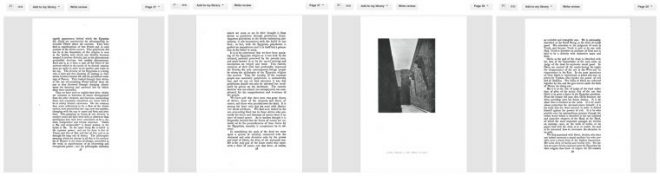
The Google Books online version of Egypt: three essays on the history, religion, and art of ancient Egypt is quite convenient. The digital facsimile is not confined to the walls of Colby Special Collections; I can access it anywhere with my phone and good wi-fi. I love the ability to “ctrl-F” a sentence or word in the text; it’s much quicker than flipping through pages until that sentence or word is found. The digital book is easily navigable with a table of contents containing links to specific pages. I was also pleasantly surprised by the electronic page numbers which remain synchronous with the printed page numbers. Because the photograph pages are not included in the original book’s page numbers, the electronic page numbers repeat to prevent misalignment (figures 1-4).
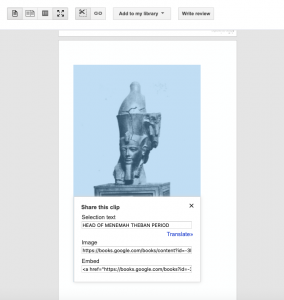
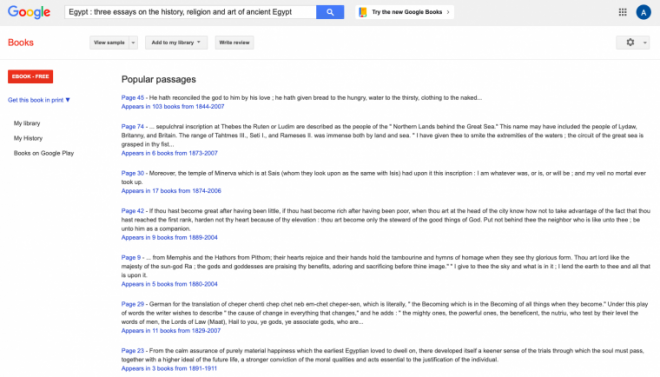
The digital version of this book can be read by anyone with a phone or computer and access to Google Books. This version could be more easily read by those with poor vision who can increase the font size with the click of a button. The entire book or selected clips can be easily shared or saved for later (figure 5). The site has a list of popular passages with links to where they can be found in the digital book (figure 6). This digital facsimile seems to have everything one could need to read Egypt: three essays on the history, religion, and art of ancient Egypt, but at what cost?
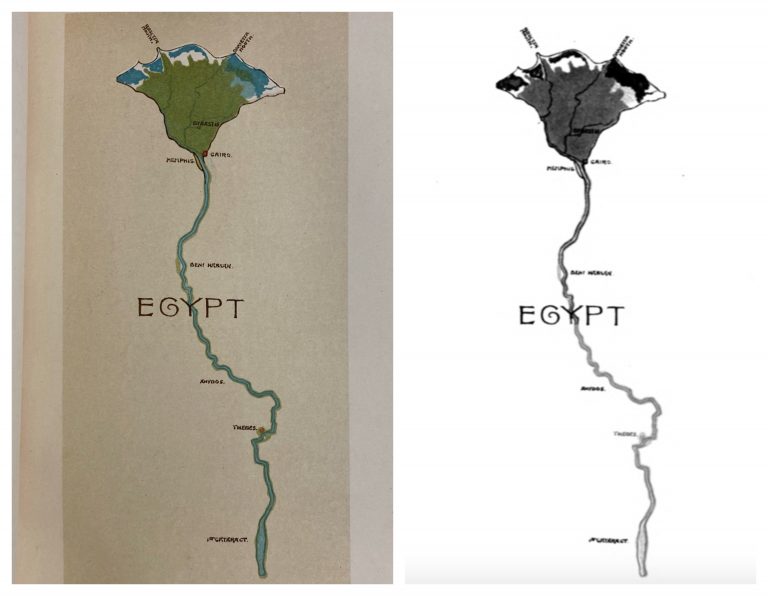
What is lost when a three-dimensional object becomes a two-dimensional online version of itself? For Egypt: three essays on the history, religion, and art of ancient Egypt, the physical effect of this aesthetic book and its visual history exemplifying the Arts and Crafts Movement is lost. The digital version crops any notion of a deckled edge, the stark white background replaces the original warm cream tone, and the colorful map is now black and white (figures 7-8). The soft suede cover is not felt through the computer screen, and the beautifully decorated spine is never depicted. This digitized version is no longer an aesthetic object to bring beauty to the home; it conveys only the surface level of the text and images on the page. Very little of the values of the Arts & Crafts Movement is conveyed by the digital surrogate of Egypt, and this important part of this book’s history is lost.
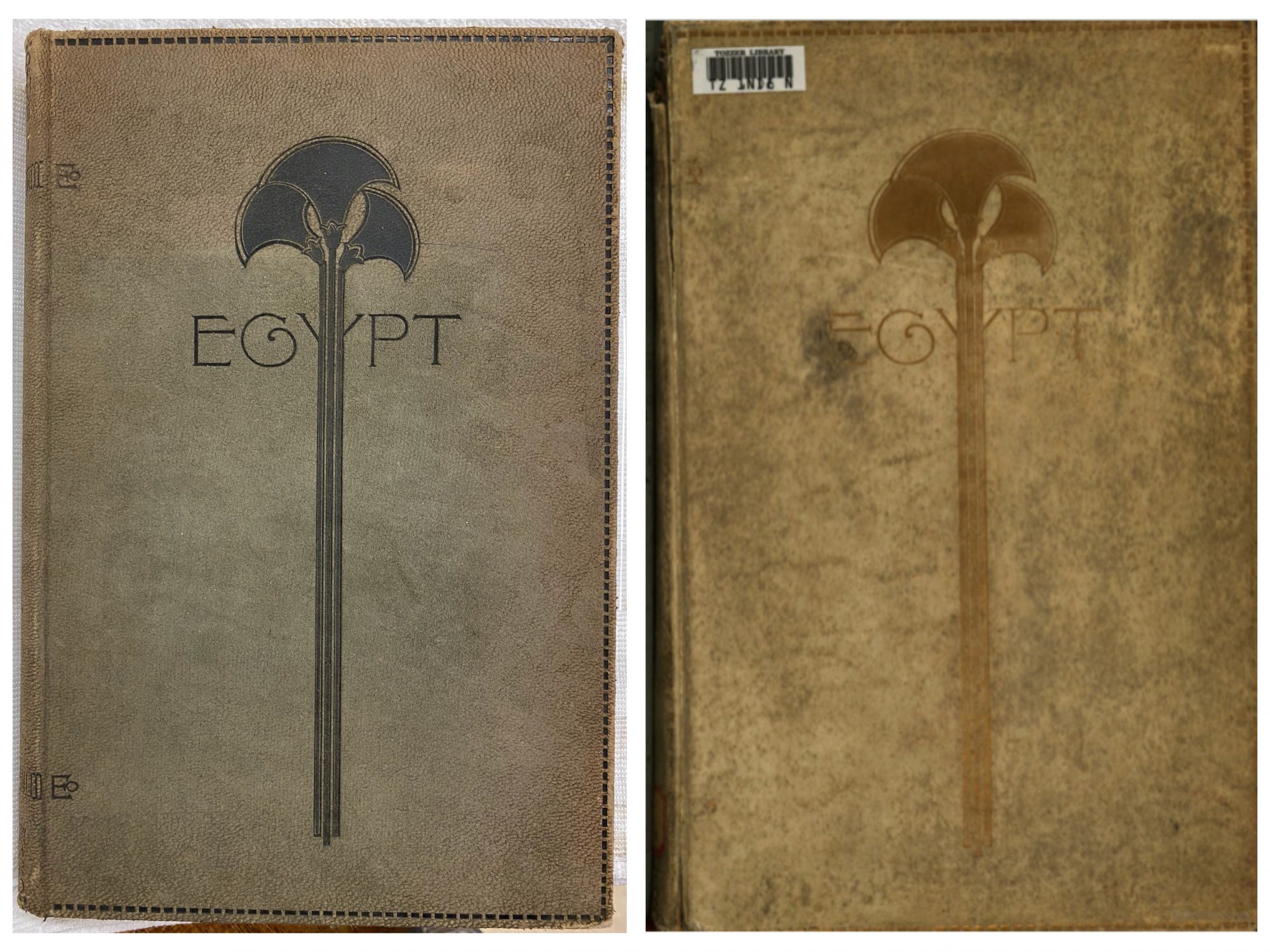
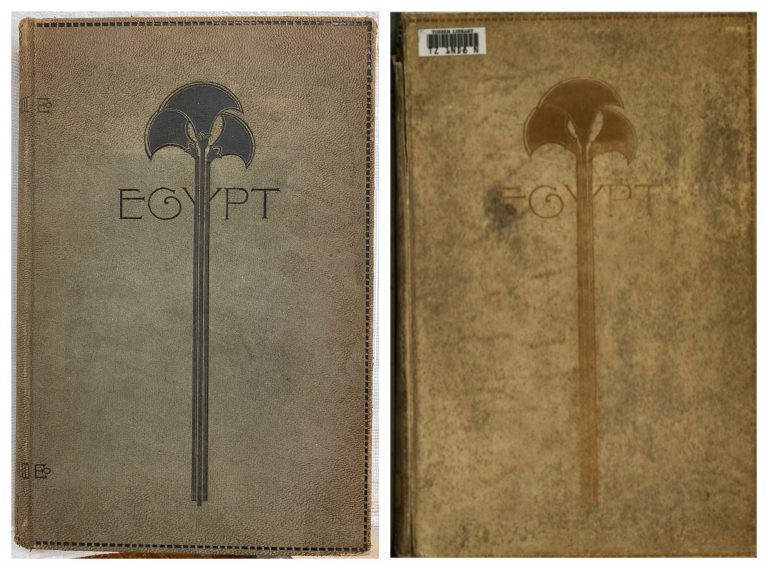
However, even though an essential character of the book is lost, the differences between the digital surrogate and Colby’s edition help to inform the history of this book. For example, the covers of the digitized book and Colby’s edition are different; the title and designs are printed in different colors and the leather of the digitized book appears tanner than the olive green of Colby’s edition (figures 9-10). Maybe Colby’s edition is in better condition and the digital book shows more signs of age, or maybe the quality of the digital image hides significant detail, but there is also the possibility of multiple production processes for the cover of the original book printed in 1891. The existence of this digital facsimile importantly enables more questions to be asked about the production of the book. However, it simultaneously exhibits the limitations of a digital facsimile because the material quality and color of the cover are difficult to discern in the available image.
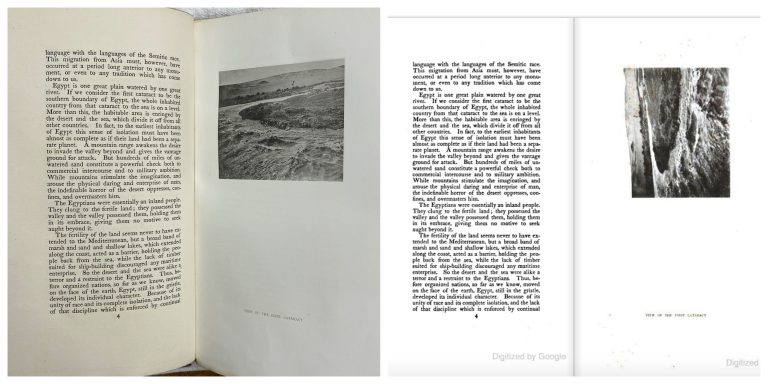
Interestingly, one of the first images in the book is printed with a different orientation in the digital version compared to Colby’s edition (figures 11-12). Most of this book’s photographs are oriented depending on whether they are landscape or portrait, but with this almost-square photograph, either orientation could fit on the page. Is the sideways print in the digitized edition a mistake, or is Colby’s edition the anomaly? This difference also shows that the picture captions and photographs were not printed from the same plate. Previously, I had inspected the captions while investigating which photomechanical process was used for the pictures; I was impressed with the regularity of the letters, and suspected type was used. The fact that the photographs and captions were printed separately helps confirm that type was used for the captions. This could not have been known without the accessibility of the digital version.
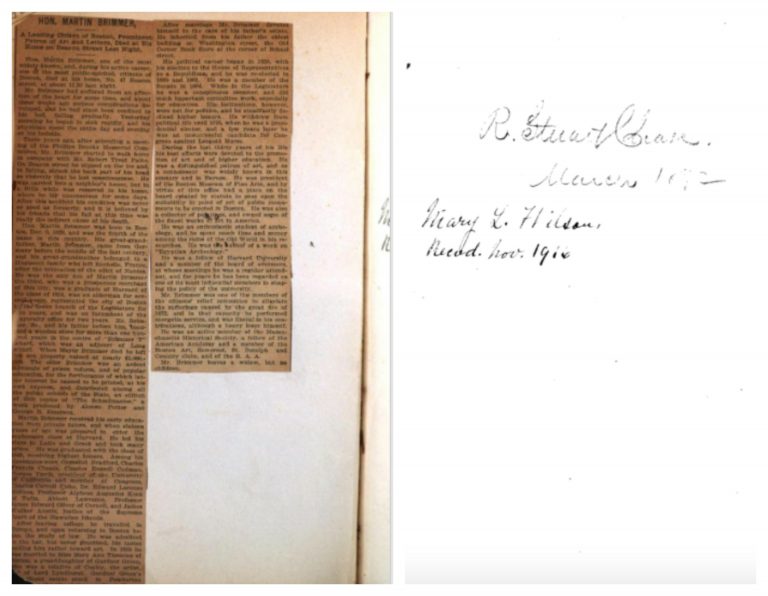
This digital facsimile serves as an important reminder that every edition of a book is unique. The digital surrogate lacks the aesthetic qualities of the original object, but its differences help inform how the book was originally produced, and interesting additions also add to the character of the book. For example, the digital version’s inside cover shows an article on Martin Brimmer, the author, glued inside (figure 13). The digital version also includes a couple handwritten names and dates, most likely those who have owned the book and when (figure 14). These features prove that some of the human history of a book can be conveyed through a digital surrogate. However, the limits of the digital version are still apparent, and I am left with more questions than answers about this edition of Egypt: three essays on the history, religion, and art of ancient Egypt.
This digital facsimile is undoubtedly lacking the aesthetic qualities of the book itself; the feel and beauty of this object are not well translated into a two-dimensional online version. Most of the benefits of this digital version are due to the comparisons that can be drawn between multiple editions, but even these comparisons are not complete without the other physical edition itself. The digital facsimile is still an important back-up if something were to happen to the books, and this online version increases the books accessibility, but it cannot replace the character of the object itself.
Google Books, Egypt: three essays on the history, religion, and art of ancient Egypt: