February 1st, 2019 · Comments Off on What’s In Your Pocket?
I first heard Scott Fried speak at a freshman wellness seminar two years ago. I remember him clearly—engaging and demanding, passionate and free. His talk was amazing. Every seat in Ostrove was filled, people were sitting on the stairs, standing in the back. But when I heard him speak just two days ago for the second time, I felt something different. There was something about sitting just three rows away from him with only fifteen other people in the room. It didn’t feel like he was putting on a show. It felt like he was talking directly to me. It felt like he had already seen my palm, before I’d even been asked to show it.
At the end of the talk when Scott asked for questions, I had one. But I wasn’t sure the correct way to phrase it. And I wasn’t sure if he would be offended. And I wasn’t sure if the question undermined the whole point of his talk. So I said nothing. I’m sitting here, still wondering, if he ever contacted the man who gave him HIV, just to let him know exactly how he had changed the course of his life forever. I drew some serious parallels to my experiences with my boyfriend from freshman to sophomore year. He had done terrible, emotionally abusive, and manipulative things to me. Things that have affected my confidence and security in relationships ever since. And while it in no way compares to the gravity of Scott’s situation, I sometimes think about picking up the phone and letting him know just how much damage he had done to me. But would it give me any satisfaction? I’m thinking maybe not.
And when Scott said that it is easy to love those who are easy to love, but it is hardest to love those who are hard to love, including yourself, I was thinking about how hard I have made it to love myself. When Scott asked us to show him who we are with our palm, I thought to myself, how do I make my palm look feeble, damaged, afraid? But I know that I am not feeble. Although the secret in my pocket is that I am afraid, I do not confuse it with the fact that I am timid. I am scared to let someone care about me again and I am scared to be vulnerable. I have someone in my life now who is incredibly supportive and caring, yet, I am so scared to let him in. But I am trying. I am working, each and every day, to believe him when he compliments me, to believe that he will follow (he does) through on plans when we make them, to believe that I did not deserve what I experienced in the past. That lack of self-respect and self-confidence is so deeply ingrained in me that it takes immense conscious effort to not shut down and shut him out.
The secret in the front pocket of my jeans, is that I am scared—scared to let myself feel and scared to let myself go. But my palm—who I am—is neither feeble nor timid. Somewhere in my mind, I know what I have to offer, what my self-worth is. Maybe one day I’ll pick up the phone and let him know all that he has done to me, and how much better off I am without him, and how I have learned to love myself again. But then again, maybe I won’t.
January 31st, 2019 · Comments Off on Measuring success
For the past few years I have had a mindset where I have thought the busier a person is, the more successful they are. If someone has more on their plate than I do, they’re a better person, they’re working harder, and they’re smarter. This fall, being a senior, I’ve been working to reprioritize, so that I didn’t spend my senior year feeling miserable, but “successful”. I think that being in this class with this kind of philosophy I was validated in my efforts. My parents are both doctors, many of my aunts and uncles are doctors or have careers in the medical field. I feel as if I know a lot about it, and it’s not something that I want to pursue. I’m a Biology and Environmental Science double major and I’m interested in public health and infectious diseases, specifically bacterial infections. I usually find myself in classes full of pre-med students. I am not pre-med. I find that in many times the people in my classes are riddled with anxiety that seems to be contagious and makes me feel inadequate. It makes being there a lot less fun. It’s harder to have intellectual conversations about the implications of what we learn or wider societal problems because so many people are just asking, “will this be on the final?” and I find myself wondering, “should I be more worried about the final?”
I went into this class knowing that it would be a lot of work since it was both Anatomy and Physiology in just one month. In the past, I’ve looked at my academics and thought that if I wanted to do well in a class, I was probably going to be stressed at some point. I thought that if I was more stressed out I was working harder and putting more effort in the class. On the first day of this class, Dr. K challenged us to be conscious of our stress levels throughout the semester. Before the first quiz and exam I tried to maintain a lower stress level and be comfortable with just knowing what I knew at the time. I ended up not doing as well as I wanted to on those first assessments. My instincts immediately wanted to revert back to they way I’ve thought in the past. I thought the reason I had not done as well as I had wanted to was because I wasn’t stressed enough.
Throughout the rest of the semester I tried really hard to fight that urge. As long as I was putting effort into the class and doing my best, I had no reason to stress. Getting to be at Colby and living amongst my friends and peers and leading some kind of holistic life that makes me feel fulfilled is a more important than how I do in one class. This is not to say that I didn’t care about this class and stopped trying. I just tried to shift my perspective. I tried my best to find new ways to learn the material that worked for me, and I definitely put time into learning this material. However, I tried to trust myself. At the end of the day, I knew what I knew, and that was FINE. Getting enough sleep, talking to my friends, reading for pleasure, not being so stressed I couldn’t sleep through the night, were all more important to me than staying awake for one more hour just to freak out about whether or not I knew enough of the material. I have appreciated the philosophy behind this class, and I am saddened by the fact that it’s been so rare in my Colby career.
Here are some videos of my friend Callie and I studying together that might be helpful for others IMG_2858IMG_2856IMG_2838
January 31st, 2019 · Comments Off on Anatomy, Fractals, and the Emergence of the Universe
I started at Colby studying physics, but I’m a biologist at heart. Thanks to this course, I can now say I generally understand the inner workings of nearly every biological system of the human body. But thanks to my prior experience, I can say I understand nearly every physical system of it as well. When you study nature with such a breadth of scope, from sub-atomic particles up to social interactions, peculiar patterns precipitate. Humans are good at finding patterns when there are none, so it’s easy to dismiss them when they first manifest. But, when you see the same patterns again and again, they become difficult to ignore.
I suspect the universe is fractal in nature, with no upper or lower bound to its complexity. The human body exists at a level of complexity which highlights this notion. Our muscles and nerves form like ropes. Beginning with single cells, they bundle together as fibers glued together with connective tissue. The bundles then form glued bundles of their own, continuing to aggregate until a complete muscle or nerve is formed with all of the associated features. Each level constructs the next; each successive level not much different from the previous, yet jumping from level 1 to level 10 feels like a totally new universe. If you look at the whole picture though, peering cross-eyed through every layer at once, you start to see them as the same. The layers, just an illusion.
Halfway through this course I encountered a pattern. I suspect it’d been following me a long time, nearly a decade. Society is like a cell. A simple thought, but one with heavy implications. Society is like a lot of things though: A body, a bee hive, an ant colony, a fungus. But all of those examples I just gave, are themselves, composed of cells. You see, each level of complexity above ‘cell’: tissue, organ, organ system, just allows organisms to eat, drink, sleep, defecate, and reproduce in more complicated ways. None of them are necessary for life or homeostasis. The simplest organisms are unicellular. That fact, that a single cell can maintain all necessary processes for life to flourish, made me see them as perhaps the most apt models of society imaginable. Simply start by swapping proteins for people and you’re on your way.
I won’t use this blog post as my grand thesis of a cellular society, I’m now writing an essay for that purpose. But I want to give credit to professor Klepach for approaching the material of this course with the sense of wonder and curiosity that it deserves. Paying close attention to the structural and functional hierarchies in nature can illuminate issues with the hierarchies we’ve created for ourselves. Understanding our society starts with understanding our own minds and the bodies that house them. Understanding those starts with anatomy and physiology.
January 31st, 2019 · Comments Off on My Experience In Dr. K’s Anatomy and Physiology Class
Going into Dr. K’s Anatomy and Physiology Class, I knew that it would be challenging but I had no idea how fast paced and difficult it would be. The first week was pretty overwhelming, as I did not do well on the first lab exam. I was stressed out by this result and was unsure of what I should do. Returning back to my dorm after receiving this grade, I questioned myself. Are you meant to be in the medical profession? Maybe this is not for you? After having these thoughts, I emailed Dr. K and met with him about ways that I could improve my study habits and not stress as much. Going into the next lab exam, I went into the lab many times to look at the different models and realized the importance of studying a little bit every day while leaving time to do fun things with friends around campus. This lifestyle worked really well for me and I saw a decline in my stress levels, even though the amount of information we were learning did not slow down. Going into the second lab exam, I was really nervous, as I felt like I needed to do much better on the second one in order to raise my grade. The second lab exam went really well, which I was pleased about, but I found myself not that concerned about the grade. Instead, I realized that I was just happy that I was not as stressed about the class and was able to live an awesome life while taking a really difficult class. The grade just seemed to be a bonus for me. It was the changes that I had made in my day to day life that really shocked me. I have felt like this class has taught me so much more than I could ever imagine. The life lessons that I have learned will stay with me forever. In addition, Scott’s talk yesterday really resonated with me, as he said “It is easy to love the people that are easy to love, but it is hard to love those that are hard to love. Those that are hard to love are the ones that we need to focus on loving.” He talked about how the person that may be hard to love is sometimes ourself. Throughout my time at Colby, I have been extremely hard on myself and have put expectations on myself that are sometimes not reachable. This part of me has changed this JanPlan, as I have learned to work hard but not put the focus on the numerical grade. Working as hard as you can is what is most important. You should never compare yourself to other people because you are an amazing individual who is capable of great things in life. Leaving A & P, I think to myself contrary thoughts of what I was thinking after getting my first lab exam back. You can do it, Callie. You are capable. Thank you Dr. K for a semester of learning about what life really is and the importance of maintaining a healthy lifestyle while learning heaps of information. These life lessons are really special and will stay with me for a really long time.
January 30th, 2019 · Comments Off on A Brief Blog on Time
No one told you when to run, you missed the starting gun.
So you run and you run to catch up with the sun but it’s sinking
Racing around to come up behind you again.
The sun is the same in a relative way but you’re older,
Shorter of breath and one day closer to death.
No neuron in my head knows who I am, not individually nor collectively. I cannot point at a brain structure and say “that’s who I am!” What is this “self” we speak of and where do I find it? How do I know it is not a fiction? Where does the sense of individuality emerge in this fleeting collection of cells we define as ours? What are we in this boundless, vast world?
January 28th, 2018 · Comments Off on Hello from the infinite chasm of meaninglessness that is the internet.
Hello from the infinite chasm of meaninglessness that is the internet. Our interaction is mediated through a screen connected to a complex network that acts as its own nervous system—perhaps even an extension of our own. Along these artificial synapses you will find my story. I hand it to you. Think it over. Perhaps you can give us a different story.
A tour of Maine General Augusta and a presentation of their Grand Rounds talks along side similar talks from Human A&P students at Kents Hill prepatory HS to the third year UNE medical students on clinical rotations.
Metabolic Analysis Lab in conjunction with the Waterville HS cross country team.
Development of an internship for a former Bi265j student shadowing a nurse pratitioner in the Inland Hospital system in conjunction with being a TA for the Bi265j class.
Bringing high school students interested in human A&P from a variety of regional school districts to campus for a day of mentoring by Bi265 students in collaboration with the Maine Math and Science Alliance. Activities included touring the anatomy lab, a hands-on pig heart dissection, and a brain storming session for helping the students develop human A&P based projects for the 2015 Maine State Science Fair.
These activities were recently mentioned in the latest Goldfarb Center newsletter which you can read here.
From myself and all of the Bi265j students at Colby and high school students from across the state that have benefited from the Goldfarb Center’s support, we give you our thanks. A special thanks to Alice Elliot, the Goldfarb Center’s Associate Director for her considerable logistical support and Amanda Cooley, the Assistant Director, for the write up in the GC newsletter.
January 23rd, 2015 · Comments Off on Human A&P Grand Rounds Presentations
Our Human Anatomy and Physiology class will be presenting a series of talks on various diseases this coming Wendesday, January 28th 2015 from 9 until 11 AM on Colby’s campus in the Olin 01 auditorium, beneath the Olin Science Library. Each of the five 15 minute talks will be followed by a brief Q&A and will cover the following topics:
Celiac Disease
Oligoastrocytoma
Atypical Hyperplasia of the Breast
Postpartum Coronary Artery Dissection
Coronary Artery Bypass Grafting vs. Stent Implantation
The presentation is free and open to the public and light refreshments will be served.
We were very lucky to have visitors to our class on Monday the 19th, MLK day, from a number of High Schools in Maine. The high schools included Lincoln Academy in Newcastle, Foxcroft Academy in Dover-Foxcroft, and even a home schooled Junior. The visit was designed to help the ten visiting students get a better sense of human anatomy and physiology in the hope of developing science fair projects for the Maine State Science Fair being held on March 21st in Bangor. The day was organized in conjunction with the Maine Math and Science Alliance and the Colby Goldfarb Center. For my part I was hoping to drive the material further into the brains of my students by following the aphorism the person who comes to teach learns the keenest lesson, while inspiring the spirit of mentorship towards the visiting students. The day started for my students at 9am with a practical lab exam covering the anatomy of:
The central and peripheral nervous systems
The eye and ear
Sensory receptors
The cardiovascular system and blood
The lab has been up in Arey 307, typically the turf of microbiology lab, but for a month transformed into a splendid anatomy lab.
Danielle Levine (’15, Biology) contemplating a synaptic bouton during the test.
Lauren Shirley (’17, Biology/Music) looking at a dissected pig heart and Ariel Oppong (’16, Biology) inspecting an eosinophil in a histologic blood smear.
Mayra Arroyo (’16, Biochemistry) peering through a stereoscope at the optic chiasm on the 3D plate of a dissected brain from the Edinburgh Stereoscopic Atlas of Anatomy published in 1911.
Following the lab test the high school visitors turned up. I had initially intended for the visitors to start with an Art & Anatomy scavenger hunt similar to the one that I had designed for my students last week in the Colby Museum of Art, except this one would be based on clues created by the Colby students themselves, however the timing didn’t workout with the visitors being able to visit on their day off from school and MLK day falling on a Monday, the day that the museum is typically closed. Instead the students got to tour the lab and then participate in dissections of pig heart specimens. Rather than type out a description of the day I am simply going to reproduce the official event summary drafted by Stefany Burrell from MMSA, punctuated by annotated photos from the day taken by myself, Amanda Cooley of the Goldfarb Center and Stefany Burrell and Lynn Farrin of MMSA.
Notes from Colby J-Term Anatomy & Physiology Mentoring Session 1/19/2015
10:15 High school students from Lincoln Academy, Foxcroft Academy and a homeschool met Dr. Klepach’s class outside of the science buildings. It was a mild 40 degrees and sunny. Everyone headed into a lab in the Arey Building for an introduction.
10:30 Dr. Klepach welcomed the visitors and described his philosophy on science and teaching. The students were struck by his enthusiasm and knowledge. Many were inspired by his belief that teaching is learning.
Introduction by Stefany Burrell and Dr. Klepach.
Lynn Farrin (left) and Stefany Burrell (right) of the Maine Math and Science Alliance.
10:45 The students introduced themselves and the formed five groups, each with two high school students and three Colby students. Prior to this meeting, the class completed a lab exam. The exam consisted of approximately 30 questions in which students needed to identify various parts of human anatomy. The exam was broken into four sections: eyes, ears, nervous system and vascular system. As an icebreaker, the college students walked their charges through the exam, explaining what the physical models represent. The exam also included microscope slides, diagrams and a real pig hearts.
The Colby Human Anatomy and Physiology class started escorting their visitors around the test that they had finished less than an hour earlier.
Lauren Shirley is discussing the chambers of the heart with her fellow Colby students, Allison O’Connor (’17) and Cal Robbins (’17, Cellular/Molecular Biology) to the left and Dover-Foxcroft HS sophomores Bonnie (second from right) and Erika (far right).
Mayra, flanked by her Colby group members Ivan Yang (’17, Cellular/Molecular Biology, left) and Chris Lee (’17, Cellular/Molecular Biology, right) points to structures on a model of the heart to help Lincoln Academy seniors Abby (second from right) and Andrea (far right) understand what they are seeing on the dissected pig heart in front of them.
Erika getting a chance to look at the Edinburgh stereoscope slides.
Ivan discussing a cross sectional model of the spinal cord.
Can (John), a Lincoln Academy freshman (center), inspects a left coronary artery dissection as Colby students Yvette Qu (’18, left) and Alex Lucas (’17, Neuroscience & Sociology) look on.
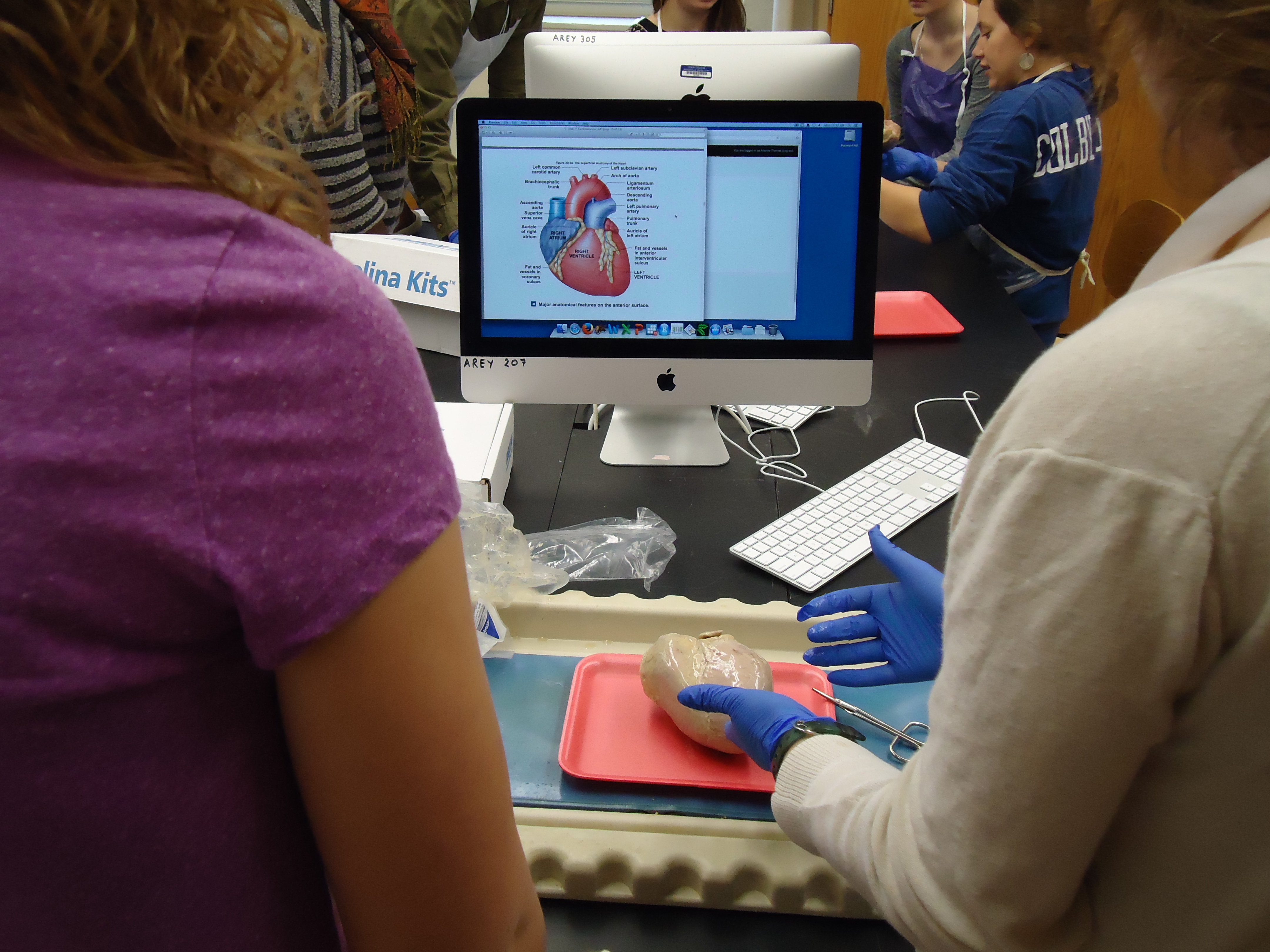
11:10 The group moved to another lab where they put on gloves and aprons to dissect pig hearts. Each dissection station included a computer with loads of diagrams to assist in dissections. Under the Colby students’ guidance, the high schoolers dissected the hearts. Dr. Klepach moved around the room, answering questions as they came up. He took a few minutes to explain how blood moves into and out of the heart before and after birth.
Enormous cow heart ready for dissection.
Students preparing to dissect a pig heart try to orient themselves based upon surface anatomy.
Danielle discussing the surface anatomy of the heart with Cierra, a Dover-Foxcroft sophomore, and Shea-Lynn, a home schooled junior, as her classmates Ari Thomas (’16, Neuroscience, far left) and Laurel Edington (’15, Biology, second from left) look on.
Ashley (left) and Norma (center), seniors from Lincoln Academy, make the first cut into a pig heart as their Colby mentor, Rebecca Gray (’18, Biology / History), looks on.
Thilee, a senior from Lincoln Academy explores the left ventricle.
The aortic and mitral valves revealed!
Dr. K goes to the board to explain the flow of blood through the chambers of the heart.
12:00 Everyone got cleaned up and walked across campus to the Foss dining hall for lunch. Many people were drawn to the location as there was a noontime speaker in honor of Martin Luther King, Jr. Day. The crowd was thick and the supply of dishes and cups was low, but the food was delicious. Dr. Klepach had reserved a room for the group to eat lunch together. Many of the high school students were a bit overwhelmed trying to get their food amid such a crowd.
12:45 The next stop was the Olin Building, to a lecture hall below the science library. The students returned to their groups and Dr. Klepach introduced the final activity of the day: developing testable questions for science fair projects. Using a SMART Questions document produced by MMSA, the students came up with questions related to anatomy or physiology. They honed their questions and discussed how they might go about answering the questions.
One group had a good discussion about parameters that students can easily measure such as blood pressure, pulse, body mass index and body fat percentage.
Two other groups were curious about the physiological effects of various emotional states such as fear or amusement. They considered the use of video clips to trigger different emotions.
Another group, spurred by one student’s interest in livestock, was stumped by how they might measure parameters in a cow.
One pair of high school students, knowing that they would not be doing a science fair project, took the time to ask their mentor about college life.
The final group wanted to explore body image, comparing how people view their weight to reality. They came up with a good research plan that involved anonymous surveys asking people to describe if they think they are underweight, overweight or at a healthy weight. The subjects would guess at their weight and then use a scale to determine their actual weight.
Dr. Klepach asked each group to report out and asked thought-provoking questions such as how students would isolate variables. He also asked the students about the limitations of common measurements such as body mass index.
1:45 To wrap up the day, all participants filled out surveys. High school students and college students took separate surveys that asked about their motivations for participating, what skills they honed and what they considered to be the day’s highlights.
I thoroughly enjoyed having the visitors in the class and look forward to having them back in the future for this and other activities.
February 14th, 2014 · Comments Off on Lizzy Gorence: The JanPlan A&P Experience
Taking the JanPlan Anatomy and Physiology course at Colby College over the past month has been an experience that I would consider not only unique to liberal arts colleges with a January program, but distinctive within the Colby environment as well. Yes, as an anatomy and physiology student of Dr. Klepach’s, pupils are given the opportunity to tour the new Maine General facilities in Augusta with a third-year medical student, to dissect a pig heart, and to apply biological sciences to fine arts in the gorgeous Colby museum. However fascinating and wonderful these experiences may have been, they could likely be replicated in similar courses at other schools. What I found most unique about the Colby Anatomy and Physiology course as a senior about to embark on her final semester of undergraduate study, was that Dr. Klepach gave us students his permission to do poorly (at least in the quantifiable sense) on assignments. Sometimes he even predicted that we would! As long as we were engaged during class and dedicated to learning the material, Dr. K. reassured us that our final grades would reflect our work and that we would have more fulfilling experiences overall.
Admittedly, this approach was initially very hard for me to stomach, and I suspect that some (or many) of my classmates shared my discomfort. As a Colby student, I’ve grown accustomed to finding academic success in the form of a percentage marked in red pen on my assignments, which is usually directly proportional to the amount of time I spend on the third floor of Miller Library. Usually, with a number of notable exceptions, I’ve been able to hammer through difficult material at Colby simply by staying up late with it, sleeping in on it, or sometimes simply putting it off until the pressure really sets in. Essentially, my learning process in college thus far has been based on repetition and revisiting material. However, as any mule can attest, we students are not afforded the same luxury of ruminative study time during JanPlan as we enjoy during the fall and spring semesters. Instead, over the month of January each year, Colby students are immersed in a single subject of their choosing, in which we are given a sort of crash course.
While many of my fellow seniors chose to pursue an independent study or to plow through a Wharton novel every day, I, along with eighteen compatriots (including some very brave first years), chose to undertake Anatomy and Physiology during the month of January. Before the course, I had no clue just how quickly a month could zip by. Sure, one single month sounds like a short amount of time to learn about the structure and function of the human body, but I still felt pretty confident at the outset of Dr. K.’s A&P class. I was bolstered by my own fading memories of my high school Anatomy class and the widespread belief that JanPlan classes are so-called “jokes,” and are engineered to allow their students ample skiing time.
My false confidence was shattered fairly quickly after I received my first quiz grade under 50%. Even though Dr. K. reassured us that the material was very challenging and that none of us should be discouraged to receive grades we weren’t accustomed to, it was pretty unnerving. Over time however, I was able to detach myself from my Colby-conditioned urge to pursue a number grade, and began to focus more on the process itself. Ultimately, human anatomy and physiology is a subject that cannot be thoroughly covered, and its information cannot be wholly retained in the span of one month. It took me a short while to accept this, but thankfully Dr. K. had been cognizant of it long before we started class on January 6th. He was constantly reminding us, his students, that our goal during JanPlan should be to absorb as much information as we could, and to whet our appetites for future study of the human body. After all, medical students spend years learning about topics to which I’ve already experienced some brief exposure. For me that was pretty awesome, and totally inspiring.
Coming into my final January at Colby, I hadn’t expected to be surprised by my JanPlan course. I had the sort of been-there-done-that attitude that comes from spending three and a half years at a small liberal arts college in a small town. Instead, over January I experienced a class that was challenging in a different sense from the other courses offered at Colby. I was asked to step out of my comfort zone not only when dissecting a pig heart, but when thinking about my own learning process and my performance in the class. Anatomy and Physiology was stimulating, inspiring, and yes, sometimes pretty stressful (sorry, Dr. K.!), but I think it prepared me for life beyond Colby College in a sense that many of my other courses have not.
February 14th, 2014 · Comments Off on Emma Roberts: My Human A&P Experience
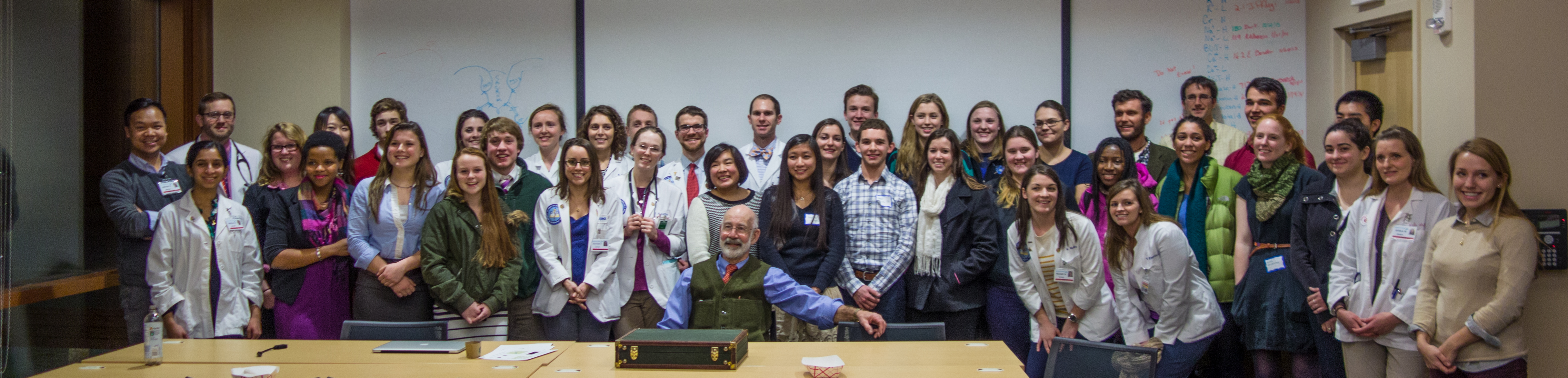
The trip to Maine General Augusta hospital was the highlight of the Anatomy and Physiology janplan. Besides touring the hospital and giving a talk to a room full of 40+ doctors, we were given the chance to spend over an hour talking personally with medical students. A friend and I toured the hospital with three medical students, two fourth years and one third year. Since I got to Colby I’ve been back and forth deciding if I want to follow a pre-med track or not. Talking with the medical students completely changed my perspective on medical school and made me sure that’s what I want to do, and so I’m really grateful that I had the chance to take this class and take advantage of this opportunity. I’m a French major and so I have interests other than necessarily pursuing the sciences. However, talking with the medical students made me realize that taking time off between undergrad and med school and learning in depth about another topic is a really valuable asset to bring to the classroom. One of the fourth years told us that he went to graduate school to study theology and become a teacher and after a few years of that went back to finish his pre-med requirements and take the MCAT. Another fourth year told us that she spent a couple years off doing research before med school. The third year student told us that she went straight to med school, but sometimes wishes she had taken time off, and really appreciates what the students who did take time off can contribute. I loved being able to hear about the paths they took to get to medical school, and I know now that it may actually benefit me in the long run to pursue other interests before finally applying to med school.
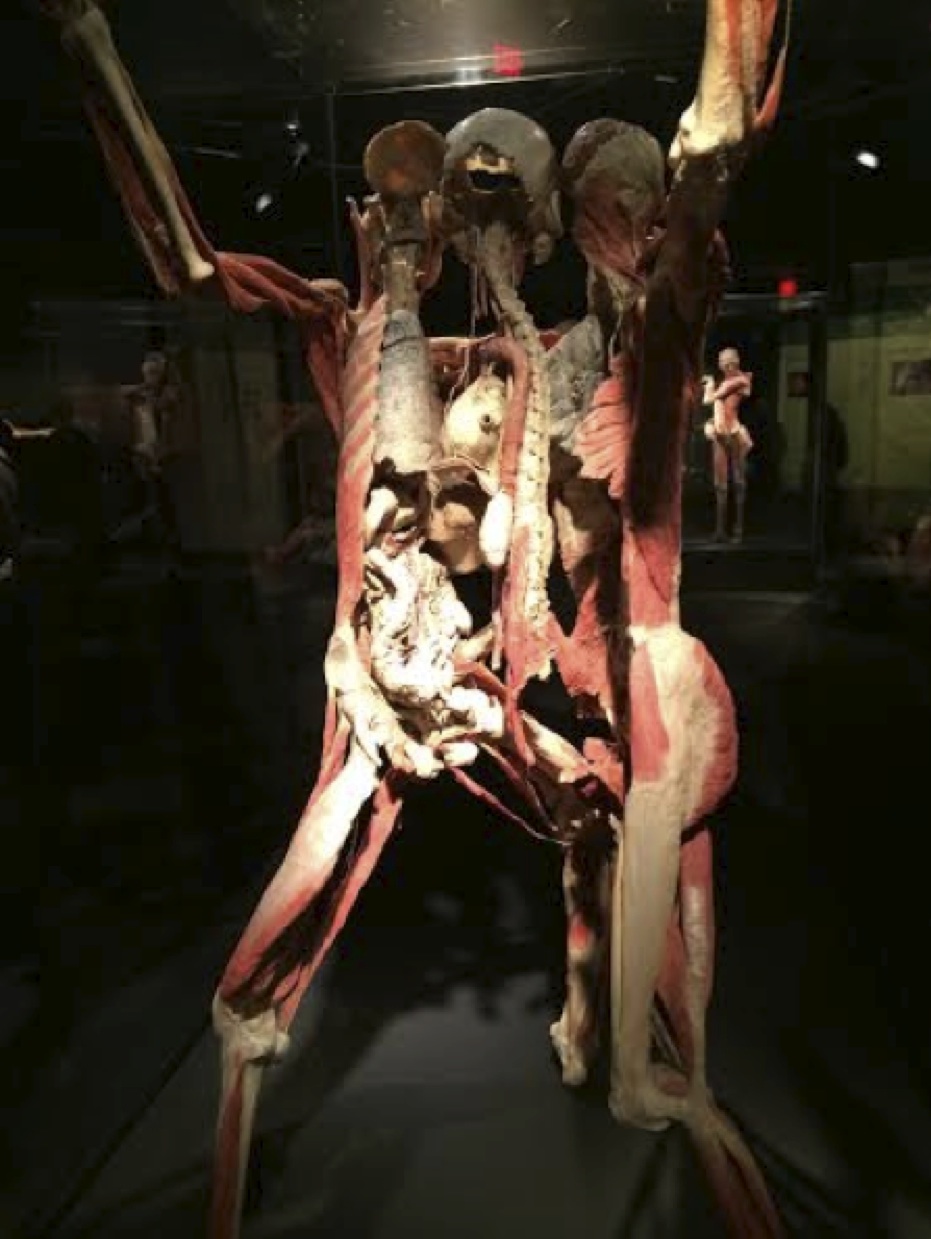
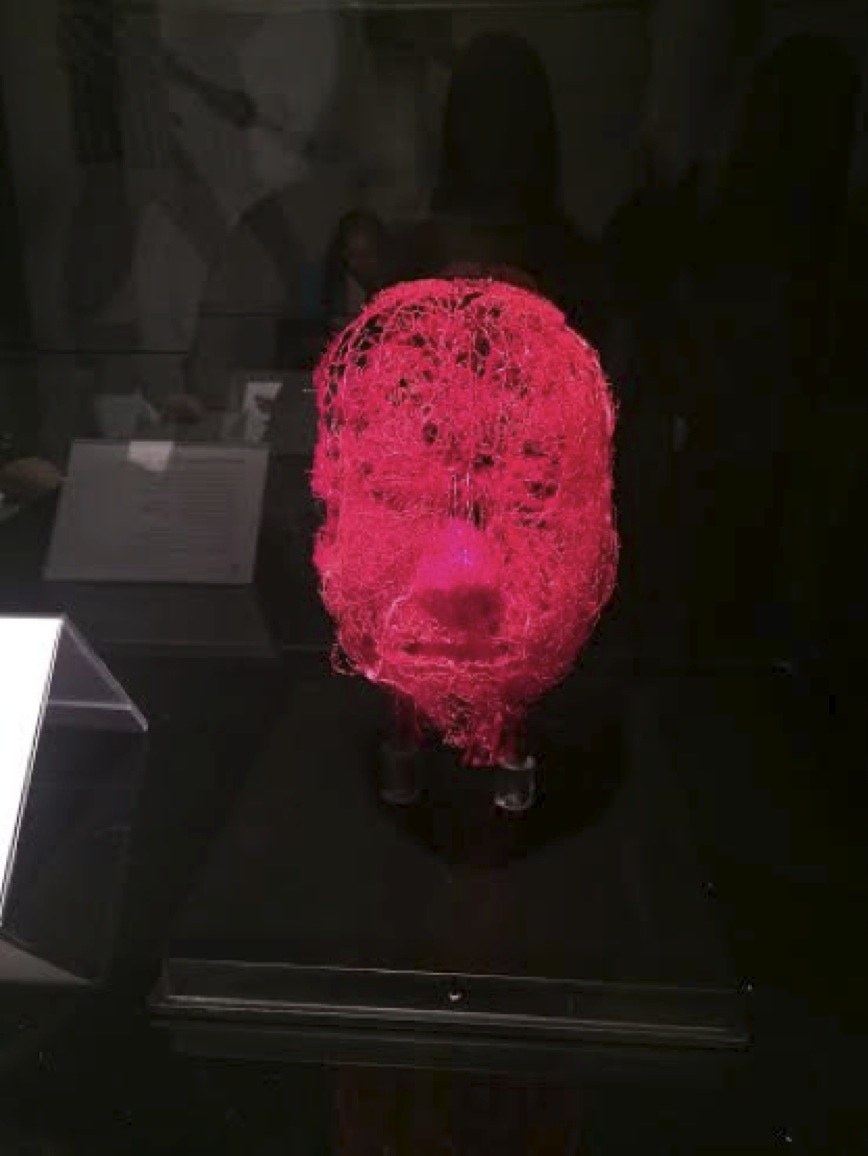
One of the other highlights from the janplan was the trip to the Boston Body World Vitals exhibit. There were dozens of different dissections of bodies and we were able to see so many parts of the body that we had just learned about on an actual human. Thom spent a good 15 minutes showing a friend and I all the different nerves in a dissection and how they relate to each part of the body which was really cool because we hadn’t had the chance to cover them all in lab. It was also fascinating to see how the dissections had been made. For example, there were many models of exactly where all the veins, arteries, and capillaries were in a structure in the body. This type of model would have probably been impossible to recreate, it needed to be made from a real human body. These were made by filling the vasculature with plastic and then melting away the tissues covering it. There were also bodies that had been dissected into three parts so you could see both halves of the body and the bones and organs all separately. It was really amazing what the different angles in the body could expose.
This janplan was great because we were given many opportunities to explore different career paths in the medical field, which is unlike most science classes that I have seen offered at Colby. This class was clearly geared towards the interests of the students, which is not always the case and which is why I really appreciated taking this class, regardless of the workload. I didn’t come into this class expecting to have such unique opportunities like take field trips to Boston or talk with current medical students and those were the aspects of the class that made really enjoy it.
February 14th, 2014 · Comments Off on Cody Eaton: My Experience in Human A&P
Cody Eaton
Class Blogpost
Coming from a family in which both parents had a medical background, I grew up hearing anatomical and physiological terms in my daily life. In my junior year, I chose to shadow doctors, PA’s, and NP’s in the ER at Goodall Hospital in Sanford, Maine for the month of January. This experience was beneficial for several reasons including exposure to various occupations and paths in the healthcare field, but left me wanting more. Now that I have taken Anatomy and Physiology with Dr. Klepach, I am even more well equipped to navigate the increasingly complicated medical world in the future.
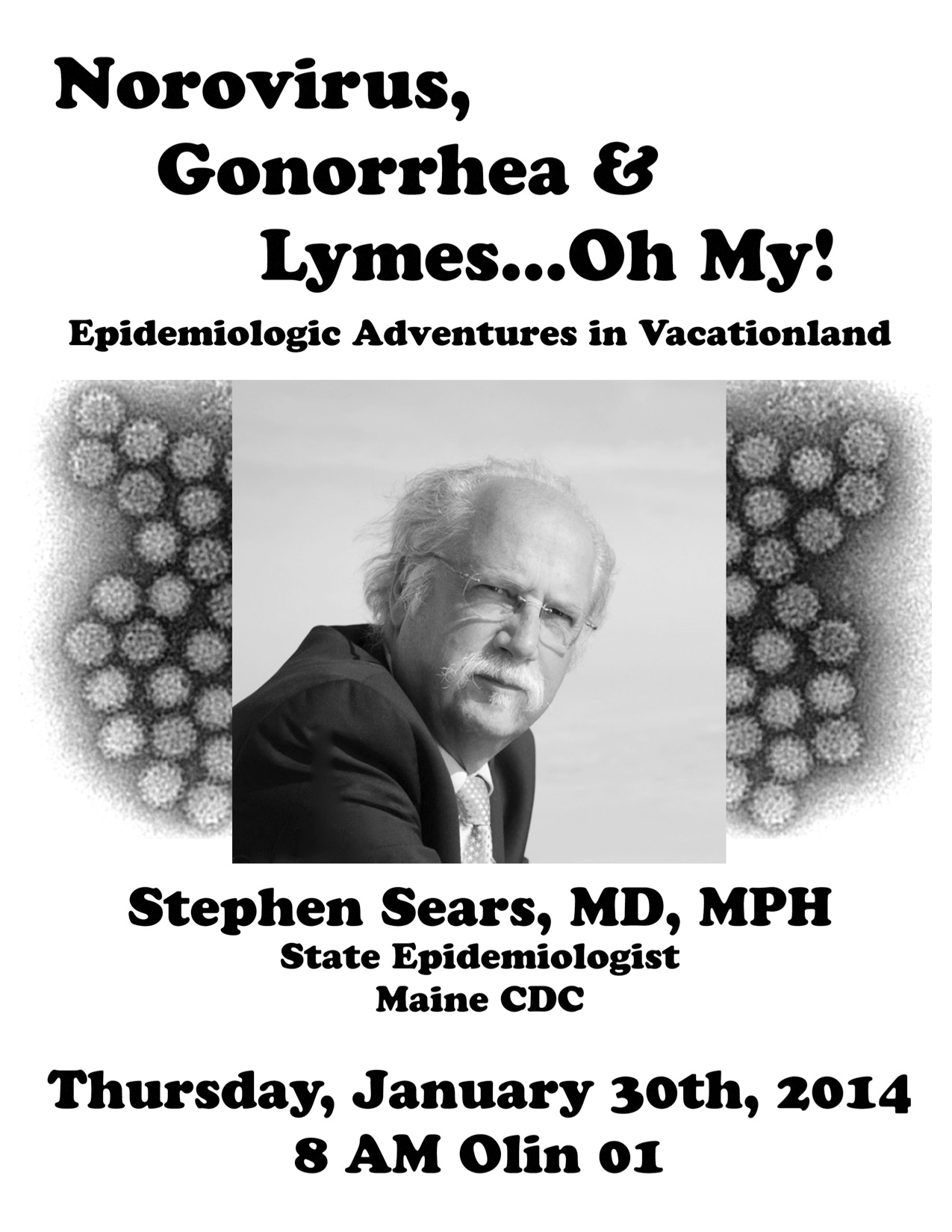
There were many experiences in this class that I was quite interested in, including the trip to Boston to attend the Body Worlds Vital exhibit, and the guest lecture from CDC Maine State epidemiologist Dr. Stephen Sears. Both of these very unique experiences taught me a lot about medicine and about the human body. Dr. Sears’ talk especially left me with a general feeling that I knew exactly what I want to do after Colby. His discussion of how the CDC uses experimental data and information gathering techniques to analyze possible epidemics was particularly interesting to me, primarily because I like the noble idea of keeping the public safe. As such, following the talk, I was more confident in my plans for the future. I now know undoubtedly that I want to work in healthcare, and now I just need to decide which path I want to take.
Additionally, the class afforded me an elevated level of insight because of the holistic progression of ideas that I have been able to study at Colby now that I am a senior. In other words, the class helped me connect some of the concepts that I had begun to explore in previous classes such as genetics and mammalian physiology. Concepts such as homeostasis and calcium regulation, which pervade many academic areas, were explored in this class and this helped me to create a broader schema regarding biological concepts.
The Grand Rounds experience was worthwhile as well. Thoroughly studying a particular case study provided me with a firm understanding of one medical concept, especially when I was responsible for understanding the anatomy and physiology that directly relates to treatment of rectal adenocarcinoma. By preparing a presentation about such a complicated topic, it was a necessity to understand the basic concepts behind the complex ones (e.g. anatomy of the colon to understand partial colectomy and ileostomy). Ileostomy is inevitably an important concept for someone who is interested in healthcare, due to the number of patients that will have one in their lifetime.
Overall, the class helped me with several anatomy and physiology ideas and concepts that I have learned over the years. Concepts such as distribution of muscles on the body, how the nervous system coordinates with the bones and muscles to move the body and send sensory input back to the central nervous system, and the circulation of blood in the body were explored throughout the month of January through activities, lectures, and laboratory. Not only did we have focused class time on these concepts, but Dr. Klepach also helped cement the concepts in our minds by providing us with a metabolic lab at the Athletic Center. This activity involved doing various exercises and analyzing spirometry parameters and heart rate before and after. Using this information, we then did a few analyses based on our own data that we obtained during the lab. This experience was good for several reasons. First, it allowed the class to learn in a context other than the normal classroom experience. It also helped to be active and learn physiological concepts at the same time, and by doing the activity ourselves it makes it almost impossible to forget some of the concepts involved.
Ultimately, this class was a very beneficial experience. In my future, I will definitely use many of the skills I have developed over the course of this month. For example, skills such as using a blood pressure cuff or a general understanding of blood pressure are life skills that impact all of our daily lives. Even though we did not have as much time exploring some of the anatomy and physiology concepts as I would have wanted, at least everything was touched upon at least once, and makes me hungry for more education. In this way, the class has served an important role in my development as a well rounded individual.
February 14th, 2014 · Comments Off on Amanda Millatt: Personal Goals Achieved
Amanda Millatt
As a freshman I didn’t have any prior knowledge about college. I came to Colby College with an open mind and more importantly attentive listening skills. I would bombard my upperclassmen friends with questions ranging from the most interesting classes to when the best time to get lunch is. My most pressing questions were always about Jan Plan. This one-month course of study was not available at many other schools and was not discussed often on college online forums. This meant that all throughout December I asked my friends who participated in Jan Plan last year about their experiences. I continued to receive the same answers; easy, relaxed, GPA booster, etc. I was convinced that every Jan Plan class would be a breeze. That thought motivated me to select human anatomy and physiology as my number one choice. I always loved knowing facts and concepts about the human body. Then when I found out that I was placed into the class I was extremely excited because I would be learning about a topic that I find fascinating and have a break from the heavy course load that I experienced last semester. However, I found out the first day of class that I was incorrect.
The first day of class started with an explanation of the syllabus as usual. My professor informed us that his expectation for the class was not for us to learn all the information, but to try our best at each task. Then he processed to inform our class of 25 students about the layout of our short semester. We were told that we would have a quiz everyday about material learned the day before in lecture, a group project worth 25% of our grade, a lab exam every week and various activates due online. I was shocked, but the next bit of information made me speechless. The registrar had recorded that each class would only be three hours, but our professor informed us that the class was actually four hours. Within the first hour of class I was determined to drop it. I had thought that I would get to sleep in late, study for a minimal amount of time and read non-academic books. My preconceived notion about this anatomy and physiology class left me confused and upset. I was not the only person with this mindset; about five other students dropped the class. I went home after class with one question on my mind; should I drop this class or challenge myself?
I decided that my love for the human anatomy outweighed my craving for sleep. The first week was horrible, but I managed to get through it. My daily routine was a 9:00 AM hour and half of anatomy and two hours of physiology till 12:00 PM from Monday through Wednesday. After class I was very unproductive, in fact I did not begin studying until about 10 pm. I knew the lab exam was on Thursday, however I did not start studying till the night before. I did atrocious on all of the physiology quizzes and failed my first lab exam. I was ashamed and disappointed in my performance for this class. I collected my thoughts and made a game plan for success.
My second week of class was more of a success for me. Before each class I would print out the PowerPoint slides for both the lab and the lecture. This helped me take faster and clearer notes in class; I could also review the slides while eating breakfast. After class everyday, I would go straight to the lab to learn and review what we were taught in class for at least an hour. At the end of the week I felt confident because I had studied each structure more than five times. To confirm my knowledge of the anatomy I went to study for the test on the weekend before my Tuesday lab exam. I improved a tremendous amount on my second lab exam losing most of my points for spelling. Nonetheless I was still not meeting my expectations for my lecture quizzes, which meant that I needed to change my study habits.
On the third week of class, I continued to go to lab everyday after class and print out the slides before class. The only aspect I changed was how I went about studying for quizzes. I started to study the lecture slides at around 7 PM followed with a 40-minute nap. Then I woke up and studied each slide while listening to the recorded lecture. This really helped me understand the material and that week I did very well on my quizzes. I was finally proud with the amount of effort I was putting into the class.
My last week of class was one of the worst weeks because three major components of the class were due within a day of each other. We had a lab examine on Tuesday, so as usual I went to the lab twice over the weekend to review all the structures. Then all of Wednesday I had to study for the final lecture exam and prepare for my ground rounds presentation due on the same day (Thursday). That Thursday was over as soon as it arrived. I turned in my final exam and started breathing again. I immediately climbed into my bed and reflected on the past month.
I was proud of my academic growth. I had completely changed my study habits and gave the class my all. I was satisfied with my performance although I did not receive A’s on every assignment; I was just proud of myself for never giving up. I may not be the most intelligent student, but I am a hard working student. This course prepared me for my rigorous semester and medical school. I started human anatomy and physiology a motivated student and left the class a hard worker driven by the motivation to be successful. Thank you Professor Klepach for everything!
January 15th, 2014 · Comments Off on Caitlin Guiney: Nurse Practitioner Internship
Hi everyone! For those of you who don’t know me, I am Caitlin Guiney. I am currently a junior, biology major and art minor from Concord, MA. I took this class last year and loved it. I initially thought coming into college I wanted to be a pediatrician, but through volunteering at Inland Hospital in Waterville, a hospital at home, and talking with people in the medical field my plan has morphed to hopefully become a nurse practitioner (NP).
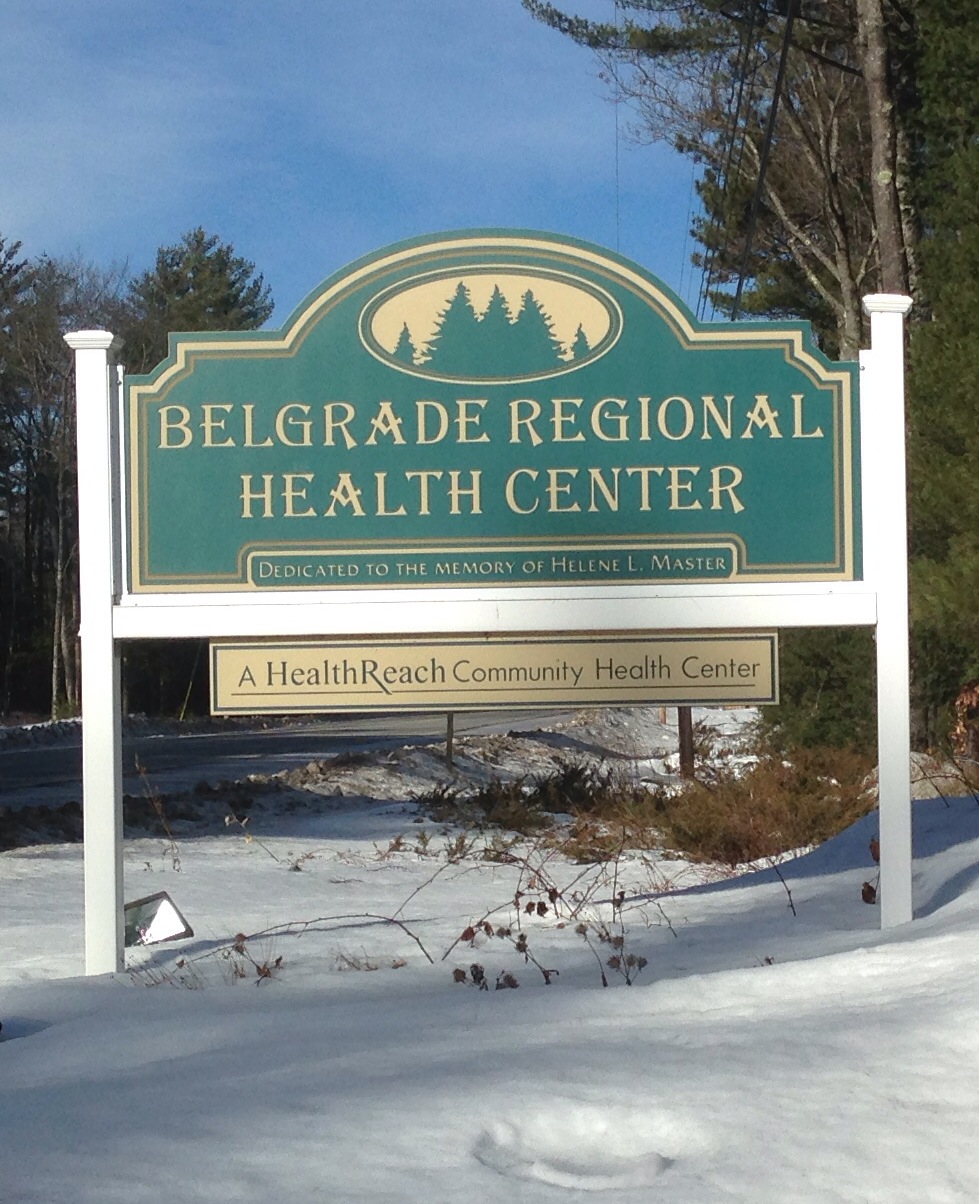
Thom was extremely helpful in setting up with me this Jan Plan an internship at two different locations so I could continue to learn about the medical field and experience what it is like day to day working in it. On Monday and Tuesday I go to the family care private practice in Belgrade and shadow Dr. Amy Madden and her staff. On Wednesday and Thursday I go to the rheumatology department at Inland Hospital on KMD and shadow NP Marci Lowe. The two different environment provide great contrast to start to narrow down my plan for after college.
I had to fill some paperwork on Monday so I began on Tuesday shadowing Dr. Amy. Dr. Amy went to Dartmouth College for both undergrad and medical school. In the practice and Belgrade there are three people practicing two doctors and one FNP, Lisa. The practice is for approximately 3,000 people from the Belgrade area.
The first patient that Dr. Amy saw was a 60 year old woman, who is a nurse, for her physical. I have always thought physicals are the easiest types of appointments for doctors, but the physicals Dr. Amy had that day were not only a check on the essentials, but opportunity for the patient to air concerns about a lingering problem and/or ask questions. The nurse had feet issues; Dr. Amy diagnosed her with plantar fasciitis. Plantar fasciitis, appropriately named is heel pain caused by when the fibrous band of tissue in the sole of the foot that helps support the arch. When the plantar fascia becomes and inflamed or torn by being overloaded or overstretched it causes small tears where the tissue meets the heel bone. It is common in overweight and pregnant women. It reminded me that health is not about the big decisions, but making every day little decisions like wearing the proper footwear and stretching.
What surprise me when the nurse whipped out her iPad and had a list of questions she had about things she had seen on the Dr. Oz show. Amy was extremely composed, and it reminded me of grand rounds question section for our presentation in A&P last year. I realized something that makes the patients so comfortable with Amy is her composure and the importance of her confidence to assure the patient and make them feel confident her ability. I found it funny Amy told me that getting Dr. Oz questions are a common experience.
One of my favorite shows is house. And the next patient we saw was a house case according to Amy. The next patient was a 56 year old male carpenter who was losing feeling in arm all at once and then slowly his feeling would return. After perform some strength tests and mobility tests, Amy said the muscle causing the issue was the deltoid muscles fatigue most likely caused by inflammation of the rotator cuff. Amy order blood tests and orthopedic appointment for the man. I am interested to see what the blood tests will show and what the orthopedist might discover because his numbness was not brought on by physical exertion.
The next physical was with a hospital dietitian who has wheat belly. Much of the appoint was Amy asking about her personal life because her life had recently become very stressful which had contributed to stress that had cause her to neglect things she has previously been doing to help her wheat belly. Amy discussed how to minimize the stress and was very sympathetic. Why I want to go into this field because it more challenge than an exam for example when you are giving a problem where there is a list of symptoms and you have to give a diagnose, people are dynamic and complex. There are so many dimensions to health and I believe there is a direct correlation between the mind and the body when one is mental overwhelmed it will one way or another will physical manifest in the body.
The last patient was a man in 50s who had gastrointestinal diabetes. All lot of the time with him was spent making sure he was sticking to his regiment. Also trying to get Maine care, insurance, to pay for his prescriptions, he was having trouble with his insurance arguing that he need his pressure socks covered for because they were something he couldn’t go without. Primary care is much more maintainer of someone’s health, but also there as a support system and advocate. Dr. Amy does an amazing job at all three, especially relentless with the insurance and drug companies, and is a great role model for me.
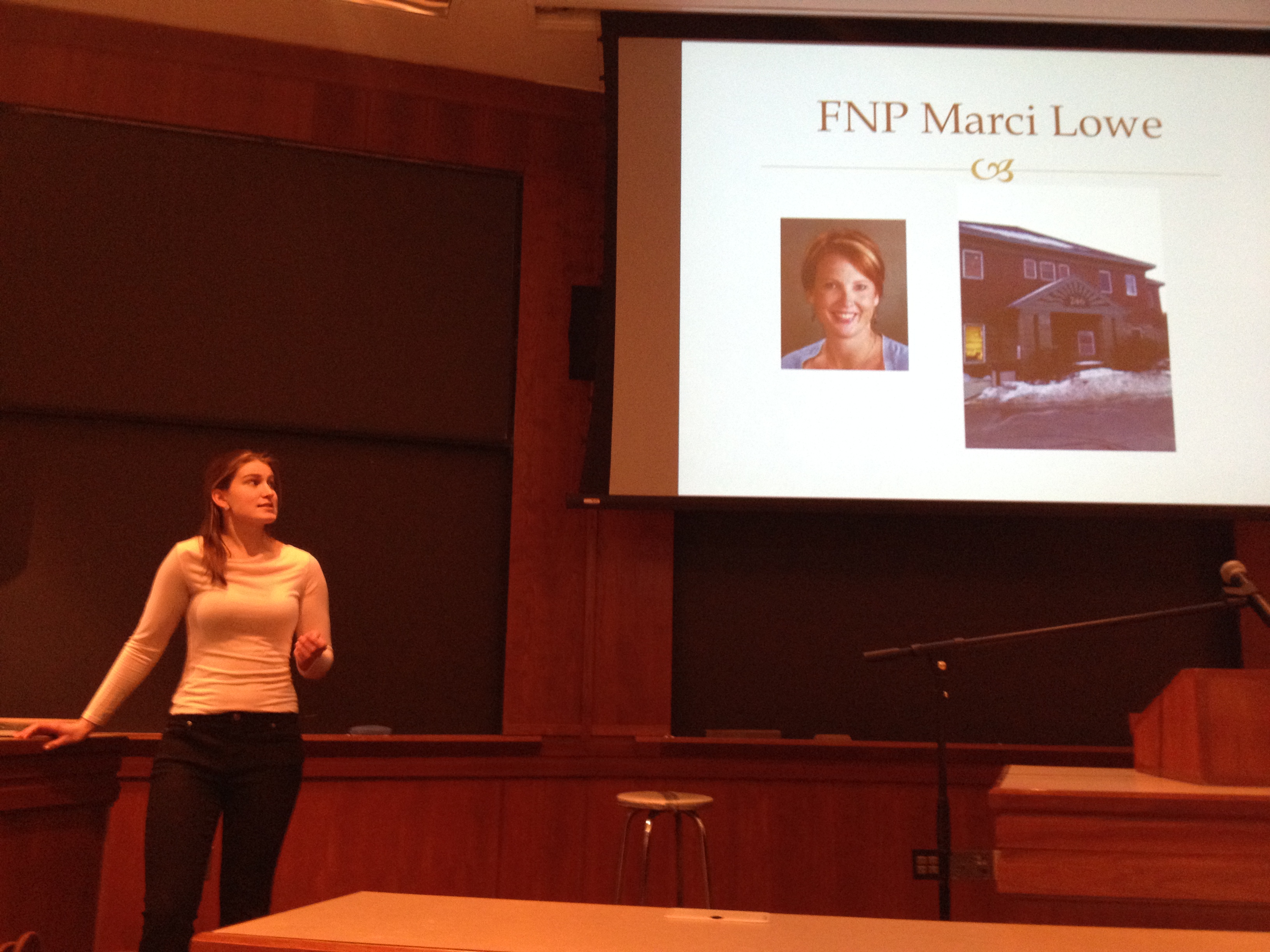
Here is the talk that I gave to the Bi265j Human Anatomy and Physiology Class reviewing my experience during the internship.
January 25th, 2013 · Comments Off on Choose your Poison
Everyone knows about alcohol poisoning… but what about poisoning by sugar? Yesterday in class we learned a lot about the hormones in the gastrointestinal tract and how your body digests sugar. I thought I had a basic working knowledge of how my own body digests food and absorbs nutrition, but what I learned yesterday totally blew that I thought I knew out of the water.