Entries Tagged as 'Bi265j'
February 22nd, 2015 · Comments Off on Allison O’Connor: Heart Dissection

Although I took a lot of science classes in high school, I never had the opportunity to do any dissections. Dissections were always something wanted to get to do because I feel like the best way to learn is through hands on experience. I first fell in love with anatomy in middle school when I visited the Body Worlds exhibit while it was in Philadelphia. My dad took me to this exhibit expecting that we would walk through quickly, but instead we were there for hours as I stopped and closely examined every part of the exhibit. This exhibit was the closest I ever got to dissecting anything before this JanPlan, but the exhibit definitely inspired me to want to learn more about anatomy.

In my various science classes and in my emergency medical technician training I had learned about the basic structure and function of the heart. Numerous times I have been asked to trace a drop of blood through the heart and it is something that I could recite in my sleep. When we started the cardiovascular unit in anatomy and physiology this JanPlan I thought I was going to hear the same spiel about the heart that I had heard so many times before. However, this JanPlan, I saw the heart in a whole new light. Though I had already learned the basic function before I learned about the anatomy in much more detail this month than I had in the past. I also learned more about the electric conductance system of the heart and some very basically how this presents itself on an EKG, which is particularly interesting to me since I see EKGs done by the paramedics on the ambulance all the time.

The heart and its function have always been interesting to me, however, I did not fully understand how truly amazing the heart and its structure are until I was holding the pig heart in my hands. While the heart was in my hands I was able to identify the structures that I have learned about so many times and really see for myself the relationship between the structure of the heart and its function. Being able to literally stick my fingers through the arteries and veins to feel where they went lead me to understand the structure of the heart on a whole other level. I was amazed at how muscular the walls of the heart actually are. You are always told that the heart is an incredibly strong muscle, and it is a fact that you just blindly accept as true, but holding the heart in my hands and trying to cut through the muscular walls really showed me the true strength of the heart muscle. I was also surprised at how strong the chordae tendonae were given the fact that they look no stronger than a strand of floss. I put their strength to the test by pulling on them with lots of force and was unable to break them. The heart dissection reminded me of the importance of hands on learning and learning through discovery as opposed to just blindly accepting things as fact. When you blindly accept things it is easy to lose sight of the intricacies and wonder involved in the systems around us. I was in awe during the entire heart dissection and it really changed the way I thought about the cardiovascular system and reminded me of the importance of being curious and full of wonder.

Tags: Bi265j · Lab
February 22nd, 2015 · Comments Off on Allison O’Connor: Grand Rounds Presentations
As a part of our Anatomy and Physiology course this Jan Plan, we worked in small groups to research and present a case study to our peers and a few health care professionals during a mock Grand Rounds presentation. Grand Rounds is a tradition in the medical field in which physicians present case studies to their peers, other medical professionals and medical students on a medical topic to share things that they learned in particular cases, so that others can learn from these cases. The Grand Rounds presentations were a highlight for me this JanPlan. Not only was it interesting to explore a case study of our choosing and get to learn about a particular medical condition, but it also exposed me to the format of Grand Rounds presentation and gave me the opportunity to practice my public speaking skills (which is something that is very anxiety provoking for me).
My group used the New England Journal of Medicine’s database to find a case study that we all found interesting. After reading through various case studies, we settled on the case of a 32 year old female, who three weeks post partum presented to the emergency department with substernal chest pain that radiated to her jaw. Substernal chest pain can be a result of many different complications including: cardiovascular complications, respiratory problems, gastrointestinal complications and musculoskeletal problems. Although cardiovascular complications are the most common cause of chest pain, it is not typically a complication that is expected in an otherwise healthy 32-year-old female. However, the fact that this patient was postpartum increases the index of suspicion for myocardial infarction, pulmonary embolism and coronary artery dissection because of the hormones present during pregnancy. An angiogram in the emergency department revealed a left anterior descending coronary artery dissection with a 35mm segment of narrowing and 90% stenosis.
Coronary artery dissections occur when the inner and outer layer of the coronary artery separate and blood pools in the area between the layers, causing decreased blood flow to the heart. There are two major types of coronary artery dissections, those that are spontaneous and those that are mechanically precipitated. Given this patient’s postpartum status and the events that precipitated her dissection, her coronary artery dissection would be classified as spontaneous. Within spontaneous coronary artery dissections, there are four sub-classifications, however only two of those are relevant to this case: postpartum coronary artery dissections and idiopathic spontaneous coronary artery dissections, which are dissections that are result of increased hemodynamic pressure caused by shear stress. Based upon test results, the patient’s postpartum status and the lack of disease in her other arteries, the patient was diagnosed with a spontaneous postpartum coronary artery dissection. Since postpartum spontaneous coronary artery dissections are relatively rare, there is not a universal treatment protocol. Conservative treatment is preferred, however sometime more invasive measures are required. In this case, conservative treatment was the most appropriate plan since the patient was stable, was experiencing very little pain and only had slight cardiac ischemia. The patient was treated with an intra-aortic balloon pump for two days to make her coronary artery more patent and was also given β-blockers, aspirin (an antiplatelet agent) and heparin (an anticoagulation agent). After two days, the patient was showing significant signs of improvement and was discharged from the hospital after eight days. The patient was able to return to life as normal and at the time that the case was presented had no further complications.
Since we had used the New England Journal of Medicine database to find our case study, we were actually able to get our hands on the PowerPoint that was used in the original Grand Rounds presentation given at Massachusetts General Hospital. The PowerPoint contained videos from the angiograms done in the hospital as well as other helpful pictures and background details of the case that we would not have had access to if we had not been able to obtain this PowerPoint. Having the actual angiogram videos from this patient enhanced our presentation immensely and made the case study feel more real.
I found this topic to be especially intriguing because it combined two of my clinical interests: women’s health and cardiology. I have always been drawn to women’s health issues particularly pregnancy and birth and for a while now have considered becoming an OBGYN or midwife. Spontaneous coronary artery dissections (SCAD) are a rare complication of pregnancy, so it was really valuable to learn about the presentation and treatment options for SCAD and this knowledge could potentially be useful in my future career, which made the information feel very relevant. This JanPlan I discovered a new interest in the heart and cardiology. I had never considered cardiology to be a field I was particularly interested in, but the cardiovascular unit in this class really opened my eyes to the wonders and intricacies of the heart and has left me wanting to learn more. This topic fit my interests perfectly and I thought it was really cool that we got the opportunity to study a case and explore our personal interests in an incredibly relevant way. Postpartum SCADs are very rare and are often overlooked, but now I know what to look out for which will hopefully help me provide the best care possible to my future patients. I also felt that I learned a lot of important and relevant information from my peers presentations. It was really fun to get to watch my classmates present topics that they were passionate about. Grand Rounds was a very rewarding and interesting endeavor and was definitely a highlight of my month.
https://www.youtube.com/watch?feature=player_embedded&v=bODWv-x-eDc
Tags: Bi265j · Grand Rounds
February 22nd, 2015 · Comments Off on Alexandria Lucas: Grand Rounds / Oligoastrocytoma

The grand rounds project, which consists of research on a particular topic and a final group presentation that is open to the public, I think was perhaps one of the most valuable parts of this class, for it really did require a lot of individual learning and the students really had to take things into their own hands, be independent, and put a final product together all outside of class, much like the way things will happen in medical school. I very much appreciate that Dr. K always pushed us to work hard in this way to prepare us for much harder tasks that are to come in the future in our post-Colby years, and the Grand Rounds project was easily one of those things.
My group wanted to do a case study for our project, so we first began by looking through a list of different case study articles when one caught our attention titled: “32 year old woman with episodes of unconsciousness.” We were very curious what was causing these episodes, because it really could be a wide range of things, so we choose this as our topic because of its very intriguing symptoms.
The next part of the project consisted of breaking up the material into sections, such as symptoms, differential diagnosis, diagnostics tests, and more, and then each group member doing research on their assigned sections. We then worked on putting together a PowerPoint presentation and a one-page synopsis on the topic. Some groups did a lot of this work together, but it is always hard to find a time that everyone can meet, so we ended up doing most of this work alone and communicating over email and Google docs which I think actually worked really well.
On the second to last day of class, each group presented their PowerPoint on their topic for about 15 minutes. I found this to be one of my favorite class times throughout the whole semester. I really enjoyed hearing about medical cases that I know nothing about, as well as see the different groups be so intrigued and excited about the topic they choose to research, and in addition seeing how much knowledge we had all gained over the past few weeks.
It was, however, a little nerve-racking to be put in front of the class speaking about something that is often quite advanced and perhaps a little over a college students’ head, but having the class there and Dr. K in front being very supportive, the presentation did not end up being as scary as I thought it was going to be. Our case, of the 32 year old woman with episodes of unconsciousness, was mainly a result of an Oligoastrocytoma, which is a tumor consisting of mixed cells. It was located in the temporal part of her brain, which was causing her unconscious episodes. However, what makes this case even more interesting is that she had a genetic predisposition to neurocardiogenic syncope (fainting, loss of muscle both due to abnormal control of the brain over the heart), which led to her case being complicated by ictal asystole (stopping of the heart during her epileptic seizures, which is very rare). Not only during this Grand Rounds project did I have the opportunity to be an independent learner as well as a group member, but I also learned a significant amount about this woman’s case and Oligoastrocytoma’s, as well as recognizing the fact that although certain medical cases can easily explained by one disease, that does not mean that is always the only thing going on.
https://www.youtube.com/watch?feature=player_embedded&v=bODWv-x-eDc
Tags: Bi265j · Grand Rounds · Human Health
February 22nd, 2015 · Comments Off on Alexandria Lucas: Overall Experience
Coming into this class, I had heard it was going to be a lot of work and was certainly not going to be a walk in the park. With that said, I had significant interest in Anatomy and Physiology, mostly because I have never had the chance to take a class on this subject material. Thus, going into it I know I was driven to work hard and I would enjoy putting effort into it to take on the challenge of learning so much anatomy and physiology in the four-week period. I have to say the first week of this class was certainly the hardest of all the four weeks, and definitely scared me a little. Yet, I know that in that first week I probably had my time of greatest learning as far as how to study the material most efficiently while still maintaining healthy life habits, which is one of the main goals of Dr. Klepach’s in this class. With 3 quizzes that week and a lab exam on tissue, bones, and muscles, it was nowhere near an easy first week. However, making it through that first week was incredibly rewarding.

In addition, during that first week of class we actually ended up trying a flipped lecture. This meant we would watch recorded lectures from last year and then go into class and do review, answer practice questions, and activities for engraining the material in our head and helping us to understand it better. I had never done a class like this before, so it was very interesting to experience. However, the next week the class vetoed to have normal lectures.

Overall, I think that the lab tests were definitely the most stressful part of this class. For the first one, I truly believe I did not understand the amount of time you had to put into studying the anatomy nor had I yet realized what studying method was going to work best for me. For that first lab exam, I really only looked over the PowerPoints for a decent amount of time. I soon learned that was not going to cut it for studying for the exams, in which you walk around the room and identify not just major muscles on the models, but rather the small muscle that goes around the top of your eye or the specific name of a vertebra, for example. It is not meant to be easy. Needless to say, that first lab exam did not go very well for me at all. However, for the second exam I realized it may help to interact with the models, since after all, that’s exactly what we were going to have to recognize anatomical features on for the exam. Although I still did not do incredibly well on the exam, I made a clear improvement in my grade from the first exam, which was definitely an accomplishment as well as what Dr. K hopes students to do during his Janplan class; find what studying tactics work best for your and improve over the course of the month.

Tags: Bi265j
February 22nd, 2015 · Comments Off on Mayra Arroyo: The Heart Dissection

The activity I enjoyed the most during this class was the pig’s heart dissection. As a student, I, sometimes forget that the diagrams and figures in textbooks are only a close resemblance to what things actually look like. This is especially true when dealing with the human body. Diagrams are usually different colors and are embellished to in order for students to learn them more easily. At first it was a challenge to find the parts of the heart I had only previously learned via diagrams. There were many times I could not find the correct anatomy for examples the pulmonary vein and the aorta looked very similar on the real heart, so it was hard to distinguish between them. Another thing I did not realize is the strength and thickness of the heart’s wall. At the start of the dissection I was extremely cautious of how deep I cut into, but I started to realize that the heart was very thick and strong. This activity showed me that the heart is truly amazing part of the body, which the diagrams did not do justice.


One of my big triumphs during this activity was locating the coronary arteries on the pig heart. Although by just looking at the outside of the heart it is possible to see where they are, but we were able to see where they connected to the aorta and where they extend away. We were able to stick a probe and follow them. We removed some of the fatty tissue to see a clearer view of the arteries. It was amazing to see these arteries, because at that point I knew my presentation was going to be about coronary artery disease and its possible treatments.


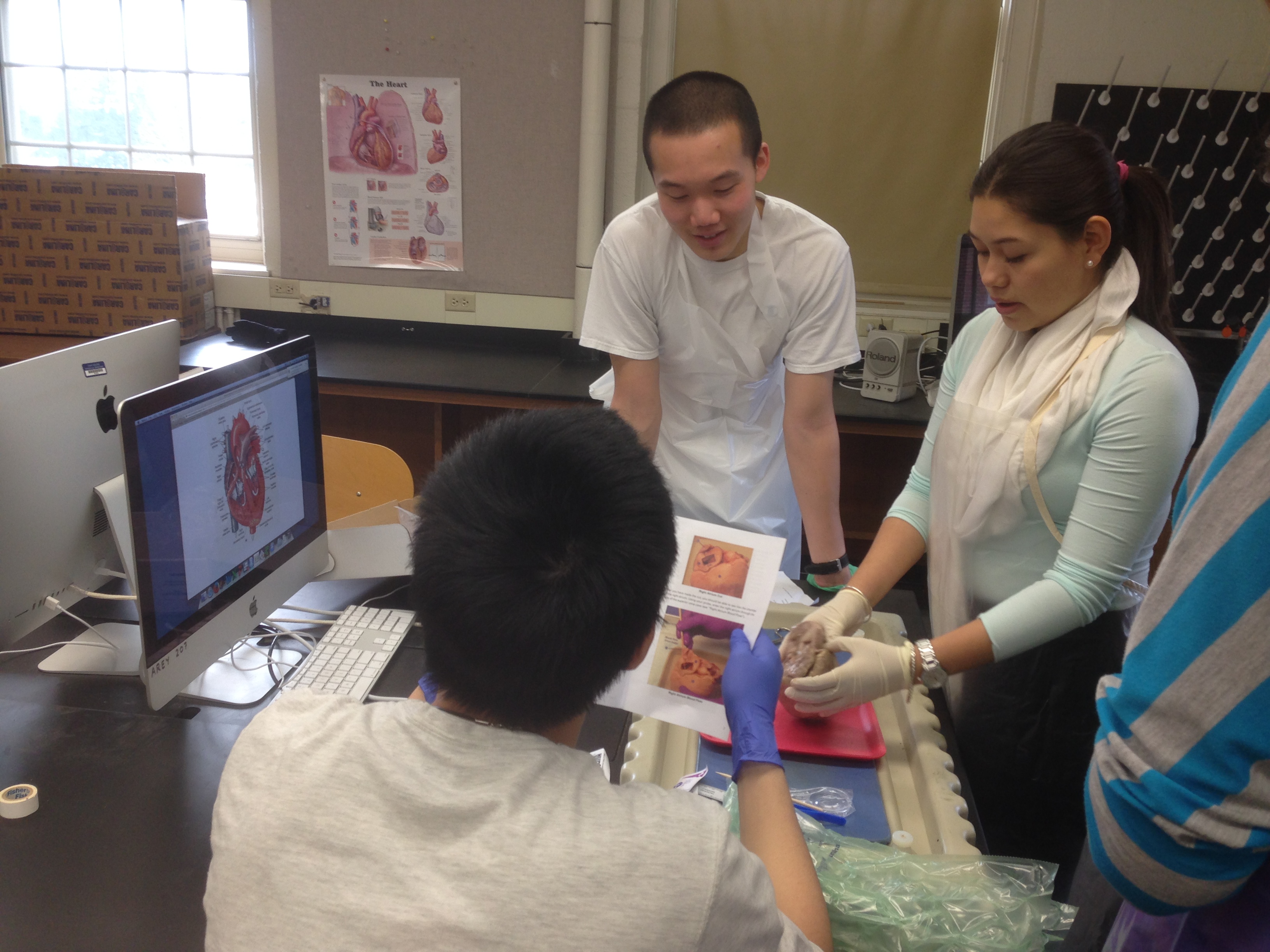
Dr. Klepach told that class that you do not really know and understand material until you teach it to another person. I had the great pleasure to put this idea to the test with the heart dissection. We showed high school students how to dissect the pig’s heart. This was a great learning experience for me, because I was able to solidify the anatomy I already knew, and it also taught me what I had missed the first time. This was by far the most useful part of this activity for me, and the most valuable. I became a full believer in this idea, and will continue to use this strategy in my future studies.
Before this unit I knew only very basic concepts of the heart’s function and its anatomy, but after this activity and lecture my knowledge increased greatly. I am biology major with a concentration of neurobiology and I thought I wanted to go into the neuroscience field, but after this unit I am seriously considering going into the field of cardiology. This is a very challenging topic, but it can potentially be a very rewarding subject for me. There is still a lot I do not know about the cardiovascular system, but I am eager to learn much more about the heart and it’s importance to the human body.

Tags: Bi265j · Lab
February 22nd, 2015 · Comments Off on Yvette Qu: My Overall Experience This Semester

Taking Human Physiology and anatomy as a freshman, I have found the course to be appropriately challenging and a great introduction into biology major. In the first few days of the course, the materials were somehow overwhelming to me. Everything needed to be memorized, and preview and review are required to do well on the quiz. However, the stress level was what I was expecting. I was hoping to learn more about biology and to decide if I can major in biology. Therefore, though I was a little terrified at first, I continued to work hard in the course, and I did gain more than I expected. Dr. Klepach had quiz after almost each lecture, and this stressed me out at first because I did not have the habit of reviewing things after each class. Being a procrastinator, I was more prone to leave everything before the finals despite the fact that I knew it was a bad habit. This course helped to reform my study methods. I have developed the habit of previewing and reviewing for each class, and the new method works perfectly. Another issue, which remained to be challenging, was the huge amount of terms of the labs. It was extremely difficult to remember hundreds of terms of minor body parts and to avoid forgetting them before the lab tests. For many time during the tests, I knew I had memorized the name of the model but could not remember how to spell it or the complete name. I did poorly on the first lab tests, but I had to admit that I did not work hard on the labs as I did for the lectures because I procrastinated the memorizing task to the last night. Despite the laziness, I forced myself to review for each lab, and as a result I did improve a lot from the first lab test to the second one. I am sure the reason is the amount of effort I put in for the second lab test. By the end of Jan Plan, I have been much more familiarized with human body than I was. The mysterious and complex human body amazed me so much that I cannot wait to learn more. My goal of learning more about biology and deciding if I want to major it was achieved, I have found myself interested in biology. Overall, I enjoyed the course of Human Physiology and Anatomy a lot and gained more than I have expected. Most significantly, this experience solidifies my decision of majoring in biology. Moreover, I have developed a better study method. Avoiding procrastination and just simply finishing preview and review for each lesson, I arrived at the score I am satisfied with, and I believe this method will help me to do better in any future courses. One more thing, with the time sheet, I did lead a healthier lifestyle in January, sleeping enough and eating regularly, than I did last semester. I would absolutely recommend this course to anyone interested in biology and ready to be appropriately challenged.

A specific activity that I particularly enjoyed:
I had a mixed feeling toward the quiz after each lecture. I really hated them at first because they forced me to study after each lecture and challenged my bad habit of procrastination. Also, I was panic when Dr. Klepach said that the average grade for the quiz was a C or D for the past years. In order to get a score higher than a C, I reviewed with extreme attention everyday. At first, it was very difficult to fight against my laziness and painful to avoid procrastination. I was frustrated when my friends taking easy Jan Plan courses had nothing to do while I had tons of things to review. However, my efforts did pay off. I did pretty well on the quiz and I was very satisfied. I begin to enjoy the result coming with the painful procedure of fighting against procrastination. Though I did know working hard and stay on top of everything could bring much better result than procrastination and laziness do, but knowing something and actually experiencing something was very different. Knowing working hard would help did not motivate me to actually do so, while when the quiz forced me to work hard and I did experience the result of the effort, I was motivated. My feeling toward the quiz changed from hatred to enjoyment and thankfulness. After well preparation, the quiz became a great ways to examine my mastery of knowledge instead of a frustrating torture. Moreover, the quiz helped to reform my study method to a better one. Even though the beginning of the forcing from the quiz was painful, the change it brings will benefit me in an unpredictable way in the future. The habit of previewing and reviewing can make me understand and memorize things better through the repetition of content from each lesson, which is much lesser amount of things than whole semester. Another thing to mention, this daily study habit not only brings better grade, it also improves efficiency and helps me to lead a healthier lifestyle. By procrastination, I left a huge amount of work to do the few days before exams; while I stayed late in those days before exam, I just wasted time irrationally on other days. Staying up late means low efficiency and unhealthy lifestyle. However, with the newly formed study habits, previewing and reviewing for each lesson, I put a reasonable amount of work for each day; the reasonable amount of work can be done without staying up late, and thus efficiently. The quiz offered was a boon, for the change it brought to me will benefit me in any courses in the future. Knowing how procrastinated I was, I did not anticipate the course to change my study habits so radically, but it does and I really enjoyed the change. Just as Dr. Klepach said, the course not only helps the students to learn biological knowledge, it also helps the students to from a better and healthier learning method and even lifestyle.


Tags: Bi265j
January 31st, 2015 · Comments Off on Danielle Levine: My Experience in Bi265j
Danielle Levine (’15, Biology)

To complete the Biology major at Colby, one has to take a minimum of six biology lab classes. As a senior biology major who at the end of the fall semester needed to take one more biology lab class, I chose to sign up for BI265 Introduction to Anatomy and Physiology for my January course rather than take an additional lab course (I will be taking the second semester of physics, which also has a lab) in the spring with my busy tennis team schedule. Having been warned before the class started that anatomy and physiology courses are a lot of work and a whole lot of memorization, I was expecting and prepared for an intensive month – but as the first week started, I found I was not quite ready for this class! During the first week, I was very nervous about the class – very concerned and stressed about the workload – and I remember wondering if I made the right decision to take the class, or if I should have just taken another lab course in the spring. After having now finished the class, I am very grateful for the opportunity to have taken BI265 with Dr. Klepach, as I truly enjoyed the class (excepting, of course, that first very difficult week!) to the fullest extent. I would recommend this class to every biology major, pre-med student, or any student at Colby just interested in learning how the human body works.
The class was, in fact, a lot of work, from studying for quizzes for almost every lecture, to listening to podcasts of lectures and labs for the next day, to making and presenting a Grand Rounds powerpoint to physicians and nurse practitioners, to studying for hours on end memorizing and identifying different anatomical structures and features on plastic models in the lab. However, the amount of material I learned and the understanding I achieved with respect to the structure and function of the human body was unimaginable to me before I took the class. The sheer volume of knowledge to be gained from this course is reason enough to recommend this class to other Colby students.
As a pre-med student, I am easily caught up with concern over my grades, GPA, exams and assignments, but taking this class reminded me of the importance of seeking to understand and learn material for oneself and for one’s own knowledge rather than for the primary purpose of getting a certain grade on an exam. As I hope to become a medical professional one day, this class had many practical aspects beyond the classroom; I was able to practice presentation skills via the class’s Grand Rounds presentation project, build a foundation of human anatomy and physiology for medical school (which I hope to go to!), learn how to succeed under stressful situations, and finally, balance my schedule keeping in mind the importance of maintaining a healthy lifestyle.
In taking this course, I was given many wonderful opportunities, such as being able to perform a wet dissection of a pig heart, and then being able to help visiting high school students perform a dissection on another pig heart, teaching them and sharing with them the material I had learned about the cardiovascular system the week prior, listening to guest lecturers, including Dr. Zak Nashed, who discussed interventional radiology and peripheral artery disease, and Dr. Peter Millard, who spoke about the field of epidemiology. Overall, I enjoyed this course very much, as it was a wonderful opportunity that I believe prepared me for the future after I graduate from Colby this spring, and reinforced my decision to pursue a career in medicine.


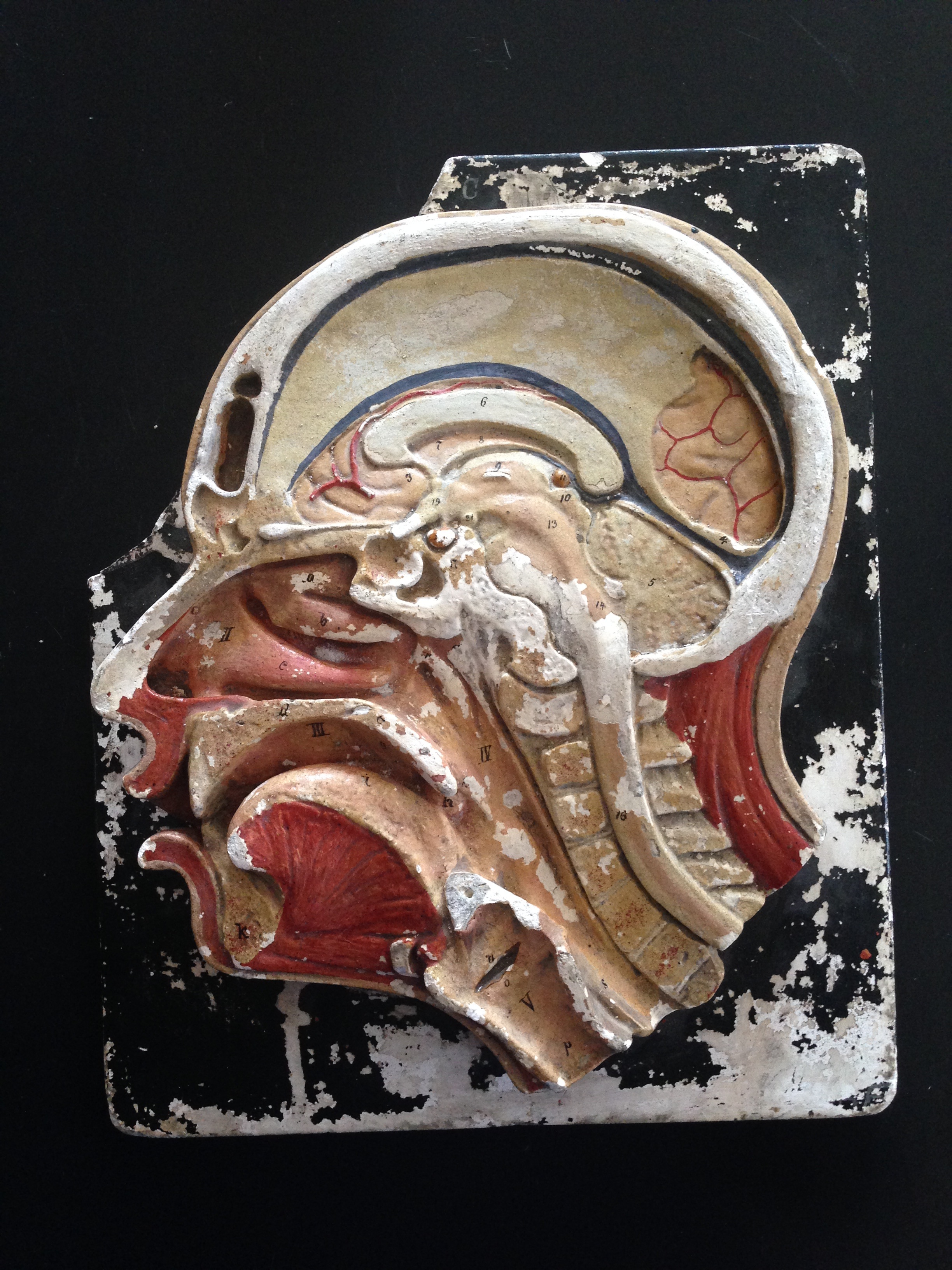
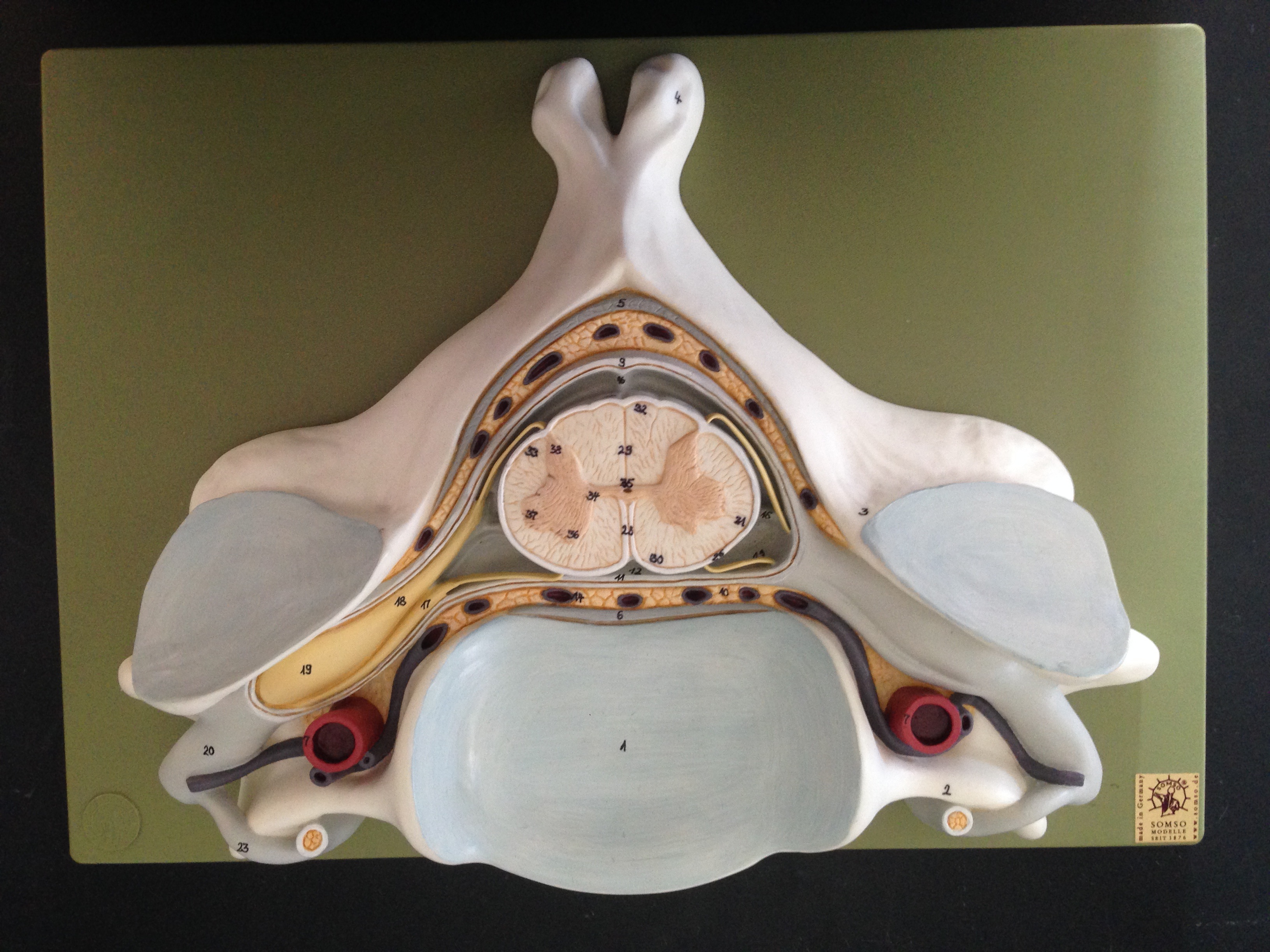
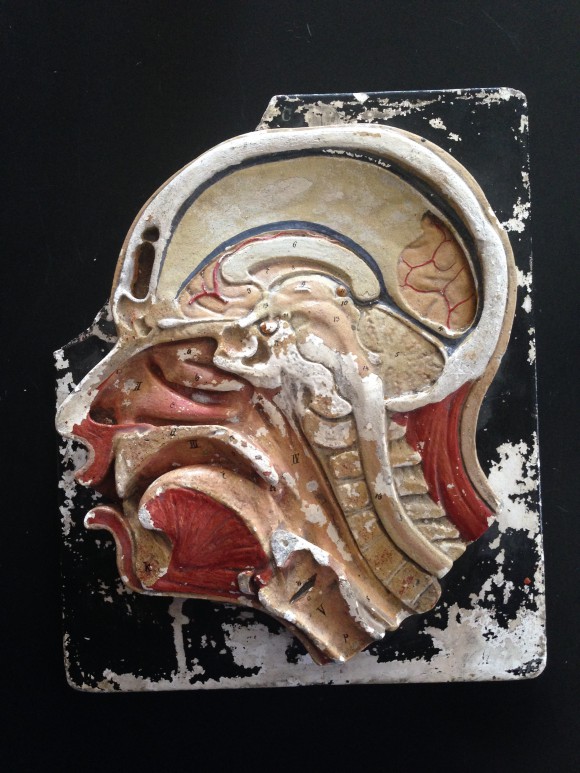
Here are some of the models used during lab and for studying for the lab practical exams.
Tags: Bi265j
January 31st, 2013 · Comments Off on We made the paper!
Check it out! We made The Morning Sentinel.
(more…)
Tags: Bi265j · Grand Rounds