On January 15, 2019, the New York Times published an article by Claire Cain Miller titled “‘It Doesn’t Have To Be This Way.’ Why Some Boys Can Keep Up With Girls in School.” This article makes an argument that boys perform less well in school due to traditional notions of masculinity that disincentivize boys from putting forth the effort required to do well in school.
Miller says that girls, on the other hand, learn to be “diligent, cooperative and ambitious,” which sets them up to be successful in school. Miller then bring forth evidence that Asian American boys perform better than boys of other races and delay the gender achievement gap until middle school when they begin performing less well than Asian American girls. The author points towards cultural practices that are common in Asian American families that value working hard in school in both boys and girls for making this progress to narrow the gender achievement gap.
Although this is interesting research, there are some problems with how it is presented: the article makes the boys seem like the victims of a failed education system that has been set up for girls to succeed. Despite the fact that boys do generally perform less well in reading intensive subjects, a gap that is often referred to as “the problem with boys”, girls still lag behind boys in academic achievement and future careers in STEM subjects.
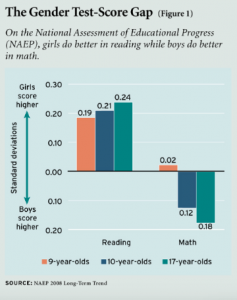
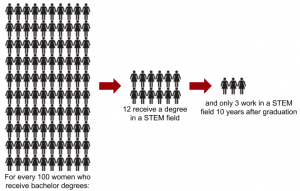
Figure 1: Published here F Figure 2: Source here
Recent research has shown that this is not because girls are innately worse at STEM, but due to other psychosocial factors. For example, a recent study highlighted that when students were told to write down their values (like family, friends and other things unrelated to the class) at the beginning and in the middle of a physics class, girls’ average score raised from a C to a B compared to a control group (and boys’ scores were unaffected). A similar study primed girls to think of themselves as a stereotypical man or woman and then perform a test related to spatial ability (a traditional situation where men are stereotypically assumed to be better): women who were told to think of themselves as a stereotypical man actually performed better than men who were told to think of themselves as either a stereotypical man or woman. Thus, stereotypes impact women’s ability to perform a task related to STEM achievement just like toxic forms of masculinity affect boys’ school achievement.
In addition to the fact that the article failed to mention areas where girls are outperformed by boys, it also fails to acknowledge the fact that the traits they listed that make girls more successful in school (diligence, cooperation, etc.) are also entrenched in unproductive forms of normative femininity. Research has shown that girls learn at a very young age to be quiet and cooperative in the classroom and other areas of life. This means that boys take up most of the talking time and receive the majority of the attention in the classroom. Additionally, as Reshma Saujani, founder of non-profit Girls Who Code, argues in her TED Talk, “we’re raising our girls to be perfect and we’re raising our boys to be brave.” Normative femininity requires that girls are the perfect daughters, the perfect friends, and the perfect students.
Research like in Miller’s New York Times article shows that this is working: girls are performing well in school and going to school longer than boys. BUT, what the article is missing is that teaching this perfection is making girls miss out on opportunities. Saujani shares that when students are given an assignment that is too difficult, many girls give up rather than try and be wrong, while boys enjoy the challenge. Later in life when applying to jobs, women only apply if they have all of the required qualifications, while men only have an average of three-fifths of the required qualifications. Boys are taught to instead be brave, which means they are more likely to leave school early to start a company or pursue other career paths rather than follow the straight-and-narrow like most girls. This contributes to the fact that more women than men graduate from college, but more men than women run companies.
Thus, while Miller raised interesting questions related to the intersection between gender and racial achievement gaps, she creates an argument that makes it seem like girls’ success is received at the expense of boys’. But in reality, society has created a complicated mess of normalized views of masculinity and femininity that set both boys and girls up to fail in some areas of their education. This is an area that needs more attention when discussing the achievement gap.
Post by: Kayla Freeman