While there are many aspects in schools that need to be changed, school lunches are a hot topic that people have been complaining about for years, deeming the food unhealthy or just unappetizing. For many students, especially in low income areas, this school lunch could be their most substantial meal of the day. Looking at trends in the United States, childhood obesity is on the rise and according to one study, 16% of children are classified to be obese, with it effecting minority children at a much higher rate.
Food and Children’s Performance
It is known that eating a healthy diet will help a person be more active and engaged throughout the day, so when it comes to our children and their school performance, why would we feed them food that isn’t healthy and helping them stay focused? Many times, this goes back to politics. Many of us remember during the Obama administration their focus on healthy foods and some sort of activity everyday. Other politicians in Washington seemed to disagree with this. Due to outside lobbying from large food corporations, such a Domino’s, many politicians want to consider the tomato paste on pizza, and french fries as a two types of vegetable. According to a study based in California, school’s that employed food companies that had a higher rating on the HEI (Healthy Eating Index), students performed up to four percentile points better than those schools who hired companies with a low rating on the HEI.

Source: NPR
School Lunch and the Achievement Gap
Many children rely on free and reduced price lunches to be able to afford lunch at school. Observing the graph below, it shows that more minority students live in high-poverty areas, which means that a larger percentage of minority students are part of free and reduced price lunches. The areas that have a large percentage of students in these programs also rely on subsidies on foods to allow these programs to take place. According to one article, subsidized school lunches tend to be high in fats, sodium, and sugar, making these lunches extremely unhealthy. When minority students rely on their lunch to be the largest and most nutritional meal they receive each day, it makes it more detrimental to their health that unhealthy foods are being provided. Based on one study, when schools switch to programs that have higher quality, healthy food, absence rates dropped by 14%. Typically, due to other outside factors, minority students tend to have higher absence rates compared to their white counterparts. By improving school lunches, minority students will have access to one healthy meal per day, improving their health and lowering their absences. Boosted test scores and lower absences are just two products of healthier lunches, but go a long way in reducing the achievement gap between white students and students of color.
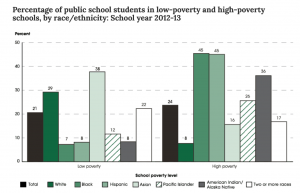
Source: NCES Blog
By: Justin Alvino