Overview
While many members of older generations brush it off, claiming that depression and anxiety aren’t real problems like broken bones and open wounds, mental health is effecting the academic achievement of students across the country, and is a problem that needs to be examined. Older generations have a hard time understanding the impact of mental health, simply because people weren’t as aware of it as they are now. Trends show that mental health problems are increasing in people age’s 12-25, while they remain pretty consistent for older people. The graph below shows the percentage of people reporting a major depressive episode within the last twelve months, and puts teenagers and young adults at around 14%.
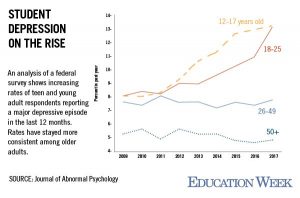
Source: EdWeek
Effects on Learning
Mental health problems, mainly depression directly effect your ability to learn and process new material. According to research, depression impairs cognitive function, and many people with depression find it hard to memorize and remember facts. Even more, people who suffer from depression often find themselves overwhelmed and confused, making the simplest of tasks even more difficult to accomplish. According to Boston University’s Center of Psychiatric Rehabilitation, depression and anxiety causes people to have less stamina and for people to lose focus more easily, which makes it more difficult to finish a full day’s worth of class and focus at the same time.
Effects on Achievement Gap
Even though these mental diseases effect everyone of different races in the same way, that doesn’t mean the steps to help remedy these illnesses are the same. According to United States Department of Health and Human services, African Americans were 20% more likely to report serious psychological stress than their white counterparts. This can be due to African Americans experiencing more structural and systematic racism than their white counterparts, causing more stress and mental health problems. Even though African Americans are more likely to have mental health issues, they are receiving treatment at a smaller percentage than their white counterparts: at a rate of 20% less. Even more detrimental than not receiving treatment, many African American teens are shunned by their families who do not believe in mental health problems. According to research, more than 33% of African Americans found it difficult to discuss problems of mental health with their family out of fear of being called “crazy” and not having them understand. Looking at socioeconomic status, many African Americans are living in poverty and without healthcare, which can lead to more mental health problems, as well as prohibit them from receiving treatment. The graph below shows the annual average percent utilization by adults of mental heath services between 2006-2012, by race and ethnicity. African Americans are using such services at a much lower rate, by 8%. Because white individuals have more access to these services, more mental health problems can be helped, and ultimately raise their achievement in school.
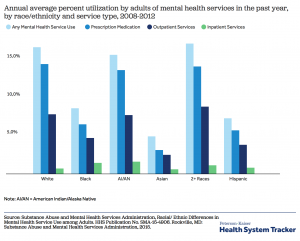
Source: Health System Tracker
By: Justin Alvino